
Table of Contents
What’s the reason behind Bengaluru’s high cost of living?
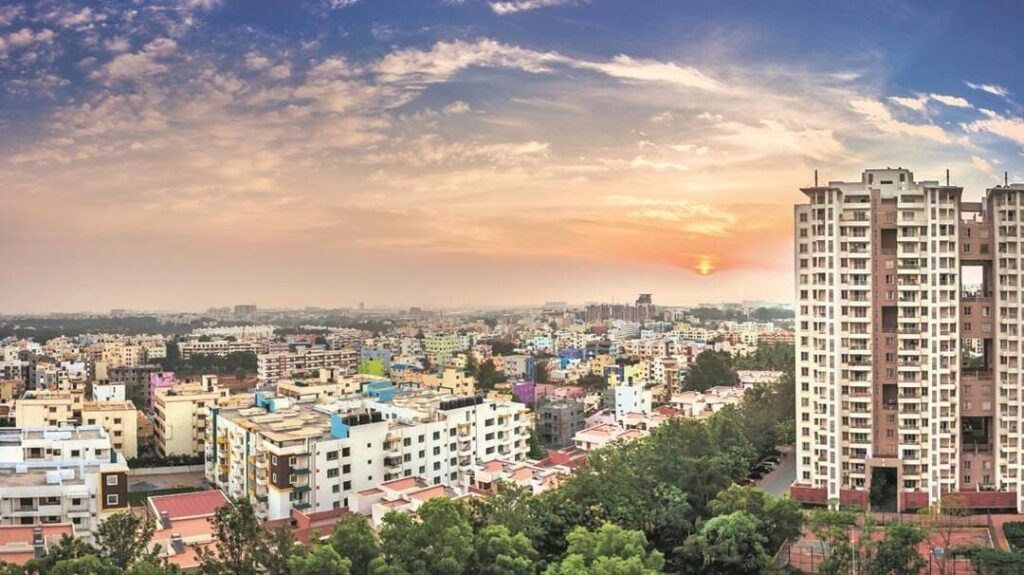
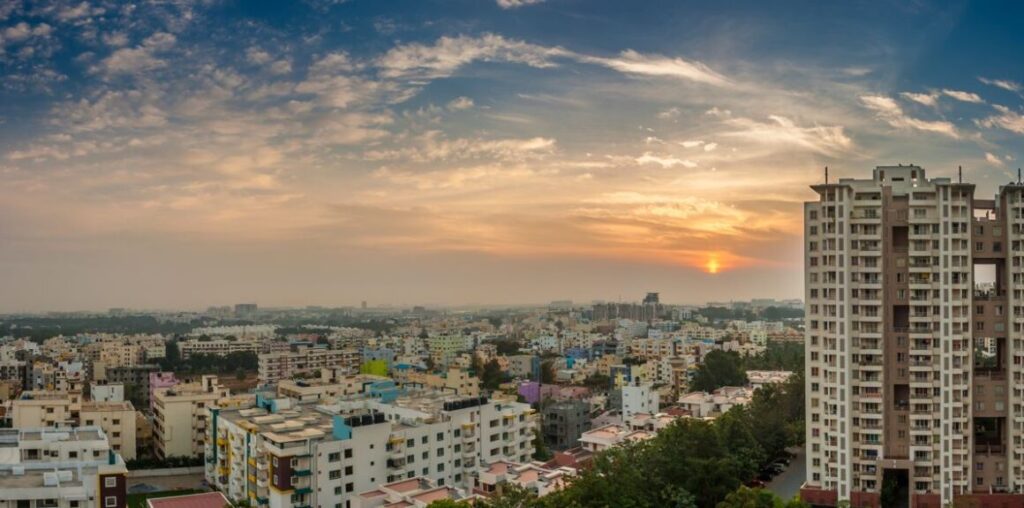
Bengaluru is considered one of the major IT and startup hubs of the country, but one question that constantly arises regarding the cost of living here is – why is it so expensive to buy or rent a house here compared to other big cities? A major reason for this is the sprawl of the city and the strong demand for housing around employment centres. Relatively affordable rental options are available in some outskirts of the city, but commuting to the office daily from there can be challenging.
In any major city, house prices and rents generally tend to fall as you move away from the CBD (central business area). In such a situation, better public transport gives people the option to live in remote areas and commute daily to the economic centre of the city. This link is not as widespread in Bengaluru yet.
The network of Namma Metro is continuously expanding. It has three operational lines of about 96 km and 83 stations as of September 2026, but reports suggest its daily ridership is around 1 million, compared to the estimated 3 million passengers for the operational corridor.
The advantage of owning a home away from the city center is cheap and fast transportation.
The biggest advantage of living away from the city center is usually lower housing costs. But this advantage becomes practical only if there is fast, regular and relatively cheap public transport available to reach the workplace.
In cities like Mumbai, Chennai and Kolkata, suburban rail has long provided connections between the city’s economic centres and distant residential areas. This also makes it possible for people working far away from the city centre to live, as the train provides an alternative for daily commuting.
The example of Chennai helps to understand this difference. A recent report found local trains to be faster and significantly less expensive than cars on several routes, including Tambaram-Guindy and Central-Tambaram. On some routes, annual travel costs by rail were more than 90 percent lower than by car.

The problem in Bengaluru isn’t just rent, it’s also commuter radius.
There are many affordable residential areas in Bengaluru. Relatively low rental options can be found in areas like Electronic City, Kengeri, Yelahanka and Kanakapura Road. But the affordability of an area isn’t determined solely by rent; The time taken to reach the office and the cost of transportation are equally important.
If an employee has to travel long distances by road every day, the benefits of lower fares may be offset by the costs of traffic, fuel and time. This is why many people prefer to live close to their office, even if the rent is higher there.
This means that in Bengaluru, “cheap housing” and “cheap commute” are not always found in the same place. This difference can make the overall cost of living in the city feel higher than in other metropolises.
Why do local trains in Mumbai, Chennai and Kolkata make a big difference?
Mumbai’s suburban railway, Chennai’s EMU services and Kolkata’s suburban rail system connect large parts of the city to economic centres. These allow people to travel to work daily even while living in residential areas far away from the city’s central areas.
Residential activity is increasing in Tambaram, Guduvanchery, Vandalur and other outskirts of Chennai. According to recent real estate reports, new housing corridors are developing in the southern and western parts of the city due to relatively affordable land and better connectivity.
In this way, the rail network is not only a means of travel, but also expands the housing market of the city. When people can easily reach work from distant areas, they have an increased choice of living in the outskirts rather than buying a house around the expensive CBD.

Namma Metro is expanding, but the network’s scale remains a challenge.
The situation in Bengaluru is not stable. Namma Metro is continuously expanding and new corridors are going to be added in the coming years connecting different parts of the city. However, several projects have been delayed. For example, the entire 58-kilometer Blue Line corridor is now expected to be operational in phases by March 2028.
This means that there are currently many residential areas where metro access is limited or commuters have to take other means to reach the station. Officials themselves have cited lack of first- and last-mile connectivity as a major reason behind the low ridership of Namma Metro.
When there is a lack of direct and reliable rail connections to distant areas, it becomes more practical for working people to live closer to the office. This could impact rents and demand for homes in areas where employment centers are located.
To understand the cost of housing in Bengaluru, commute costs must also be factored in.
Looking at a city’s cost of living solely from monthly rent or home prices can be incomplete. If a person lives in a low-rent area but travels long distances daily, the cost of petrol, cabs, buses, autos, metros and travel time also become part of his total expenditure.
This is why, while choosing a house in Bengaluru, along with distance, the mode of reaching the office also becomes important. There are some budget-friendly areas in the city, but not every area has the same level of public transport access to employment centers.
On the other hand, suburban rail in cities like Chennai can make long-distance travel a relatively cheaper option. Therefore, buying a house on the outskirts of the city may become a more practical option for many people.
When can Bengaluru feel cheap?
The biggest change towards reducing the cost of living in Bengaluru can come not just from the construction of new houses, but from better and wider public transport connectivity. If remote residential areas are connected to major employment centres in the city through a fast and reliable rail network, people will have more options to choose their homes.
The expansion of Namma Metro is important in this direction, but first- and last-mile connectivity with the network is also essential. Currently, despite the expansion of the metro network, officials have identified this connectivity gap as a ridership challenge.
So the story of Bengaluru’s expensive living is not just about high rents. The real question is how easily one can reach the economic center of the city while living in a low-cost area.The long-distance rail connectivity of Mumbai, Chennai and Kolkata offers ample options to the housing market, while in Bengaluru, despite metro expansion, the network is still developing.