On July 11, 2026, Ethereum stands at the heart of the decentralized web. If you look at the numbers, it’s clear that ETH is still one of the giants. The whole crypto market is valued at around $2.2 trillion, and Ethereum easily holds its spot as the second-biggest digital asset, right behind Bitcoin, and as the top smart contract network.
Table of Contents
Latest Market Movements: ETH and the Bigger Picture
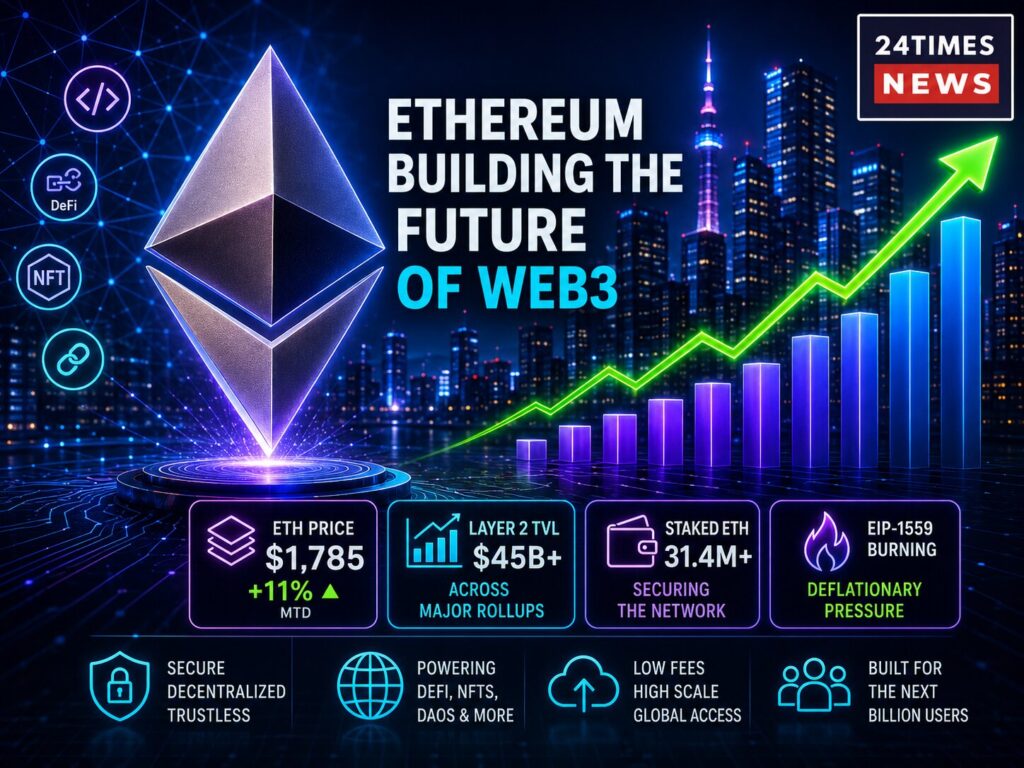
Ethereum is trading between $1,780 and $1,800, which is about ₹171,500 in Indian rupees. July shows a pattern for Ethereum periods of quiet price action, but with steady, almost patient accumulation from big investors and institutions. In the past, July meant big moments for ETH, like the DeFi boom in 2020 or the crucial Merge upgrades in 2022. This July isn’t different; the market is seeing key developments: rollups on Layer 2 networks are matured, more institutions are jumping into staking, and protocol upgrades keep rolling out.

Looking at the numbers, ETH isn’t as wild as it used to be. Trading volumes are stable and there’s less rollercoaster volatility. Bitcoin sits above $64,000, helping steady the broader crypto market. Ethereum commands about 17.5% of the total crypto market share. Gas fees for basic transactions are sitting at historic lows, just 2 to 5 Gwei, so using the network is cheaper than ever. Layer 2 solutions like Arbitrum, Optimism, Base, Linea, and zkSync combined now hold more than $45 billion in locked value.
If you check history, July is usually a good month for Ethereum. In the past ten years, it often delivered solid gains sometimes up to 43%. This July, Ethereum is up about 11%, not because of any hype cycle, but thanks to real changes: institutional funds coming in through ETFs, companies adding ETH to their books, and healthy staking rewards.
Ethereum’s Changing Infrastructure: From Mainnet to Layer 2
Ethereum has shifted its technical focus. If you used Ethereum a few years ago, you probably minted NFTs or swapped tokens directly on the mainnet. Not anymore. By 2026, the mainnet has become more like a backbone it settles the final state of transactions, guarantees network security, and acts as a huge vault for staked ETH. Everyday activities mostly happen on Layer 2 networks, which bundle up transactions and send them to the mainnet for final approval.
This change is a game-changer. Thanks to previous upgrades, especially with the introduction of “blob space” for L2s, the base-layer gas fees no longer spike when people are active. Mainnet fees now stay low, even if Layer 2s are handling thousands of transactions per second.
This means:
Layer 2 networks pay for mainnet blob space using ETH.
Sequencers on these rollups send key data back to the main chain, again paying fees in ETH.
Less gas means less ETH burned, so ETH supply is more stable, but still often slightly deflationary when the network gets busy.
Tech Upgrades in 2026: Smoother, Smarter, and Preparing for the Future
Ethereum’s developers are constantly working to make the system easier, faster, and more secure. Here’s what’s topping the list in 2026:
Account Abstraction and Smart Accounts: The old days of seed phrases are fading. New smart wallets using ERC-4337 let people interact with Ethereum using biometrics like FaceID, fingerprints, or passkeys, very much like how you unlock your phone. Apps can even sponsor your transaction fees, so you can pay in stablecoins or sometimes not pay directly at all.
Statelessness and Verkle Trees: With the chain’s data getting too big to store easily, Ethereum is rolling out new tech, like Verkle Trees, that let nodes verify everything using smaller pieces of data. This keeps the network decentralized, because more people can run a node without needing massive hardware.
Post-Quantum Readiness: Quantum computers are no longer sci-fi. Ethereum is already working toward upgrading its cryptography, planning for a future where quantum attacks could be a risk.
Growing Institutional Adoption: ETFs and Staking
Ethereum ETFs are now a standard investment in the US, Europe, and Asia. Big funds see ETH as more than just “digital oil” for transactions, but as a major asset that pays real yield.
Here’s the flow: Institutional money moves into spot ETFs and special custody vaults, which then take that ETH and put it to work in validator nodes. Right now, more than 30% of all ETH is locked in staking, earning yields from consensus rewards (new ETH), transaction tips, and MEV a special kind of revenue made from building blocks in the most profitable order. Thanks to liquid staking platforms like Lido, Rocket Pool, and institutional services like EigenLayer, staked ETH isn’t just sitting around; it’s backing loans and being used as collateral across DeFi.
The World of Real Assets and DeFi on Ethereum
Ethereum in 2026 isn’t just supporting digital coins and NFTs. Real-world assets are moving on-chain. Top financial firms, like BlackRock and Franklin Templeton, now issue US Treasury bills, corporate bonds, and other debt as tokens on Ethereum or Layer 2 networks.
There are billions of dollars in tokenized US Treasuries trading on-chain, earning returns as stablecoins. Banks are also using Ethereum for real-world settlement and experiments in cross-border transfers.
DeFi has matured, too. It’s less about risky yield farming now. Automated market makers have grown up into fast, institutional-grade exchanges on Layer 2s. Over 60% of all major stablecoins are parked on Ethereum and its partner networks, making ETH the main highway for global digital dollars.
Challenges Ahead: Fragmentation, Competition, and Value Flows
Not everything is easy sailing. Ethereum faces problems like too many competing Layer 2 networks, which split liquidity and users, making things more fragmented. Teams are working on better cross-chain messaging and shared infrastructure, but there’s plenty more to do.
Another ongoing debate is around value with so much activity moving off the mainnet and onto Layer 2s, some worry that less value flows directly back to ETH. Some users even migrate to rival chains like Solana, drawn by lower fees and simpler single-state systems.
Final Thoughts: Ethereum’s Role in 2026
In July 2026, Ethereum is clearly no longer an experiment. It’s a mature, global settlement platform that balances being a technological engine, a store of value, and a yield-generating asset. Through the growth of Layer 2s, better accounts, and strong institutional adoption, Ethereum remains the central force powering decentralized finance, digital assets, and a new wave of tokenized real-world investments. And by the looks of it, the story is far from over.