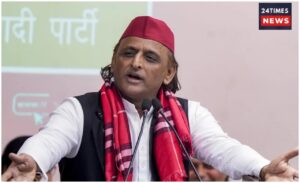
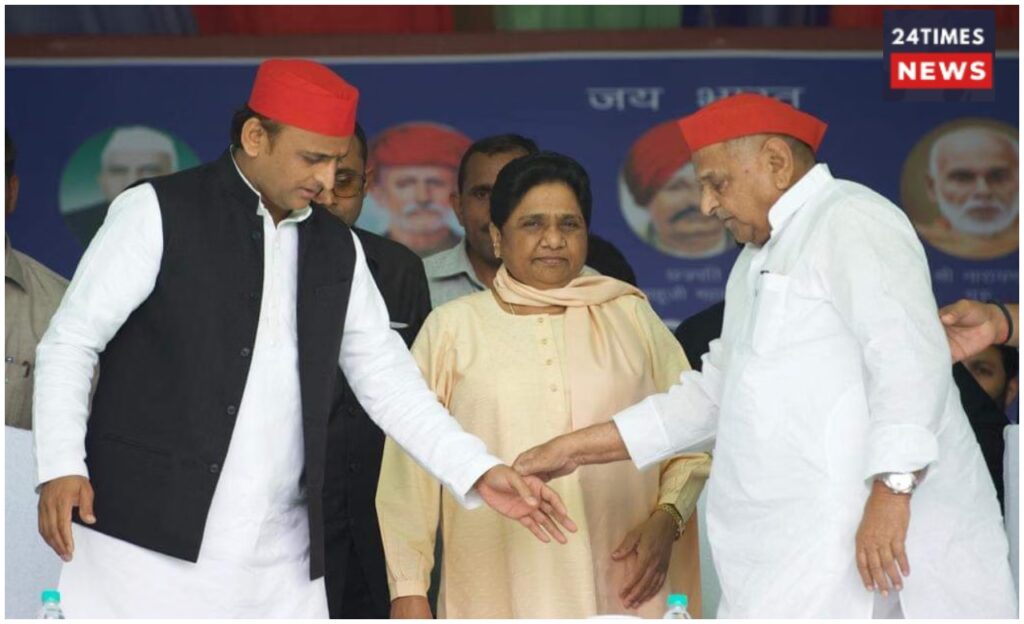
New Delhi: All political parties have already set their sights on the Uttar Pradesh Legislative Assembly elections. This election will prove to be highly significant for the BJP, SP, BSP, and Congress. It will also serve as a litmus test for SP chief Akhilesh Yadav, and his ‘PDA’ (Pichde, Dalit, Alpsankhyak Backwards classes, Dalits, and Minorities) strategy will face a rigorous examination. The situation regarding which seat Akhilesh Yadav will contest in the upcoming assembly elections has now been made crystal clear.
He has declared that he could become Chief Minister without even contesting an election. He remarked, “We can become Chief Minister even without contesting an election; therefore, I will do what is most auspicious for us.” He noted that last time, he took the oath as Chief Minister while serving as a Lok Sabha member, and he intends to follow a similar path this time as well. Akhilesh’s stance makes it evident that he will not be a candidate himself in the assembly elections.
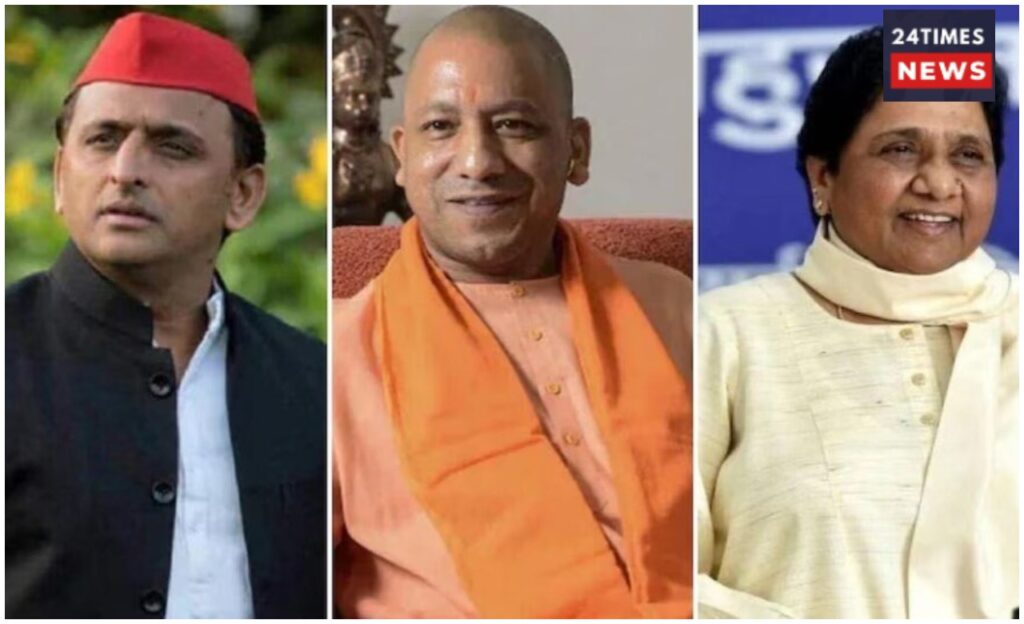
Akhilesh set to replicate the 2012 formula.
It is now clear from the SP chief’s position that he will not be a candidate in the 2027 assembly elections. Akhilesh Yadav intends to prioritise the same formula he used in 2012, a time when he played a pivotal role in forming an SP government and took the oath as Chief Minister without having contested an election. Rather than confining himself to a single assembly constituency, he aims to travel across the entire state to build momentum in favour of the SP and the ‘PDA’ alliance.
He believes that guiding his party to the threshold of power is far more important than winning an individual seat. Should the party form the government, he could subsequently assume the office of Chief Minister by entering the Legislative Council or winning a by-election. This is not the first instance of a leader becoming Chief Minister without contesting an assembly election; there is a long list of such precedents in the state.
Mayawati also became CM without contesting an assembly election.
BSP supremo Mayawati also served as Chief Minister twice without having contested an assembly election. In June 1995, following the ‘Guest House incident,’ when she became Chief Minister for the first time with the support of the BJP, she was a member of the Rajya Sabha, not a member of the Legislative Assembly.
This government lasted for only about four and a quarter months. In 2007, when the BSP secured an absolute majority, Mayawati was not a member of the Legislative Assembly; at that time, she was a member of the Rajya Sabha. Upon becoming Chief Minister, rather than contesting a by-election, she opted for membership in the Legislative Council (Vidhan Parishad). She held the office of Chief Minister for five years while serving as an MLC.
Ram Prakash Gupta and Rajnath Singh also served as Chief Ministers.CMs
Both Rajnath Singh and Ram Prakash Gupta became Chief Ministers without having contested an election. In 1999, when Kalyan Singh was removed and the reins of power were handed to Ram Prakash Gupta, the latter was largely removed from active politics and was not a member of either house of the state legislature. After becoming Chief Minister, he chose the route of the Legislative Council and became an MLC.
Subsequently, in 2003, Mulayam Singh Yadav assumed power in the state for the third time without having contested an election. At that time, he was a Member of Parliament (MP) from the Sambhal Lok Sabha constituency. Tofulfil aa constitutional requirement, he contested a by-election from the Gunnaur assembly constituency in Badaun, winning by a record margin to become an MLA. He remained in the Chief Minister’s chair until 2007.
Akhilesh in 2012 and Yogi in 2017 also became CMs.
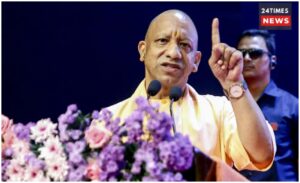
In the 2012 assembly elections, Akhilesh Yadav did not contest from any constituency. The Samajwadi Party (SP) secured an absolute majority, and he became the Chief Minister. At that time, he was an MP from the Kannauj Lok Sabha constituency; he later resigned from the Lok Sabha and became an MLC. Similarly, in 2017, Yogi Adityanath became Chief Minister following the BJP’s attainment of an absolute majority. At that time, he was a Lok Sabha MP from the Gorakhpur constituency; he was subsequently made an MLC.