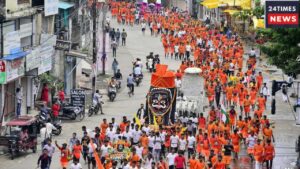
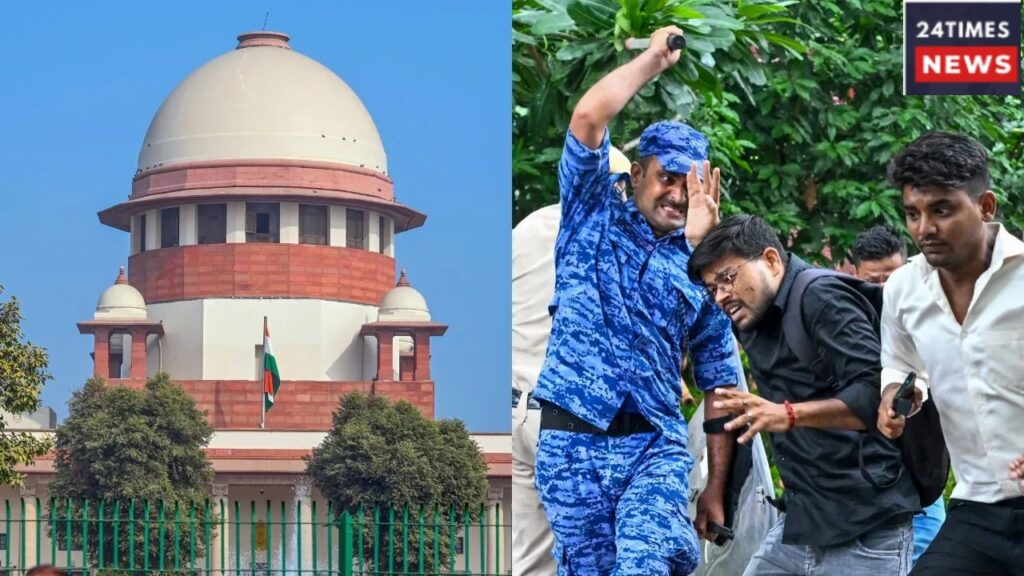
New Delhi: During a protest at Jantar Mantar in the national capital, Delhi, the police resorted to a heavy lathi-charge to disperse the students. Many students, both male and female, were injured in the police action. Additionally, the Delhi Police used water cannons and fired tear gas shells. Now that the matter has reached the Supreme Court, a significant order has been issued.
During the hearing on Tuesday, the Chief Justice of India stated that the matter requires an impartial investigation and that accountability must be fixed; those responsible for the lathi-charge will now be identified. The Supreme Court issued this order at a time when the opposition is continuously demanding accountability from the government during the monsoon session.
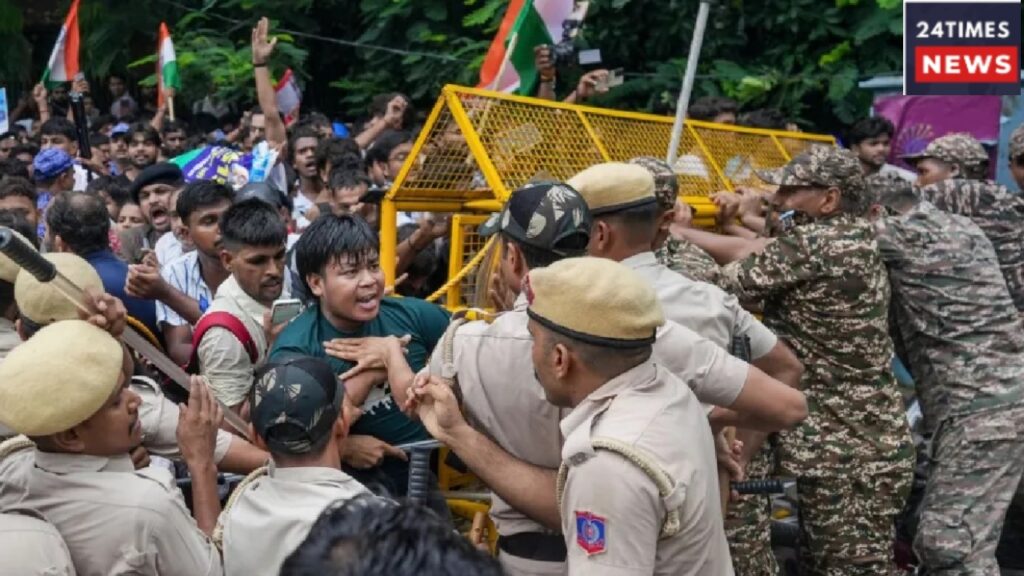
CJI’s remarks on the petition
While hearing the petition, the Chief Justice observed that the protest was initially peaceful but violence erupted on one particular day. He noted that there could be two reasons for this: either the police exercised excessive force, or individuals intent on inciting violence had infiltrated the ranks of the protesters.
The CJI further remarked that once a protocol is established, fixing accountability will become much easier. During the hearing, the petitioner’s counsel presented their arguments, stating that while the police are free to register FIRs against specific individuals if necessary, they should avoid resorting to a lathi-charge whenever possible.
The petition highlighted that on the day of the incident, there were police personnel present who were neither in uniform nor wearing nameplates, yet they were armed and obstructing the protesters; they also participated in the lathi-charge. The lawyer argued that a Special Investigation Team (SIT) led by a former judge should be constituted.
While the Court is discussing future measures, a move we welcome, it is also essential to conduct a transparent investigation into these specific incidents. Furthermore, there is a need to halt the practice of identifying protesters via digital technology and making those identities public, especially given that the group includes students and several minors.
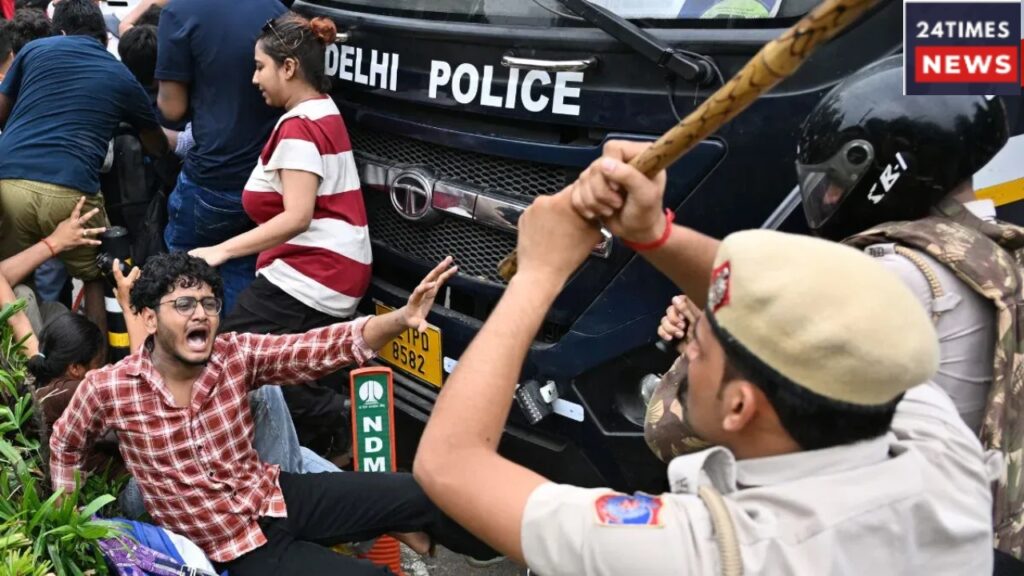
Junaid’s case was raised in the Supreme Court.
In the Supreme Court, the petitioner’s counsel stated that minors had been detained during the protests in Bihar; even a 13-year-old child was taken into custody. Prashant Bhushan then mentioned that he also wished to raise the case of Junaid, who is being harassed by the UP Police. Responding to this, the Solicitor General remarked that it was a separate matter.
It is worth noting that Junaid had joined the protesters during the student agitation at Jantar Mantar and had taken great care of the demonstrators. Once the protest ended, the police began harassing his family.