Increased Pressure on Delhi’s Water Supply: Why Is the Crisis Deepening Amidst the Heat?
With the increase in heat in Delhi, the water problem is also becoming serious. The capital is currently facing a water shortage of more than 90 million gallons daily. The situation is such that Delhi is dependent on Haryana and Uttar Pradesh for a major part of its water needs. Increasing demand and limited supply have increased people’s concerns.
The summer season in Delhi always brings water challenges, but this time the situation seems to be more difficult. Strong sunlight, continuously increasing temperatures and everyday needs have increased the demand for water rapidly. Meanwhile, information that has emerged has further increased concerns that the capital is facing a water shortage of more than 90 million gallons every day.
In a big city like Delhi, water is not limited to drinking needs only. It is needed everywhere, from homes to schools, hospitals, markets and industries. But when the supply starts falling short of the requirement, the impact becomes directly visible on the lives of common people.
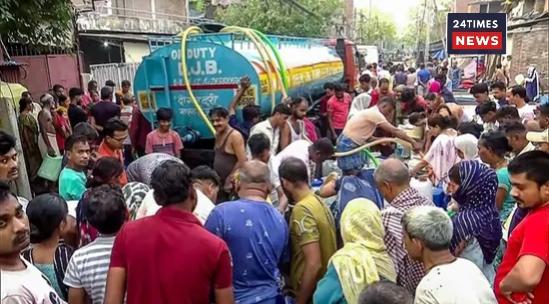
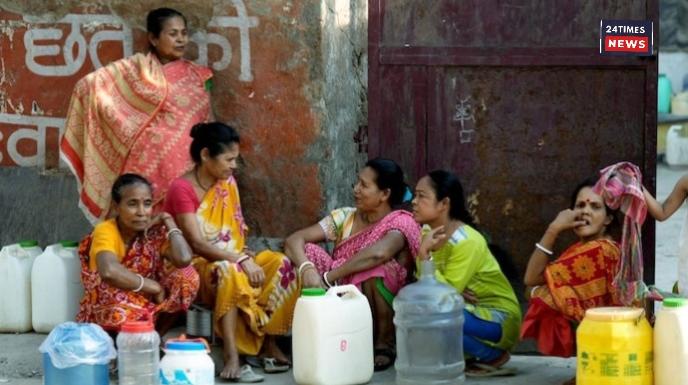
In many areas, people have to wait for the water to arrive. While some areas have grown increasingly dependent on water tankers, numerous families are compelled to ration their usage and conserve water strictly. The rush to fill buckets early in the morning and the worry about storage become common during summer days.
Experts believe that the growing population and rapidly expanding urban areas in the capital have increased the demand for water more than ever before. But on the other hand, the available resources have not increased as fast. This is the reason why Delhi water supply becomes a topic of discussion every year in summer.
Why is the capital Delhi dependent on neighboring states for water supply?
The biggest challenge for Delhi is that it has limited natural water sources as per its needs. The capital is heavily dependent on raw water from neighbouring states to meet the needs of its large population.
According to the current system, Delhi gets most of its raw water from Haryana. According to the data, about 61 percent of the total supply comes from Haryana. Apart from this, about 25 percent water is obtained from Uttar Pradesh. Efforts are made to meet the remaining needs from other sources.
This clearly means that if for some reason the supply from neighbouring states is affected, it can have a direct impact on millions of people of Delhi. This is why coordination between states regarding water is considered very important.
Sometimes the availability of water is affected due to increase in heat or decrease in water level. On the other hand, every state also has its own requirements. In such a situation, it is not easy to maintain balance.
Water experts say Delhi will have to focus more on long-term solutions. Depending solely on external supplies could become a bigger challenge in the future. Steps like harvesting rainwater, increasing recycling, and reducing pipeline leaks can be very helpful.
What is the impact of the Delhi water supply crisis on the lives of common people?
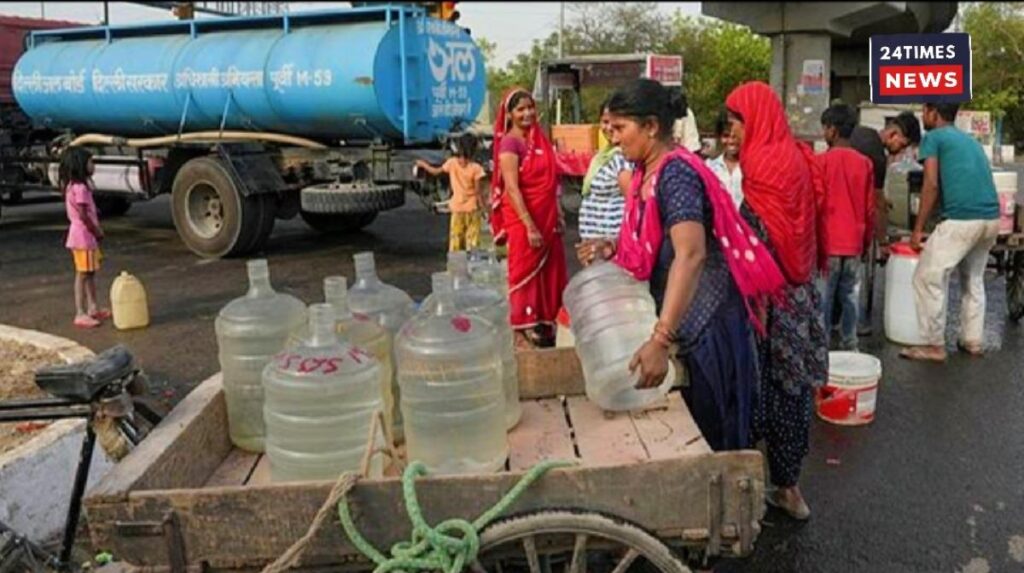
The biggest impact of water shortage is on the common people. In areas where supply is already limited, people’s problems increase further. Many families have to store water to meet their daily needs.
In some places, people wake up early in the morning to collect water because the supply time is fixed. If on some day there is less water or no water at all, the problem increases further. This situation becomes challenging especially for the elderly, small children and working families.
Water scarcity is not limited to household work only. Schools, small businesses and hospitals could also be affected. In such times, water saving habits become more important.
Experts say that people will also have to fulfill their responsibilities. Excessive water wastage, ignoring leakages and unnecessary use can further aggravate the crisis.
With Delhi’s growing population and changing weather, the water challenge may become more serious in the coming times. Therefore, only the steps taken by the government will not be enough, but the awareness and responsibility of the people will also be equally important. At present, the biggest hope of the capital is that the supply should improve and people should get relief from the heat.