
Table of Contents
Action against workers following the April protests resulted in a 53-day average jail term.
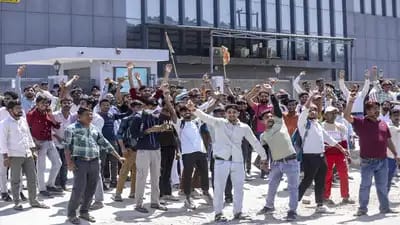
The police action following the April labor protests in Noida had long-lasting effects on many workers. According to available cases, some of the arrested workers had to spend an average of about 53 days in jail. The FIRs lodged during the protests and the subsequent arrests also increased the difficulties faced by labour organisations and their families.
The picture changed after the matter reached the courts. While hearing bail pleas, the courts have stressed that mere presence of a person at a protest cannot be considered a sufficient ground against him. Even if the allegations are serious, it is important to look at the individual role and available evidence against each accused.
Workers got relief in many cases after the comments of the courts. According to the report, the courts granted relief in about 84 per cent of the bail applications related to FIRs in which concrete allegations were made. This also highlighted the need to differentiate between police action and the individual role of the accused.
Legal battle escalates after police action
Following the protests in April, police in Noida filed FIRs and made arrests against several people. The workers involved in the protest were detained on the basis of the charges leveled against them. Subsequently, their long stay in prison also affected their families and daily lives.
In many cases, the court was approached for bail. During the hearing, the courts gave importance to the allegations as well as the actual role of the accused and the material available against him. The mere fact that a person was present at the scene was not considered sufficient in itself to presume that he was involved in a serious crime.
In this legal process, the courts emphasized the principle of personal responsibility. This means that every person present at the protest cannot be treated at par with those who are specifically accused of inciting violence or playing an active role in carrying out the incident.
Mere presence is not a ground for denial of bail.
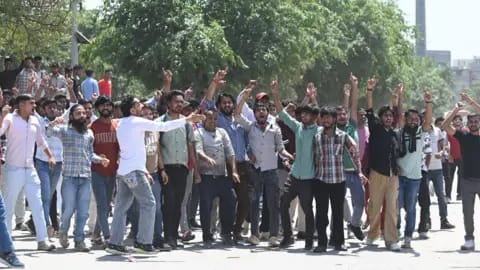
An important observation made by the courts in bail matters is that a person’s mere presence at the scene cannot be used as a basis for denial of bail. There must be specific and concrete evidence against the accused which makes his alleged role clear.
This had a direct impact on the cases of workers against whom charges were levelled but there were substantial material questions about their individual roles. The courts also noted that the role of all those participating in the demonstration may not be the same.
This distinction is important in legal procedure. Being present at a demonstration and instigating or actively participating in an event are two different things. This distinction was given importance in bail decisions in the cases that came before the courts.
What does the relief in 84 per cent of bail applications indicate?
According to the report, courts granted relief in about 84 per cent of bail applications in cases involving FIRs with concrete allegations. This figure highlights the fact that in many cases a different picture emerged between the initial police action and the subsequent judicial review.
While granting bail, the courts also looked at the material available against the accused and his alleged role, rather than merely considering the allegations made in the FIR as the ultimate truth. This personal scrutiny is crucial in the judicial process, as different people involved in the same incident may have different roles.
However, granting bail does not equate to an accused being completely acquitted of the charges. Further legal proceedings in the cases may continue and the final status of the charges will depend on the detailed consideration of the court and the outcome of the trial.
The arrests of workers also created hardships for their families.
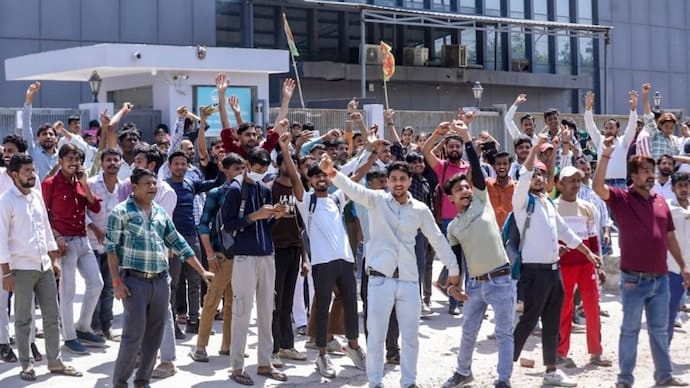
The impact of prolonged imprisonment was not limited to the arrested workers. Their families may have faced economic and social difficulties, especially if the family income depends on wages. The average jail stay of 53 days gives an indication of the gravity of the situation.
Getting bail from the court was also important for the workers because prolonged detention could affect both their work and income. In such cases, the expenses of legal battle and the daily needs of the family also become an additional challenge.
The courts’ observations also strengthened the argument that the role of each individual should be determined separately while dealing with cases related to protests. Merely being part of a mob during a mass action cannot be considered the same as playing an active role in an alleged crime.
The courts’ intervention in the Noida case raises the question of individual roles.
The courts’ role in these Noida cases, following police action, has raised an important question: can everyone involved in the protests be viewed with the same lens? During bail hearings, courts have emphasized the need to assess specific evidence against an accused and his/her individual role.
The average jail stay of 53 days and the large number of bail applications granted relief highlight how important judicial scrutiny of the initial allegations can be in such cases. The courts also clarified