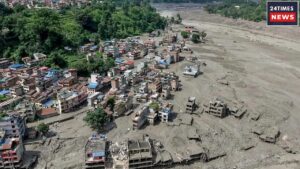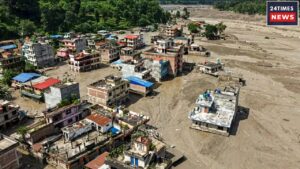

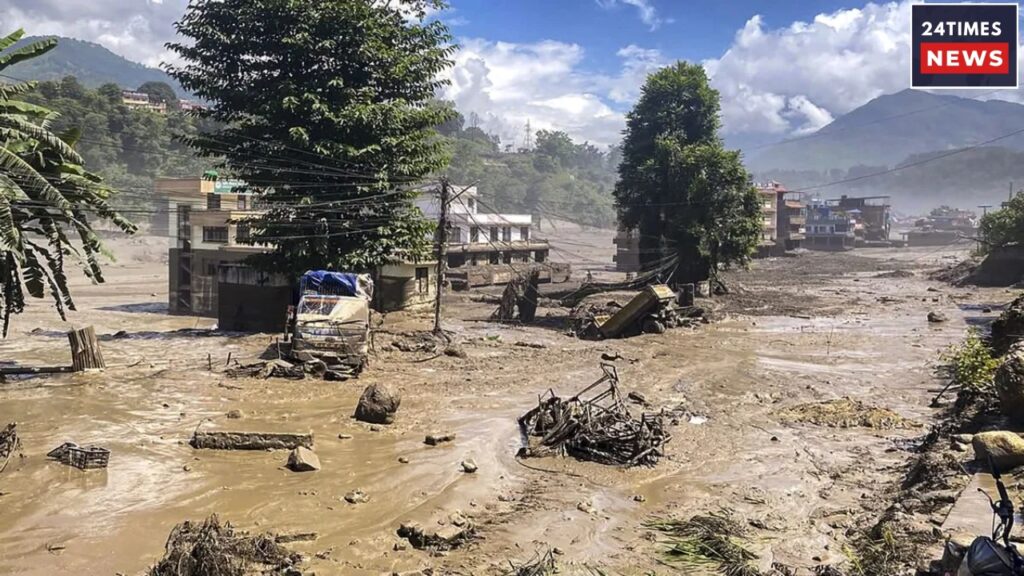
New Delhi: No one could have ever imagined that the areas of Nepal bordering Tibet would suddenly face such a catastrophic deluge, a disaster so severe that people would struggle even for breath. A sudden, massive flood in the Bhote Koshi-Lhende Khola river system left a large number of people homeless. Moreover, according to the latest reports, 300 people have lost their lives, and over 1,000 are reported missing.
More than 300 of the missing individuals are Indian nationals. The death toll may rise further. Experts are now investigating the causes of this massive deluge. Initial reports suggested an earthquake-induced avalanche, but satellite imagery tells a different story.
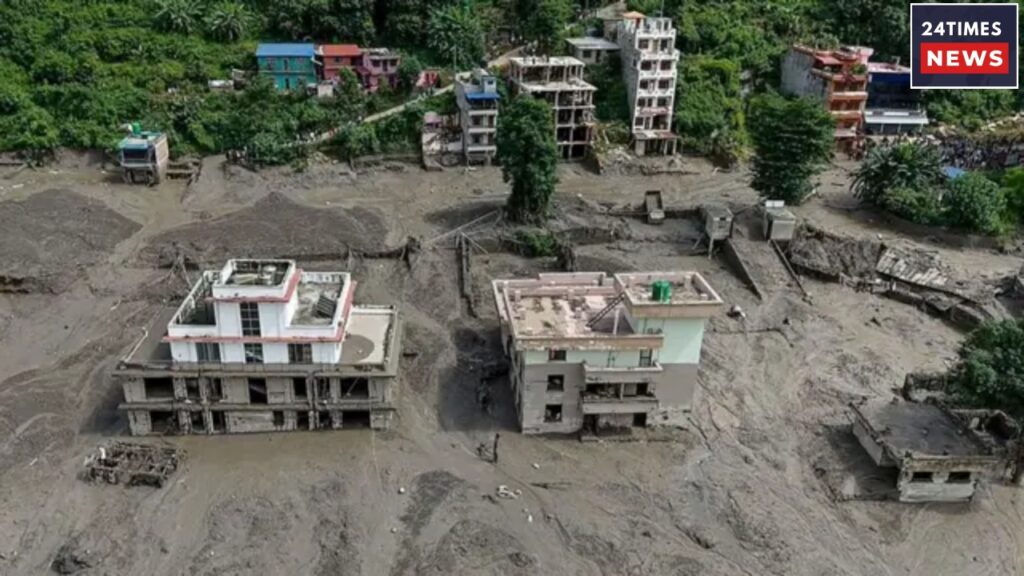
Geological investigations reveal that the event was not caused by a tectonic earthquake but rather by the collapse of melting glacial ice and the rapid descent of debris. Disasters such as landslides, earthquakes, and floods frequently plague a country like Nepal. You can learn more about the causes below.
Understanding the causes of disasters in Nepal
Did you know that the frequent disasters in Nepal are caused by the collision of two tectonic plates, the rugged mountainous terrain, the warming of cryospheric (icy) regions, intense monsoon rains, unstable slopes, and infrastructure built within narrow valleys? Consequently, major earthquakes and natural disasters are becoming commonplace in the country.
Additionally, there is a persistent earthquake risk in Nepal because the Indian and Eurasian tectonic plates continue to move towards and collide with each other. The Indian Plate is advancing towards the Eurasian Plate at a rate of approximately 20–21 mm per year. This collision began around 50 million years ago and continues to this day. This process causes continuous changes and pressure within the Earth’s upper layer (crust) beneath the Himalayas. Consequently, Nepal faces a very high risk of earthquakes.
Then there is the threat posed by rivers: while Nepal is home to some of the world’s highest peaks, its rivers often flow through very narrow valleys with steep slopes. This becomes a critical factor during floods. When a massive volume of water suddenly surges into a narrow Himalayan valley, it has very little space to spread out; instead, the force of gravity pulls it rapidly downwards.
Is the warming of the Himalayas also a factor?
It is surprising to learn that the Himalayas are warming rapidly. This is causing a loss in glacier mass, leading to their retreat. According to a recent assessment by the International Centre for Integrated Mountain Development (ICIMOD), the rate of glacial melt in the Hindu Kush Himalayas has doubled since the year 2000. There is also a warning regarding inadequate monitoring: only a few glaciers are monitored over the long term in accordance with international standards.
A 2020 list by the United Nations Development Programme (UNDP) identified 3,624 glacial lakes across the Koshi, Gandaki, and Karnali basins. Of these, 47 were deemed potentially dangerous: 25 in Tibet, 21 in Nepal, and one in India. However, merely counting these lakes presents a significant challenge, as the risk landscape itself can shift.