
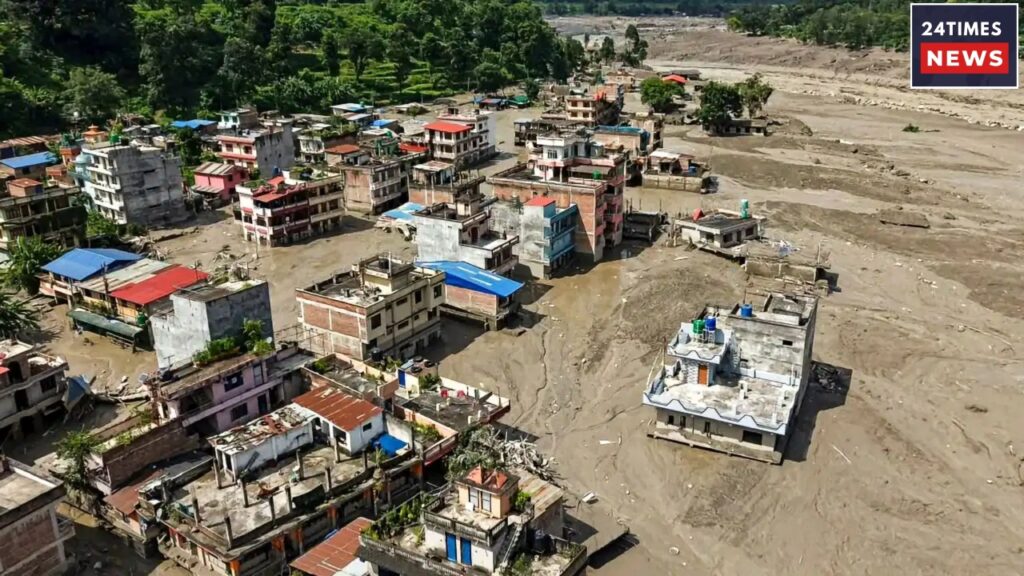
New Delhi: A sudden, massive deluge has wreaked havoc in India’s neighbour, Nepal, affecting a large number of people. The flash flood was triggered by a severe ice avalanche in Tibet near the Nepal-China border, followed by a glacial lake outburst. On the morning of August 26 at 9:00 AM, a torrent of water, laden with debris and rocks, surged into Nepal via the Bhote Koshi River.
The river swept away markets, roads, and bridges in its path, causing significant damage to Nepal. Debris washed away a hydropower project belonging to the Nepal government, and numerous homes were also swept away by the floodwaters. Rescue operations are currently underway to move people from the affected areas to safety. According to reports, 157 people have lost their lives so far, and over 750 people are reported missing amidst the debris brought by the flood; the death toll could rise further.
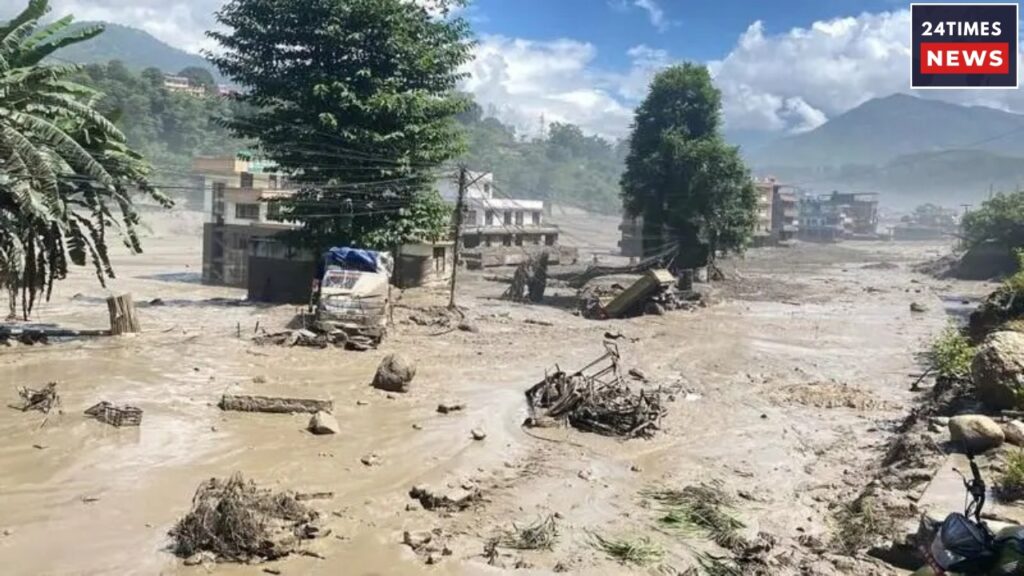
Severe Devastation at the Border
The Rasuwagadhi-Timure corridor, situated along the Nepal-China border, was the first to be hit by the surge. Water, rocks, and debris flowing from the Tibetan side arrived at high speed. The Miteri Friendship Bridge was also swept away along with the debris. Additionally, the Timure customs office was buried under the debris. Numerous electric vehicles and container trucks, returning after being imported from China, also fell victim to the deluge. This region is considered vital for trade between China and Nepal, and the area has suffered immense economic loss.
Multi-story Buildings and Hotels Destroyed
More than 60 multi-story hotels, lodges, and concrete houses were swept away by the debris during the deluge. Syaphrubesi is a major hill town situated along the banks of the Bhote Koshi River. A sudden deluge wreaked havoc in this region, which is renowned for Langtang trekking and tourism—a devastation so severe that its scars will likely remain for decades. Landslides also damaged the army’s main helipad, complicating relief and rescue operations.
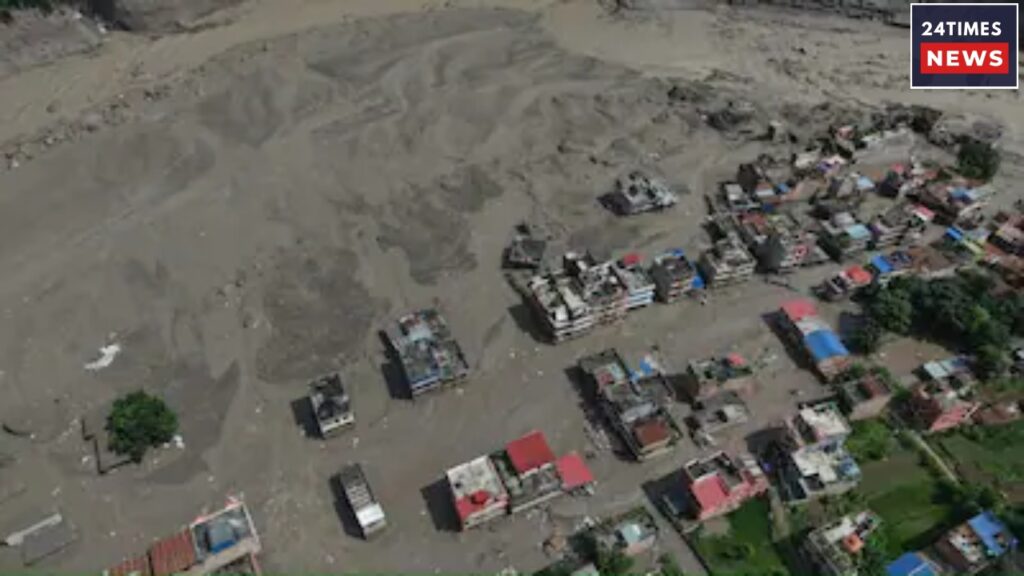
Mud-filled homes
Mud washed in by the massive deluge engulfed the houses. Homes were filled with 7 to 8 feet of mud; the waters of the Bhote Koshi surged downstream to merge with the Trishuli river system, severely affecting the Trishuli Bazaar and Betrawati areas of Nuwakot. A torrent of debris-laden water, moving at speeds of approximately 70 kilometres per hour, inundated the low-lying areas. Many homes were filled with 6 to 8 feet of thick silt and mud. Ground floors were submerged, forcing many families to seek refuge on their rooftops.