Table of Contents
Biggest Drop for Stocks in Months
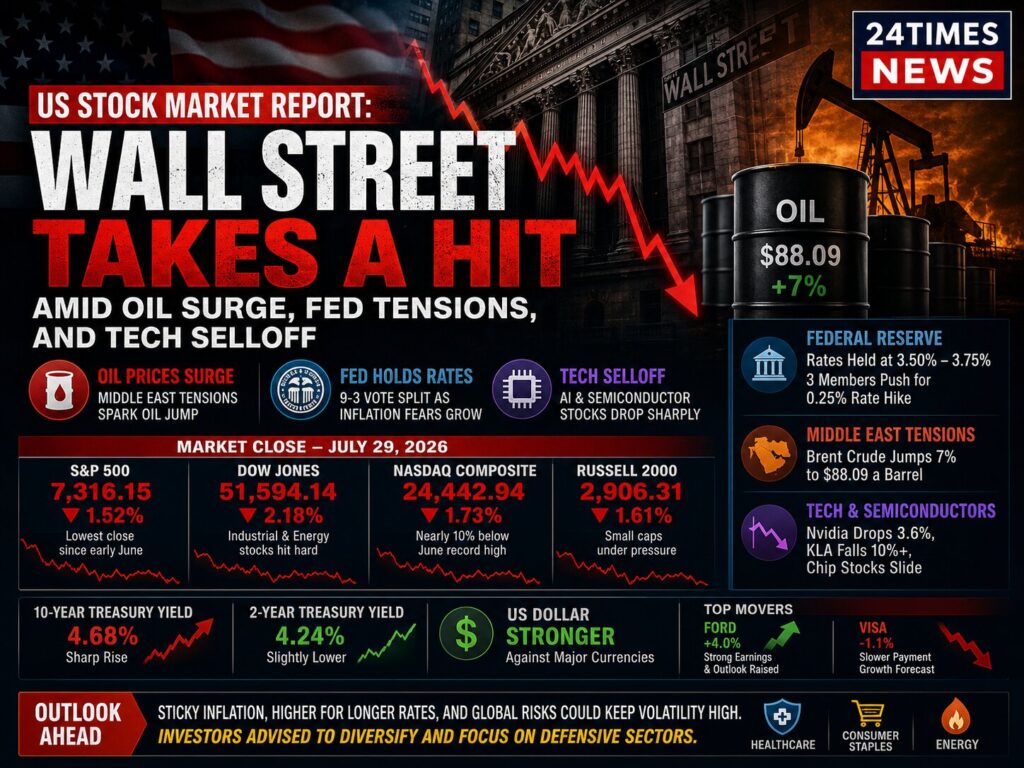
Wall Street got slammed on Wednesday, July 29, 2026, with a broad selloff hitting nearly every sector. Three tough problems came together: Oil prices jumped as trouble in the Middle East flared up; the Federal Reserve kept interest rates steady, even as some members pushed for a hike; and shares of big names in artificial intelligence and semiconductors dropped sharply. Together, these factors made investors nervous, with many scrambling to reduce risk.
The Dow Jones Industrial Average dropped more than 1,150 points its worst single-day loss in quite a while. The S&P 500 and the Nasdaq both fell hard too, with the Nasdaq now nearly 10 percent below its June record high.
How Markets Closed
All four major US indexes finished deep in the red. The swings got wilder after the Federal Reserve’s announcement in the afternoon. Here’s where things ended up:
- S&P 500 closed at 7,316.15, down 1.52%. This ended a 3-day winning streak and was the lowest close since early June.
- Dow Jones finished at 51,594.14, down 2.18%. Industrial and energy stocks took it especially hard.
- Nasdaq Composite fell to 24,442.94, off 1.73%. That’s now almost 10% below last month’s highs.
- Russell 2000, which tracks small companies, ended at 2,906.31, down 1.61%.
Federal Reserve Splits Over Rates
The Fed kept its benchmark interest rate range at 3.5% to 3.75%. That was what most investors expected. But behind the scenes, things were tense. The vote was 9-3, with three regional Fed presidents pushing for an immediate rate hike of 0.25%. They argued inflation is still a problem, especially as energy prices go up.
In the official statement, the Fed admitted that Middle East turmoil and rising oil prices make inflation harder to fight. Still, the central bank gave no hints about what it might do next. Fed Chair Kevin Warsh spoke after the meeting and said they’ll keep a close eye on the numbers but refused to say if a September hike might happen.
Oil Prices Surge as Middle East Worries Rise
The real drama came from the oil market. After news broke about military action in the Middle East, investors worried that oil shipping through the Strait of Hormuz could be threatened. Brent crude the global oil benchmark jumped more than 7%, ending at $88.09 a barrel. US oil prices shot up almost 4.5% to around $82.50.
This quick jump in energy costs made investors fear that inflation will stay high. Bond markets immediately began factoring in the chance that the Fed might have to keep interest rates higher for longer if price pressures don’t fade.

Tech and Semiconductor Stocks Sell Off
The tech sector got hit the hardest. Shares in top artificial intelligence and semiconductor companies, which have driven much of the market’s growth all year, fell quickly. There were a few key reasons: Stocks had become expensive, bond yields were climbing, and some major overseas tech firms disappointed investors with their results.
The trouble actually started in Asia. South Korea’s KOSPI index dropped 6% on Wednesday after a huge loss the day before. SK Hynix, a big name in memory chips, fell almost 10%. Even though SK Hynix posted record sales, investors wanted better numbers. This started a chain reaction, pulling down shares of major US companies:
- Nvidia lost 3.6%, the biggest drag on the S&P 500.
- KLA dropped more than 10%, even after a strong quarter.
- Chipmakers like AMD and Micron both fell over 3%. This weighed on the entire semiconductor sector.
A few companies moved against the trend. Ford jumped 4% after reporting great earnings and raising its outlook for the rest of 2026. Visa slipped just over 1% after it warned of slower growth in payment volumes.
Bond and Currency Markets Respond
Bond markets felt the shock, too. The yield the interest rate on the benchmark 10-year Treasury rose sharply to 4.68%. That’s a big increase compared to earlier in the year and can make mortgages and business loans more expensive. The 2-year yield, closely tied to Fed policy, slipped slightly to 4.24% as markets tried to judge the Fed’s next move.
The US dollar strengthened against other major currencies. Investors tend to buy dollars when they get nervous, and higher bond yields added extra support.
Looking Ahead: What Might Happen Next
July 29 was a tough day. It reminded everybody how fast things can change when the world gets unpredictable. As we move further into the second half of 2026, investors have a lot to think about. On the bright side, US companies are still reporting steady earnings and growth. But stubborn energy inflation, a more aggressive Federal Reserve, and trouble overseas are weighing on markets.
Rising oil prices could keep feeding into inflation, forcing the Fed to keep or even raise rates. Meanwhile, investors are starting to demand more than just solid quarterly earnings from companies. They want clear plans for cash flow and future growth, not just hype or big promises.
Many wealth managers now recommend spreading investments out more, cutting back on tech stocks, and putting more into defensive sectors such as healthcare, everyday goods, and energy especially since high commodity prices lift profits in those industries.
After the Dow lost 2.2%, the S&P 500 fell 1.5%, and the Nasdaq dropped 1.7%, it’s clear: both world events and central bank policy can hit hard and fast. With big tech companies set to report earnings soon and important inflation data coming in August, it looks like market volatility isn’t leaving anytime soon. Investors should brace for more turbulence ahead.