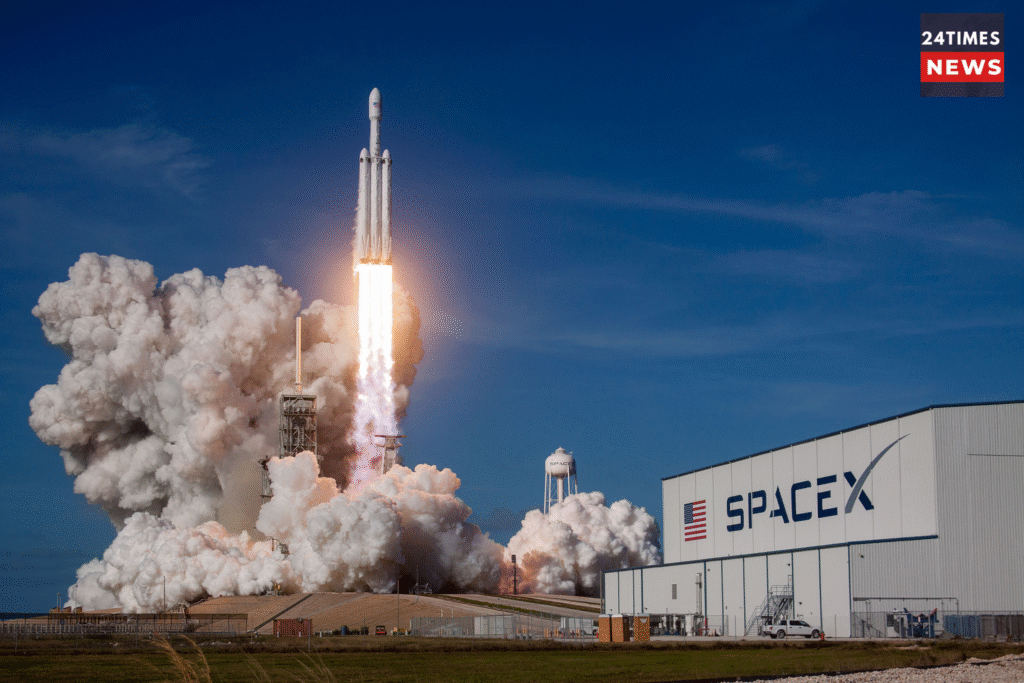
SpaceX has made Wall Street history. On Friday, June 12, 2026, Elon Musk’s space company went public on the Nasdaq under the ticker SPCX. Right from the opening bell, investors scrambled to get a piece of the action. SpaceX didn’t follow the usual path of setting a price range and letting the market decide. Instead, the company set its price at $135 a share for 555.6 million Class A shares.
That bold move raised $75 billion in one day a figure nobody’s seen before. For comparison, the old record-holder, Saudi Aramco, raised $29.4 billion during its IPO back in 2019. SpaceX’s total valuation hit $1.75 trillion, making it one of America’s top ten biggest companies overnight.
Table of Contents

Investors Rush In
The demand for SpaceX shares was unbelievable. Banks leading the IPO, like Goldman Sachs, reported that investors wanted to buy more than $250 billion worth of shares at least three and a half times more than what was available.
What set this IPO apart is how SpaceX welcomed regular people, not just big investment funds. Thirty percent of the shares went to retail investors. People buying through popular platforms like Fidelity, Robinhood, and E*TRADE flooded the market with requests, making for one of the most diverse groups of new shareholders ever seen at a listing of this size.
Starlink and xAI Take Center Stage
SpaceX is more than just rocket launches these days. In early 2026, the company changed its structure, and now Wall Street sees it as a leader in global internet and artificial intelligence.
The main moneymaker is Starlink, SpaceX’s satellite internet business. By June, Starlink counted over 12 million active subscribers in 160 countries, bringing in $11.4 billion out of SpaceX’s $18.7 billion in revenue for 2025.
On top of that, SpaceX merged with xAI, Elon Musk’s artificial intelligence company, earlier this year. Together, these parts let SpaceX sell a story of offering internet everywhere and building next-generation AI. The company even launched the Colossus 1 data center, which landed a huge contract worth $1.25 billion per month with AI research firm Anthropic, running through 2029.

Big Numbers, Bigger Losses
Excitement is sky-high, but SpaceX’s financials give investors plenty to think about. Revenue for 2025 rose 33% to $18.7 billion, but losses also ballooned. For all of 2025, SpaceX lost $4.94 billion, a sharp change from the $791 million profit it posted in 2024. In the first quarter of 2026, losses hit $4.28 billion, with the total deficit now over $41 billion.
Management says these losses were planned they come from ambitious projects like the Starship rocket program, new Starlink satellites, and major spending on Nvidia’s high-end AI chips.
At the $135 listing price, SpaceX trades at almost 95 times its annual revenues. That’s a steep price, and means the stock is likely to swing up and down as Wall Street weighs the risks and rewards.
SpaceX IPO by the Numbers
Event: SpaceX IPO
Date: June 12, 2026
Exchange: Nasdaq (SPCX)
Price per share: $135
Shares offered: 555,555,555
Total raised: $75 billion (a world record)
Valuation: $1.75 trillion
Investor demand: Over $250 billion (oversubscribed)
Retail allocation: 30% of shares
2025 revenue: $18.7 billion (up 33%)
2025 net loss: $4.94 billion

Joining the Big Leagues Fast
SpaceX’s size means the rules had to change. Normally, a new company waits months before joining major indexes like the Nasdaq-100. But leaving a $1.75 trillion company out would distort index funds that millions of Americans own. So, Nasdaq made an exception: any company this big and already a top 40 firm by value gets added within 15 trading days.
By early July, SpaceX will show up in index funds like the popular QQQ, adding even more demand for its shares.
Musk in Control
If you buy SpaceX stock, you’re signing up to follow Elon Musk’s lead. After the IPO, Musk owns about 42% of SpaceX’s shares, but controls 85% of the voting power. Thanks to a special share structure, regular investors won’t have much say in major decisions.
Most on Wall Street are fine with this setup they want Musk and his team to take big risks and build for the long term, even if it means years of losses.
As trading goes live, the world is watching. SpaceX’s stock debut isn’t just another headline it’s a real-life rocket launch for the market itself.