Table of Contents
Ethereum has come a long way since its early days as a niche smart contract network. Now, in July 2026, it stands tall as a key part of the digital finance world. The price of ETH stays steady around $1,900 to $2,000, and it acts more like a mainstream financial asset than a wild bet. Big institutions are investing through ETFs, and real-world assets are finding their place on the blockchain. At the same time, the network has reached a huge scale, handling global transactions with confidence.
The Big Shift: How Ethereum Scales
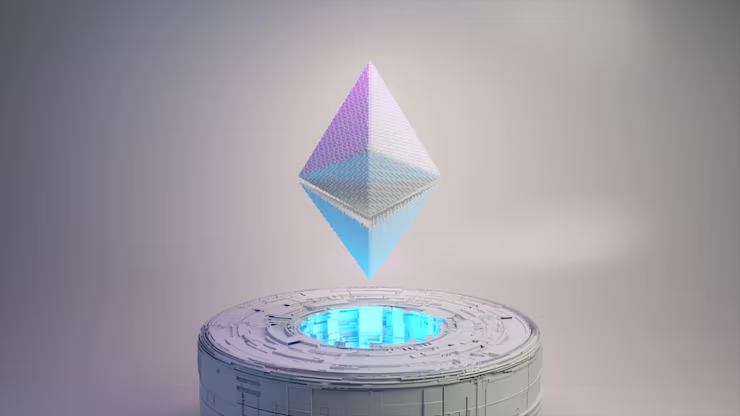
People no longer question if Ethereum can keep up with growing demand. The real story is just how smoothly its upgraded structure runs. A few years ago, Ethereum switched to a design focused on “rollups” side networks that bundle and process transactions before they hit the main Ethereum chain. The main network now serves as a trusted ledger, confirming and securing all these outside actions. Specialized layer-2 networks do the heavy lifting, handling most of the transactions quickly and cheaply before adding the final stamp to mainnet.
Ethereum’s Market in 2026: Calm and Controlled
By now, the crypto market feels more stable. The old days of boom-and-bust shopping sprees are gone, replaced by regular, careful investments from big players. ETF products are standard in portfolios alongside stocks and bonds from the US to Hong Kong.
Let’s look at some basics as of July 27, 2026:
- ETH price hovers around $1,860 to $1,970 (about ₹188,000 to ₹189,000 INR)
- Total value locked in Ethereum and its layer-2s is about $95 billion
- Main layer-2s include Arbitrum, Base, Optimism, zkSync, Linea, and Scroll
- Together, the network handles up to 15,000 transactions per second
- About 29.5% of all ETH is staked, earning around 3.1% to 3.5% annual yield
Ethereum’s supply is shaped by its burn system, where a portion of every transaction fee is removed permanently, keeping inflation in check. Even though most transactions now happen on layer-2 networks, the main chain still burns enough ETH to keep it attractive for big holders. Companies and digital asset funds like holding ETH not just as a currency, but as a productive asset one that earns yield over time.
Layer-2 Networks: From Silos to Highways
One of the biggest changes showing up in 2026 is the growth of these layer-2 solutions. Networks like Arbitrum, Optimism, Base, zkSync, and others have moved far beyond being isolated projects. Now, they’re all connected, letting users and developers move their money and applications seamlessly. Sophisticated messaging standards and unified sequencing mean less juggling your funds and data flow where they need to without hassle.
Lower Fees, Bigger Reach
With tech upgrades like “data blobs” expanding the bandwidth for transactions, everyday fees have dropped to less than a cent for simple payments and under a nickel for bigger operations. That opens doors for all kinds of use cases:
- Decentralized finance platforms on layer-2s see record trading volumes, with super-fast settlements and barely any slippage.
- On-chain games and social apps process millions of tiny updates every day, pushing blockchain deeper into daily life.
- Big companies settle their trades through private blockchains tied to Ethereum, balancing the need to follow regulations with the security of the main chain.
Bringing Everything Together
One early pain point was how tough it was to move money or assets across the growing number of networks. Users needed to jump through hoops to bridge funds, and apps struggled to gather enough liquidity. But by 2026, lots of this gets handled behind the scenes. Today’s wallets quietly shift assets wherever needed, so using any Ethereum app feels like working with a single, worldwide network. For most people, it just works.
Real-World Assets Take Center Stage
2026 is known for one main thing: real-world assets (RWAs) on-chain. Big names think BlackRock, Fidelity, and Siemens no longer just experiment with blockchain. Now they run live, large-scale projects.
Tokenizing traditional assets on Ethereum is now standard. U.S. Treasury bills, bonds, and real estate all get converted into tokens, so they can be traded 24/7 or used as collateral instantly in DeFi platforms.
Why are companies diving in?
- Standard frameworks like ERC-3643 build in compliance from the ground up: every transaction follows KYC and anti-money laundering rules automatically.
- Companies borrow money through Ethereum, cutting out middlemen and saving big on fees.
- Smart contracts handle dividend and interest payments instantly, paid in stablecoins like USDC or tokenized bank deposits.
Technical Advancements: Building for the Long Haul
Ethereum’s developers have listened to user complaints and pushed ahead with new features. The focus now is on simpler ways to manage wallets, stronger security, and making the network lighter to run.
Wallets Get Smarter
Nobody wants to memorize seed phrases or worry about losing private keys anymore. The default for new users are “smart accounts.” Log in with FaceID or your phone’s biometrics; wallets can pay transaction fees in stablecoins, and social recovery means you can rely on trusted friends or multiple backup options if you lose access.
Making Ethereum Lighter
Developer groups work on statelessness so anyone running a node doesn’t need to store the whole blockchain. “Verkle Trees,” a new cryptographic system, helps cut storage needs way down, making it easier for regular users to help secure the network.
Restaking Grows Up
Restaking using staked ETH to secure not just the main chain but lots of extra services—has become mainstream. Platforms like EigenLayer let users earn extra rewards (if they’re willing to take on extra risks). By now, the ecosystem has set up solid risk controls to keep things from spiraling out of control.
Regulation and the New Order
Many countries now have clear rules for digital assets. Europe enforces the MiCA law; North America and Asia have spelled out how tokens should behave. In most major markets, Ether is now officially seen as a digital commodity. This clears a big roadblock, letting pension funds and sovereign wealth managers get involved through regulated products.

Stablecoins and Banks
Stablecoins have become the grease for the global financial engine, processing trillions every year. Banks issue tokenized deposits on Ethereum’s layer-2s, supporting real-time payments and making cross-border trade much smoother than before.
Ongoing Challenges
Ethereum isn’t free of growing pains. Key issues include:
- Making sure layer-2 chains are just as decentralized as the main chain, with open governance.
- Reducing the risk of manipulation like MEV, where insiders might profit unfairly from reordering transactions.
- Keeping pace with fast, single-chain competitors who target special use cases.
The Road Ahead
As of July 27, 2026, Ethereum is more than just a platform for speculation or experiments. It’s become part of the world’s financial backbone. Billions move every day across its networks, touching everything from investment funds to gaming and social media.
The progress is all about careful engineering, keeping things decentralized, and building out flexible, solid technology. And with big institutions, physical assets, and millions of users merging on Ethereum, it looks like the foundation is only going to get stronger from here.