Table of Contents
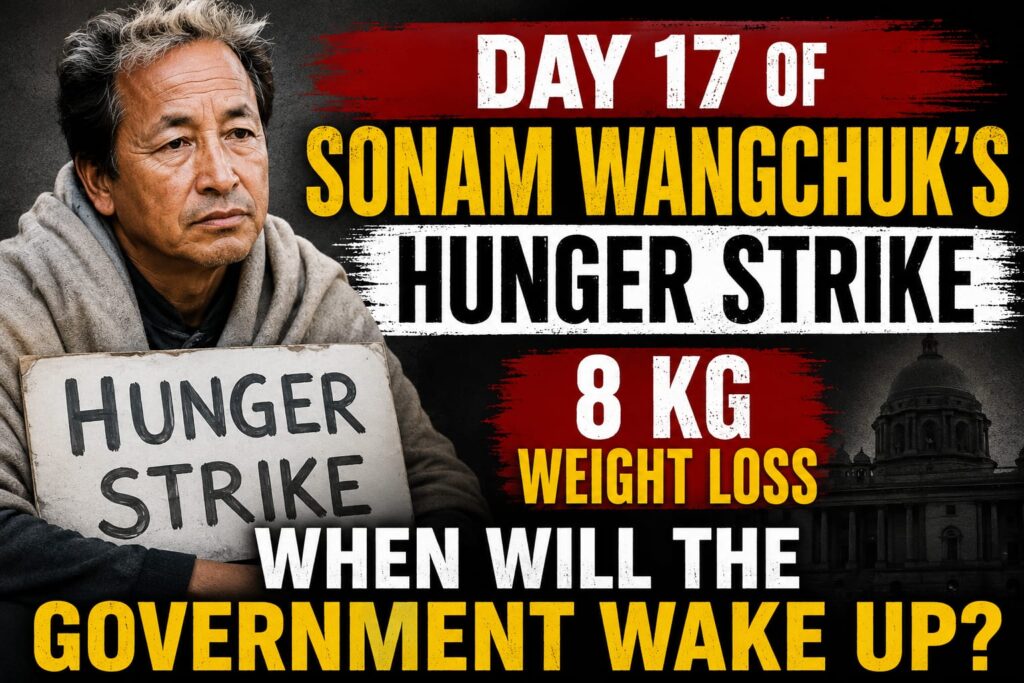
Hunger strike continues for the 17th day, 8 kg WeightLoss, raising concerns.
Ladakh social reformer and education reformer Sonam Wangchuk’s hunger strike has entered its 17th day. Among the ongoing protests at Jantar Mantar, the Cockroach Janata Party (CJP) has mentioned that Wangchuk has lost more than 8 kg so far. The organisation said that the effect of his hunger strike, which has been going on for a long time and involves only liquids, is clearly affecting his health. Sonam Wangchuk has been on an Endless hunger strike for the past few days, demanding his demands. The protesters are asking the central government to start talks and seriously consider their demands.
Wangchuk has long been raising constitutional, environmental and administrative issues that were clearly harming the future of youth. He says that effective policies should be made to protect the environment, local identity, and resources of the Himalayan region. For this purpose, they are continuously gathering public support and are now trying to raise their demands at the national level through a hunger strike.
On the other side, political conditions on this issue have also intensified. Opposition parties are demanding that the government start talks and take the health condition of the protesters seriously. Till now, no detailed official information has been issued by the government on this hunger strike of people asking for the justice to delivered to young generation.
Why is the demand for talks with the government increasing among the hunger strike?
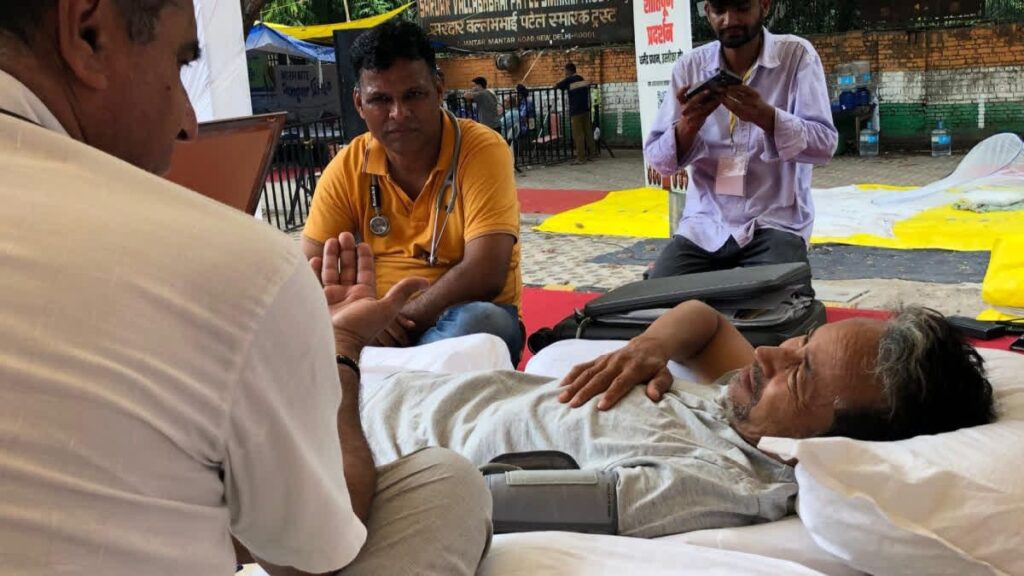
Sonam Wangchuk’s hunger strike at Jantar Mantar has now reached a point where his health has become the talk of the town more than the protest. The Cockroach Janata Party (CJP), which is leading the protest, has claimed that Wangchuk has lost more than 8 kg of weight during the 17-day fast, surviving only on liquid. The organisation says that the effect of continuous fasting is clearly visible on his health. Meanwhile, a student protester had to be hospitalised after his health deteriorated, further increasing the anxiety of those present at the protest site.
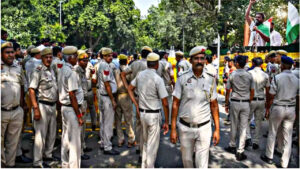
The protesters say that their protest is going on in a completely peaceful and democratic manner. They aim to draw the attention of the government towards their demands. Supporters believe that dialogue is the most effective solution in any democratic system, and now the central government should start talks with the troublemaker.
Opposition parties have also demanded the government to take initiative on this issue. He says that in view of the long-running fast, the government should adopt the path of dialogue while giving priority to health and humanitarian aspects. However, there has been no detailed official statement from the government regarding these latest developments so far.
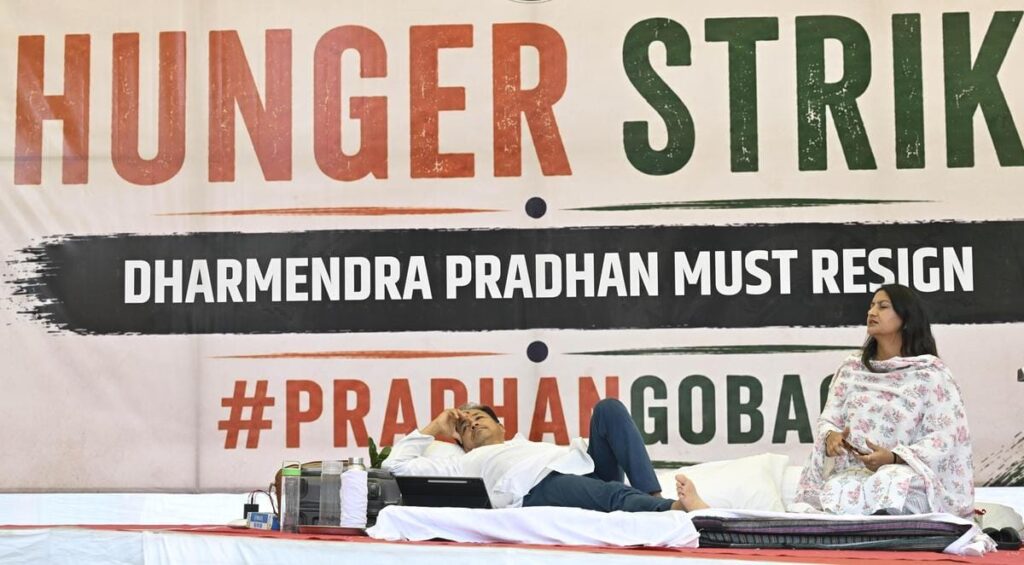
What will be the demands of the movement and the way forward?
Sonam Wangchuk has long been raising issues related to environmental protection, local representation and constitutional issues related to Ladakh. He says that concrete policy measures should be taken to protect the sensitive ecosystem of the Himalayan region and the interests of local communities. For this purpose he started an indefinite hunger strike.
After 17 days, this movement is no longer limited to demands only, but serious questions are also being raised about the health of the protesters. Experts believe that prolonged fasting can have serious effects on the body, so regular medical monitoring is necessary.
Now everyone’s eyes are on whether the government will start formal talks with the agitators or this deadlock will continue further. If talks take place, a path towards a solution may open, whereas if there is a delay, there is a possibility that the movement may get prolonged further.
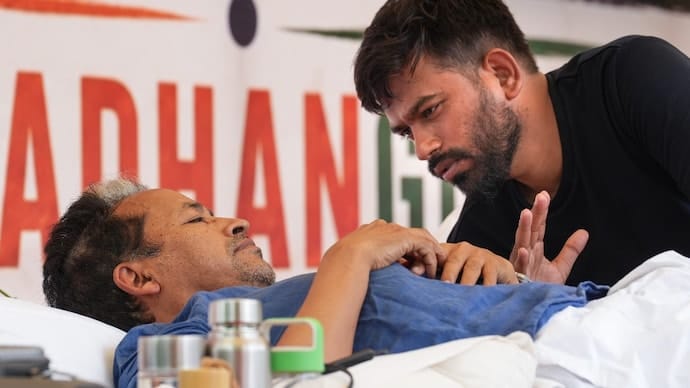
The fast has moved beyond political debate to become a humanitarian concern.
Sonam Wangchuk’s protest has now moved beyond political accusations and counter-accusations to become a humanitarian concern. The hunger strike that continued for 17 consecutive days and the claim of weight loss has also attracted the attention of health experts and social organizations. Any prolonged fast carries increased health risks, so medical monitoring of those involved in the movement is considered important.
Political analysts say that in such cases, dialogue is the most effective medium of the democratic system. If the government and the agitators sit face to face and talk, many issues can be resolved. The protesters are also continuously demanding that their voices be heard and their concerns be considered seriously.
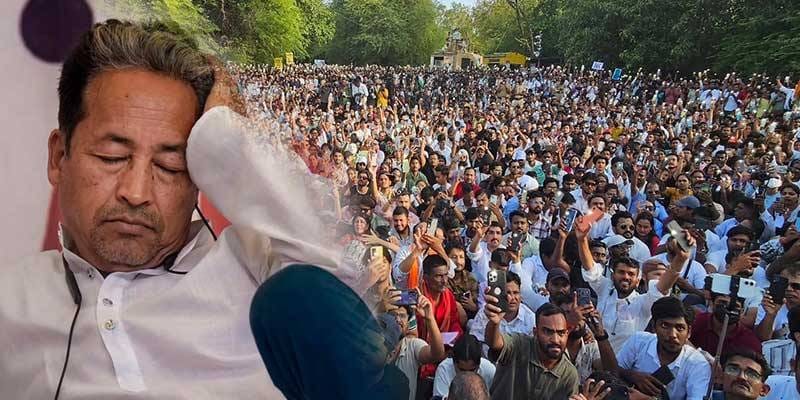
The biggest question after 17 days: will the government initiate dialogue?
The movement has reached a turning point as Sonam Wangchuk’s hunger strike completes its 17th day. Supporters say their demands are not limited to Ladakh, but touch on broader issues such as environmental protection, local participation and constitutional rights. On the other hand, everyone’s eyes are also fixed on the government’s next response.
At present the movement is continuing at Jantar Mantar. Protesters are reiterating their demands for dialogue, while health concerns continue to grow. Now the biggest question is whether the government will choose the path of dialogue to end this deadlock, or will this fast continue further. The coming days could prove decisive for this movement and the political and social developments associated with it.
After a 17-day long fast, the biggest question is whether the government will adopt the path of dialogue with the protesters or this deadlock will continue for a longer time. At present the movement is continuing at Jantar Mantar and the supporters say that their peaceful protest will continue until there is a positive initiative on their demands.