
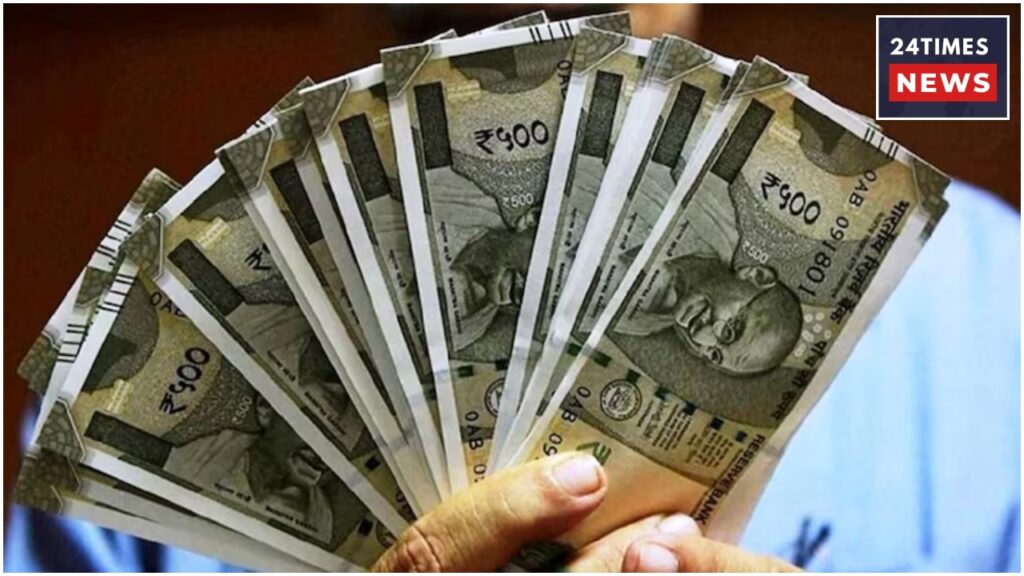
New Delhi: A major question remains: when will the Central Government implement the 8th Pay Commission? It is anticipated that the government might roll out the new Pay Commission next year, a prospect that has raised high expectations among many. The government has already initiated the formation of this commission. Under the 7th Pay Commission, the actual increase in employees’ salaries was only 14.3 per cent.
A significant portion of the fitment factor was utilised to absorb the Dearness Allowance (DA). Central government employee unions have demanded a fitment factor of 3.833. If the government agrees to such an increase, central government employees could see a substantial boost in their salaries. In any case, this development is set to be a major boon for central government employees and pensioners. Further details regarding this are provided below.

How much could salaries increase?
The 8th Pay Commission is expected to be a significant benefit for central government employees. The fitment factor operates in two stages: first, it incorporates the existing Dearness Allowance (DA) into the basic pay; second, any additional amount provided beyond this determines the actual salary increase. When the 7th Pay Commission was implemented, the fitment factor was set at 2.57.
At that time, a factor of 2.25 was used to merge the then-existing 125 per cent DA into the basic pay, which limited the actual salary increase to 14 per cent. If the 8th Pay Commission adopts a fitment factor of 3.833—against the current DA level of 60 percent—the effective fitment factor would be approximately 2.4. This could lead to a surge of nearly 1 per cent in the actual salaries of employees.
What will the basic salary amount be?
If the Central Government implements a fitment factor of 3.833, a substantial increase in the basic salary could be recorded. For instance, an entry-level employee in Pay Band-1 currently has a basic salary of ₹18,000, along with a Dearness Allowance (DA) of ₹10,800 (calculated at a rate of 60%).

Meanwhile, if a fitment factor of 3.833 is approved, the minimum basic pay would rise from ₹18,000 to approximately ₹69,000. This salary calculation is currently based on estimates; no final decision has been reached regarding the fitment factor.
Demand for changes to the formula
Employee unions are also demanding a revision to the formula used for determining salaries. In India, Pay Commissions set salaries based on the ‘Aykroyd nutritional formula.’ The 7th Pay Commission used this basis to set the minimum wage at ₹18,000, which accounted for the expenses of only three consumption units (a husband, a wife, and two children).
Employee unions have demanded that the scope of the family unit calculation be expanded to five units. They argue that this should mandatorily include the costs of food, living expenses, and medical care for employees’ dependent elderly parents.