Table of Contents
Introduction: An International Summit Turns into a Political Battlefield
The second Bharat Summit, held in November 2026 at the Hyderabad International Convention Centre and the HITEX grounds, was meant to be a landmark event for policymakers, business leaders, activists, and thinkers from across the world. The Congress party and the Telangana government, led by Chief Minister Revanth Reddy, envisioned it as a champion for global cooperation, economic justice, and policy innovation away from the usual right-wing agendas.
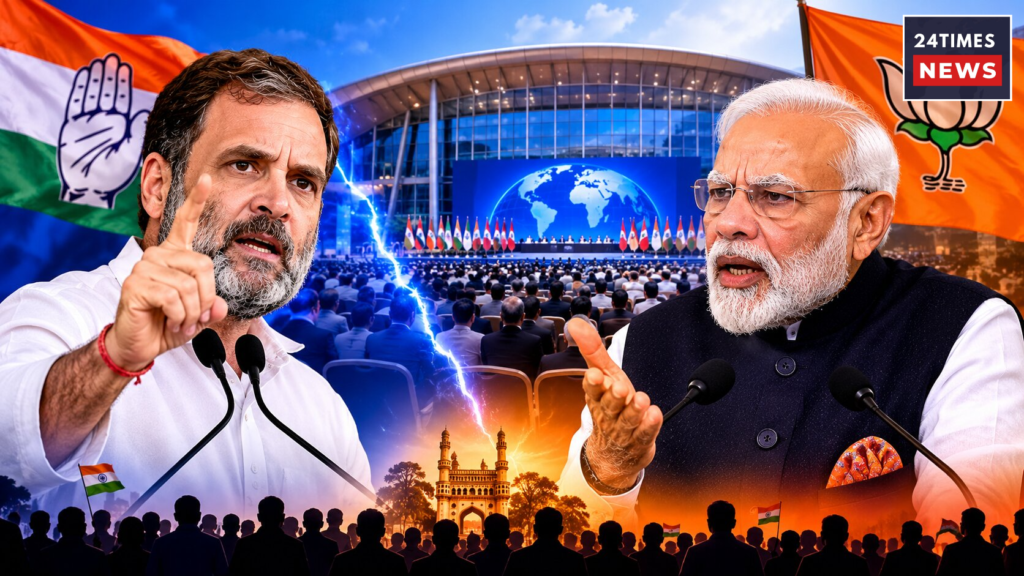
But the spirit of international dialogue barely made headlines. Instead, the summit became a noisy battleground, with fiery speeches and charged exchanges between the Congress and the Bharatiya Janata Party (BJP). The war of words, especially after Rahul Gandhi launched a sharp attack on the country’s current leadership, took over the entire event and sent shockwaves through the national political scene.
The Origins and Structure of Bharat Summit 2026
The core idea behind the Bharat Summit was to give leaders, scholars, and activists from around 70 countries a platform to discuss pressing issues facing India and the world. Over two days, more than a thousand delegates came together to talk about democracy, economic fairness, new technologies, climate change, and how countries of the Global South can work together more closely.
Some of the Congress’s top leaders set the tone for the conversations. Congress President Mallikarjun Kharge, Telangana’s Revanth Reddy, and key figures including Shashi Tharoor, Sachin Pilot, and Gaurav Gogoi all shared their visions for a just and equitable future. But it was Rahul Gandhi’s address that truly set things on fire.
Rahul Gandhi’s Speech: Calling Out the Decay in Indian Democracy
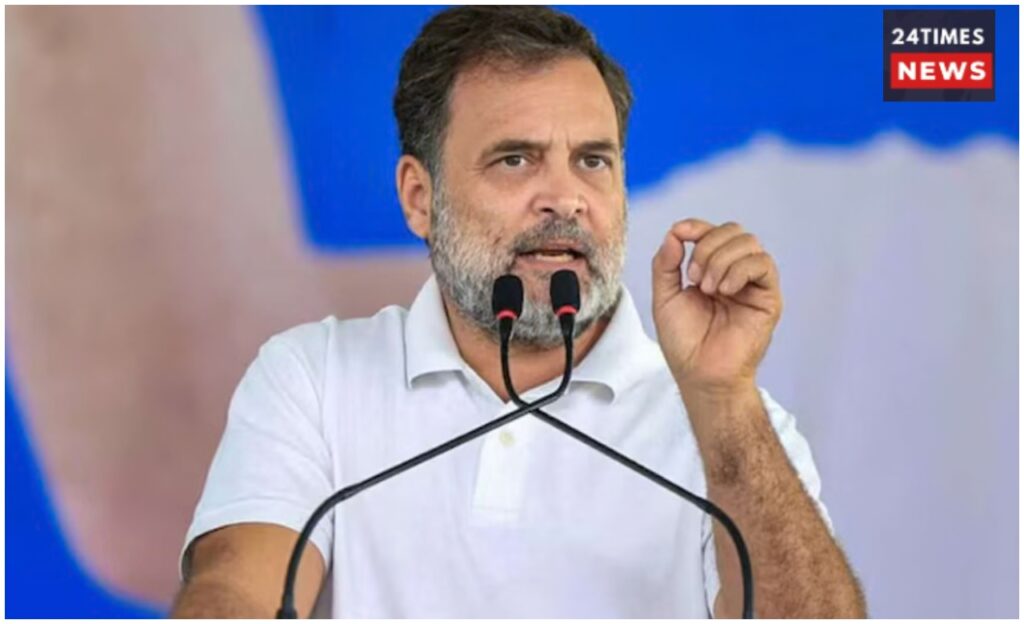
Rahul Gandhi took the stage on November 14 with a sense of urgency and moral responsibility. He went straight for the jugular. In his address, he claimed that India is “actually no longer a democracy,” pointing to what he called a “systemic shock” that began in 2014. According to him, the fundamental pillars that ensured fair elections and checks on power have been under consistent assault ever since.
He didn’t mince his words. Gandhi argued that authoritarian ideas, which he called “fascist,” have been allowed to grow and take root. He accused the current leadership of using loud rhetoric to shut down dissent, manipulating institutions, and forcing opposition voices out of the conversation. He insisted that these tactics weaken India’s vibrant democratic traditions and push the country toward dangerous territory.
He went on to illustrate that opposition parties and leaders across various states feel the bite of constant pressure whether it’s through investigations, the misuse of police powers, or changes to constitutional rules designed to favor the ruling party. Gandhi’s words were direct, emotional, and certain to stir outrage among political opponents.
The Core of Rahul Gandhi’s Claims
Rahul Gandhi’s main argument was simple, but explosive: since 2014, India’s political system has shifted so sharply that democracy, as the nation’s founders dreamed of it, is no longer recognizable. He described how the opposition was caught unprepared, and how this allowed the government to tighten its grip on every important lever of power.
He also spoke about global trends. According to Gandhi, history shows that authoritarianism and fascism only emerge when fundamental democratic systems are hollowed out. He urged his listeners to recognize the signs and act before it’s too late.
The BJP Counter-Attack: Questions, Accusations, and Demands
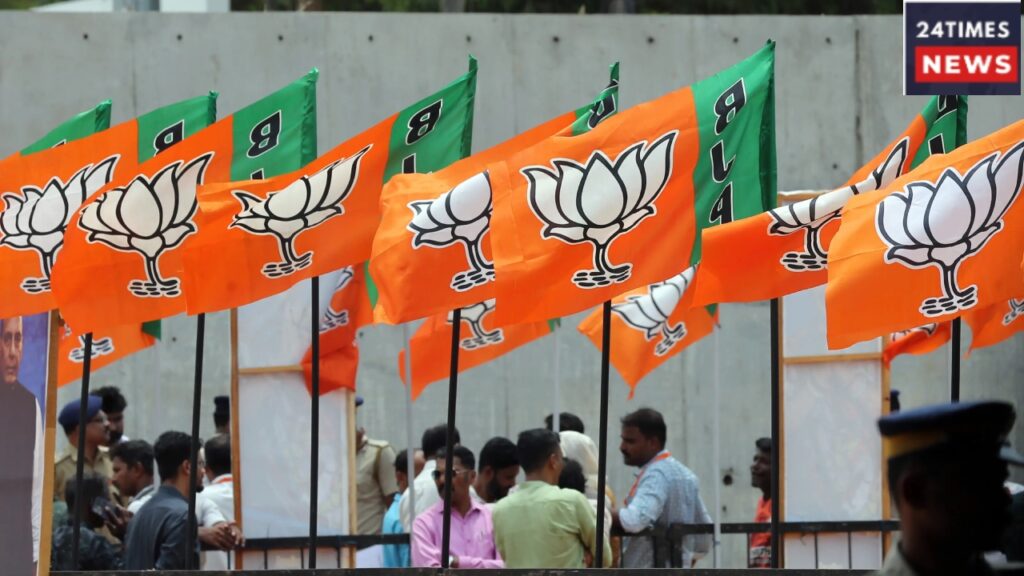
Hardly had the applause for Gandhi faded before the BJP began its own campaign of criticism and accusation. The ruling party took direct aim at the summit itself, the choice of speakers, and the sources of funding. They painted the event as a tool for laundering India’s internal disputes onto a global stage, with foreign players and money pulling strings behind the scenes.
The Controversy Around Guillaume Long
One of the most heated points of contention was the invitation to Guillaume Long, a former Ecuadorian foreign minister and a senior researcher with the Center for Economic Policy Research (CEPR). The BJP argued that the CEPR received significant funding from George Soros’s Open Society Policy Center a name that instantly sets off alarm bells in Indian politics.
BJP leaders recalled that earlier in 2025, the Enforcement Directorate had conducted raids linked to these same funding networks, citing violations of the Foreign Exchange Management Act. They implied that the Congress was using international connections and funding to interfere in India’s political process.
Raising the “Anti-India” Narrative
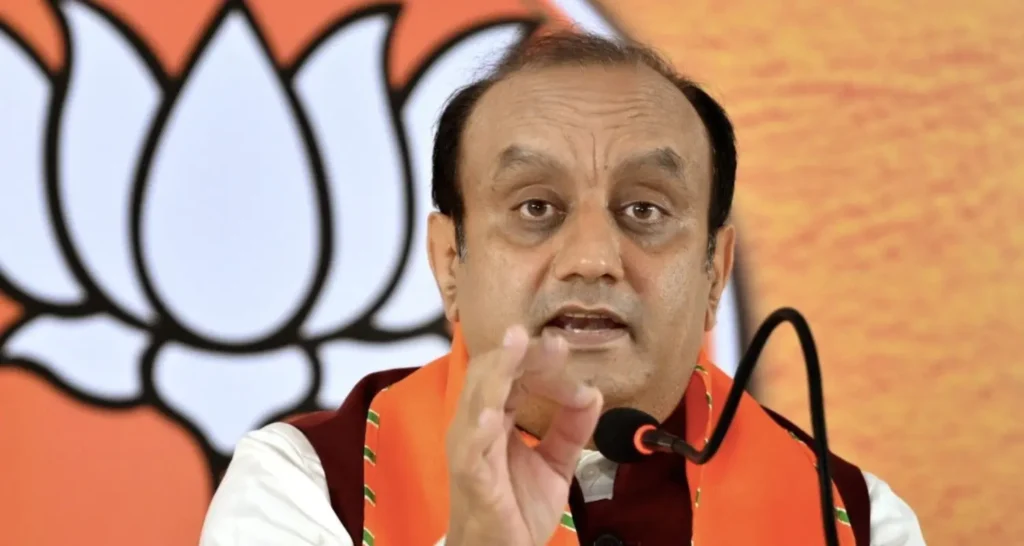
Senior BJP spokespersons, including Rajya Sabha member Sudhanshu Trivedi, cast doubt on the true goals of the Bharat Summit. Was it truly about dialogue and learning, or just another chance for Congress to present “anti-India” viewpoints on the world stage? Telangana BJP leaders went further, attacking the state government for spending public money on the summit and demanding a transparent account of every rupee spent.
The charge was clear: Congress wasn’t just looking for ideas, it was undermining the country’s interests with help from abroad.
Breakdown of Arguments and Their Impact
Let’s look at how these claims and counter-claims played out in the days following the summit.
Political Fallout
On one side, Congress leaders repeated their fears that the Indian democracy they love and fight for is being weakened from the inside, especially since 2014. They insisted that the summit’s international participation brought valuable perspectives to India’s struggle for justice and fairness.
On the other side, the BJP said the country is strong, its democracy is robust, and none of these claims have real evidence. They pointed to repeated electoral victories as proof that Indian people stand with them. At the same time, they used the international angle to their advantage, suggesting that Congress is desperate enough to seek foreign help to win arguments it can’t win at home.
This war of words quickly spilled into every national television debate, social media post, and editorial page. People across India picked sides, often echoing the lines drawn by these two main parties.
International Guests: Progress or Problem?
Congress leaders celebrated the diversity of global voices at the summit. They said it showed that India’s struggles and hopes resonated far beyond its borders, and that international support could help build bridges for the future.
The BJP, though, pounced on the foreign guest list. Instead of global cooperation, they saw it as a sign of Congress relying on outsiders to build pressure at home. They questioned some of the affiliations and demanded tighter rules and scrutiny on funding for NGOs and summits like Bharat, citing national security concerns.
State Governance Under Scrutiny
Telangana’s government, host and co-sponsor of the summit, positioned itself as a role model for decentralized, people-first democracy. BJP leaders, however, saw it as a misuse of public funds for political showmanship. The question of state spending became a flashpoint, with the opposition demanding detailed records and audits.
Wider Implications for Indian Politics
What does all this mean beyond headlines and social media squabbles?
The summit highlighted just how deep India’s political divide has become. The Congress, by involving delegates from 70 countries, signaled its intent to frame the fight over India’s democracy in global terms. They want the world to pay attention and weigh in as India’s institutions, in their view, come under attack.
The BJP, far from being defensive, is turning the international angle into a powerful tool. They’re determined to show that Congress and any opposition alliances are so out of step with everyday Indians that they have to seek backup from abroad. To their supporters, this paints Congress as weak and out of touch.
What’s clear is that this kind of institutional polarization will only grow in the months ahead. As India moves through new rounds of elections, debates about the independence of institutions, the meaning of democracy, and the influence of foreign money are going to heat up even more.
Conclusion: A Divided Nation, An Unfinished Conversation
The Bharat Summit 2026 was supposed to be a forum for new ideas and global cooperation. Instead, it laid bare India’s political wounds for all to see. The fight between Rahul Gandhi’s pointed critique and the BJP’s aggressive defense made it clear that deeper ideological rifts are shaping not just parties, but the very soul of Indian democracy.
The debate over what happened at the summit will continue online, in parliament, and in the cities and villages where India’s future is being written every day. For now, the only certainty is that the conversation is far from over and its outcome could set the tone for India’s next chapter.