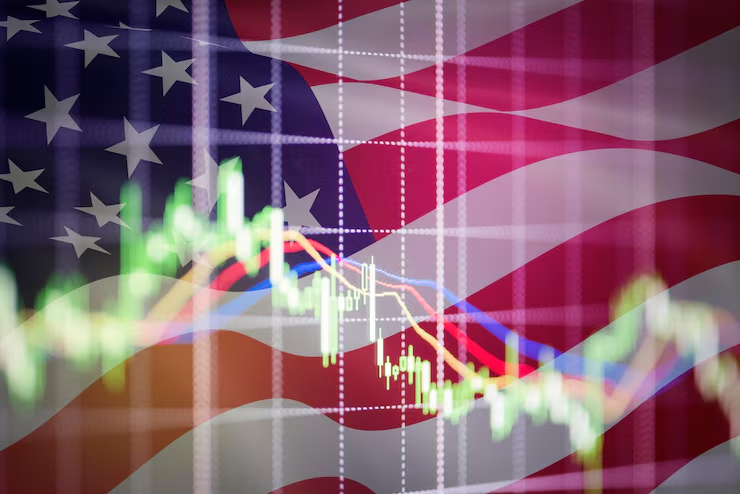
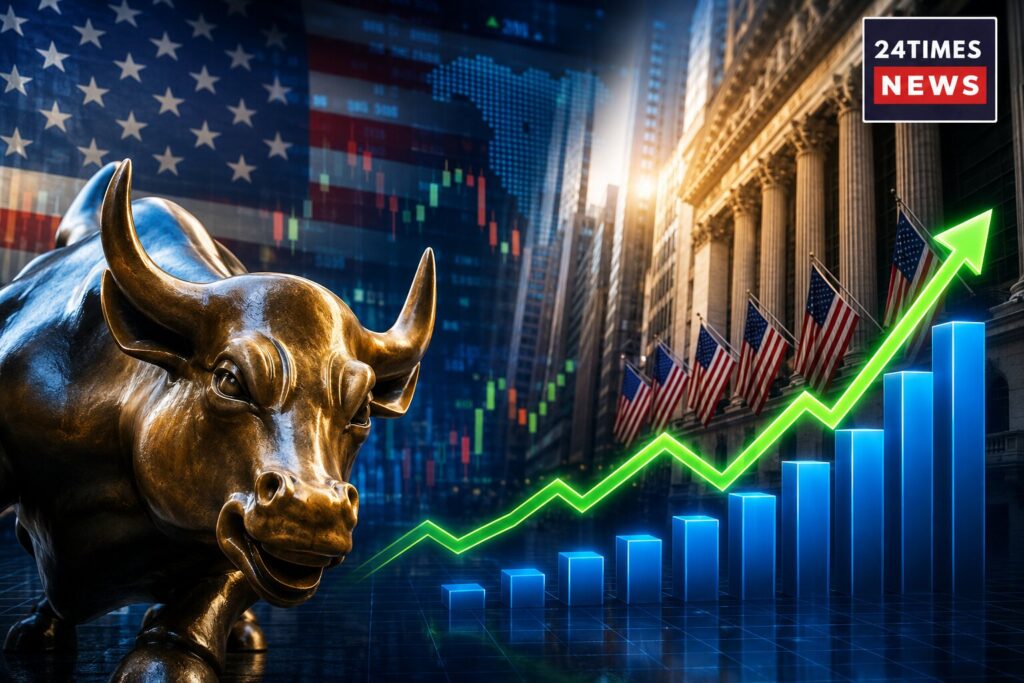
On Friday, September 4, 2026, U.S. stock markets ended a shaky week with an uneven finish. Trading stayed bumpy all day as investors wrestled with stronger-than-expected jobs numbers for August, higher Treasury yields, concerns about tensions in the Middle East, and split performances in the tech sector. People on Wall Street were looking for signals on what the Federal Reserve might do next about interest rates, especially with the big FOMC meeting coming up right after the Labor Day holiday.
Table of Contents
Markets at a Glance
The Dow Jones Industrial Average lost 271 points and closed the day at 53,414, dragged down by falling shares of Apple, Microsoft, and Alphabet. The S&P 500 slipped too down 0.38 percent to 7,718.60 as gains in chip stocks were outweighed by losses in consumer, financial, and software giants. The Nasdaq Composite managed a small gain, ending up 0.2 percent, as semiconductor and AI stocks jumped sharply. On the flip side, small-cap stocks struggled, with the Russell 2000 dropping 1.4 percent thanks to higher bond yields making borrowing tougher for smaller companies.

Here are the final numbers for Friday:
- Dow Jones: 53,414.25 (down 0.51% for the day)
- S&P 500: 7,718.60 (down 0.38%)
- Nasdaq: 26,506.99 (up 0.20%)
- Russell 2000: 2,410.15 (down 1.40%)
Jobs Report Sparks Market Jitters
The biggest news of the day was the August Jobs Report. The U.S. added 162,000 jobs last month, much more than most experts thought (they expected just about 53,000 to 60,000). This was the strongest job growth since March. The unemployment rate stayed at 4.1%, perfectly matching forecasts.
Wages grew by 0.3 percent for the month, keeping the yearly increase near 3.8 percent.
So, what does all this mean? Some investors saw the jobs gains as proof that the economy is healthy. But with stronger hiring, the Federal Reserve is less likely to cut interest rates soon. Fears grew on Wall Street that the Fed might keep borrowing costs high to keep inflation under control.
After the report, traders raised their expectations for another Fed rate hike or, at least, a longer pause on cuts. The chance of more tightening at the September Fed meeting jumped above 60 percent. That sent the 10-year Treasury yield up toward 4.8 percent, making borrowing even more expensive.
Stock Standouts: Winners and Losers
Semiconductor stocks were the big winners on Friday, with companies like Sandisk soaring 11.9 percent and Marvell Technology rising 7 percent. Micron Technology also bounced back 6.1 percent. These gains came on the back of strong predictions for chip demand, especially for memory storage and AI hardware. Intel and AMD did well, too, moving up around 4.5 to 4.7 percent each. Nvidia, a big name in AI chips, rose 0.8 percent and helped steady the Nasdaq.
On the other hand, heavyweight tech names didn’t have a great day. Apple dropped 2.55 percent after reports about possible supply chain issues and lower targets for its next wave of devices. Tesla fell 5.9 percent as higher auto-loan rates are making buyers hesitate. Both Alphabet and Microsoft were down around 2 percent.
Retailers also took a hit. Lululemon plunged nearly 17 percent after lowering its outlook for the rest of the year, blaming slower traffic and more competition.
Sector Performance
Out of the main S&P 500 sectors, Utilities and Information Technology hardware did best. Investors leaned toward more defensive, reliable picks like utilities, which rose by 0.42 percent. Information technology stocks got a boost thanks to chipmakers, even as software names dragged them down.
The worst sectors on Friday included financials, communication services, and consumer discretionary (stores, cars, consumer brands). Rising rates hurt banks and credit card companies, with Visa and JPMorgan both ending lower. The consumer discretionary sector fell the most, weighed down by Tesla and Lululemon.
Bonds, Commodities, and Currency Moves
Bond yields shot higher after the jobs news, with the 10-year U.S. Treasury near 4.8 percent and the 2-year at 4.42 percent. These rising yields reflect growing expectations of higher rates from the Fed.
The oil market cooled a bit after a wild week. West Texas oil closed at $90.45 a barrel, while Brent crude hovered under $95. Even though prices slipped, ongoing Middle East concerns kept oil traders on alert for more surprises.
The U.S. dollar got stronger against other currencies, while Bitcoin slipped almost 2 percent to $79,619 as traders moved away from riskier assets.
Market Breadth and Trading Desk Wrap-Up
It was a tough day for most stocks. On the New York Stock Exchange, more stocks fell than rose, with about 1.8 losers for each winner. The Nasdaq also saw more decliners than gainers. For the week, the S&P 500 only saw one new 52-week high and four new lows, while the Nasdaq posted 15 new highs and 38 new lows.
Looking Ahead
Monday is a holiday for Labor Day, so U.S. financial markets will take a break and reopen on Tuesday, September 8. Investors will be watching closely for the next round of inflation reports (CPI and PPI), to see if rising consumer prices will keep the Fed on the fence about interest rates.
And don’t forget, September is often a wild month on Wall Street. Past patterns show the market can get rocky, especially in the second half of the month. So, traders are likely to stay on their toes as summer fades and fall gets underway.