Table of Contents
Rajbhar questions Akhilesh Yadav’s women’s allowance promise
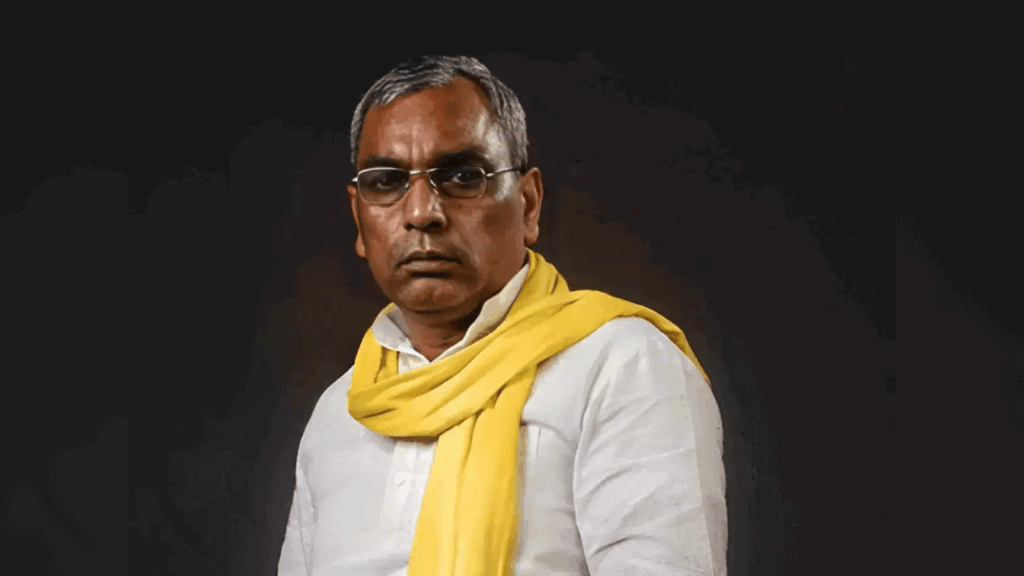
Ahead of the 2027 Uttar Pradesh Assembly elections, the wave of political promises and claims regarding women has intensified. Samajwadi Party chief Akhilesh Yadav recently announced the ‘Stree Samman Samriddhi Yojana’ for women, promising to give ₹40,000 annually to every woman. After this announcement, now Uttar Pradesh Cabinet Minister and Suheldev Bharatiya Samaj Party chief Om Prakash Rajbhar has targeted Akhilesh Yadav.
Referring to Akhilesh Yadav’s previous tenure, Rajbhar questioned what he did for backward classes, Dalits, women and youth when he was the Chief Minister of Uttar Pradesh for five years. Rajbhar alleged that such promises are being made now at the time of elections, whereas these sections did not get adequate priority while in power.
Rajbhar’s comment comes at a time when all the major parties in Uttar Pradesh politics are preparing their strategies regarding women voters. Akhilesh Yadav’s announcement is being seen as an important part of the Samajwadi Party’s election strategy, while the ruling camp is raising questions on the practicality of such promises and the record of the previous government.
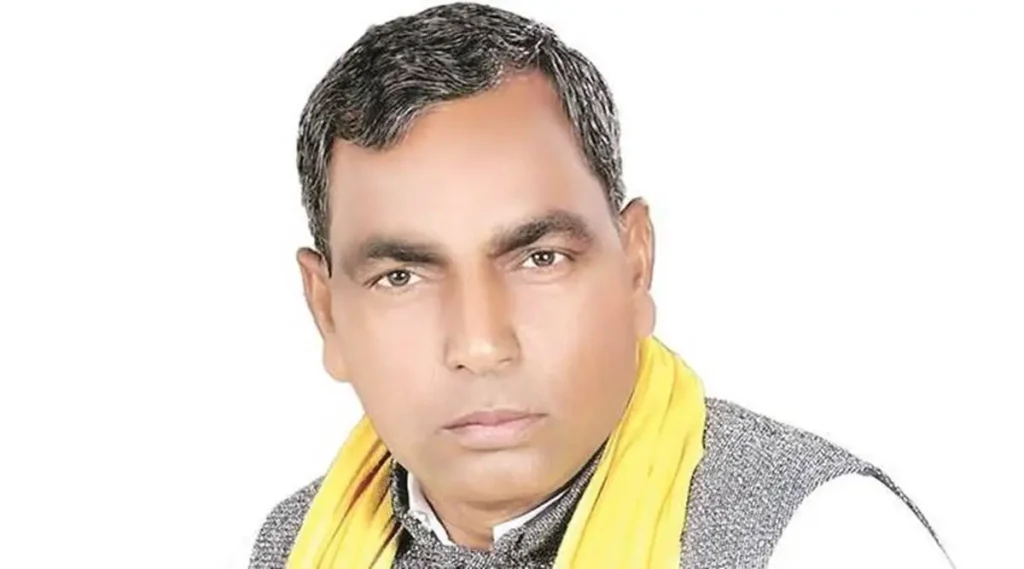
Akhilesh Yadav has promised to give ₹40,000 annually.
While releasing the Samajwadi Party’s manifesto for the 2027 Uttar Pradesh Assembly elections, Akhilesh Yadav announced the “Stree Samman Samriddhi Yojana” for women. Under this, a promise has been made to provide financial assistance of ₹40,000 annually to women. The party has presented it by linking it with the economic independence and respect of women.
The SP chief also highlighted his party’s priorities for women, the ‘half population’. She has tried to put issues related to women’s safety and economic participation at the centre of the election debate.
Apart from this, Akhilesh Yadav has also promised to restart the laptop distribution scheme for students. He said that work will also be done on the plan to provide laptops to girl students who pass the intermediate examination. In this way, both women and youth have been given prominence in the election promises of SP.
Rajbhar raised the issue of Akhilesh Yadav’s five-year rule.
Om Prakash Rajbhar, reacting to Akhilesh Yadav’s announcement, referred to his tenure as Chief Minister. He raised the question that what steps did Akhilesh Yadav take for backward classes, Dalits, women and youth during his five years in power in the state.
Rajbhar’s attack focused directly on the comparison between the SP’s governance record and its current election promises. He argues that instead of making big promises as elections approach, political parties should also give account of their past performance.
Rajbhar’s comment is being seen as part of the political rhetoric that has started ahead of the 2027 assembly elections. As the election contest in Uttar Pradesh draws closer, different parties are raising questions about each other’s promises and past records.
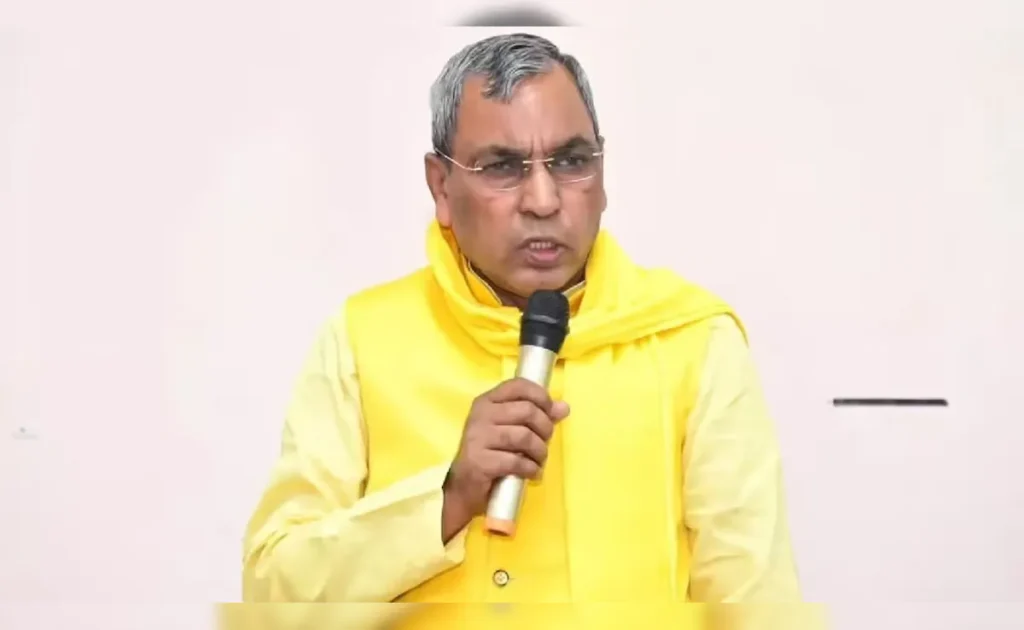
All parties are eyeing women voters.
In a large state like Uttar Pradesh, women voters are a crucial part of any election strategy. This is the reason why political parties are continuously bringing issues related to women’s safety, economic assistance, employment and social participation into the electoral debate.
Akhilesh Yadav’s promise of giving ₹40,000 annually can also be seen in the context of this broader political strategy. SP is linking it to the economic empowerment of women, while opposition parties may question the practicality and financial impact of such announcements.
Rajbhar’s latest comment takes this political debate forward. He emphasizes that before making announcements for women, political parties should also present before the public the evaluation of the work done by them during their previous tenure.
Rajbhar also mentioned the ‘Lakhpati Didi’ initiative.
In his response, Rajbhar also mentioned the central government’s ‘Lakhpati Didi’ initiative. He compared it with Akhilesh Yadav’s announcement, linking it to providing employment and income opportunities to women.
He said that the Central Government’s schemes are already underway to provide assistance to women’s accounts and provide them employment opportunities. On this basis, he raised questions on the new promise of SP and said that it should be seen in the electoral context.
However, different political parties are presenting schemes related to financial assistance and employment for women from their own perspective. In such a situation, this issue may become more prominent in the electoral discussions of Uttar Pradesh in the coming times.
Political rhetoric intensifies ahead of the 2027 elections
Political parties have intensified their preparations for the 2027 Uttar Pradesh Assembly elections. Manifestos, welfare schemes and promises made to different social classes are now gradually coming to the centre of political debate.
After the announcements made by SP regarding women and students, reactions from the leaders of the ruling camp are also coming to the fore. Rajbhar’s statement has come in this sequence, in which he has raised questions by linking the current promises of SP with its previous rule.
In the coming months, issues related to women’s safety, employment, financial assistance and youth can play an important role in the electoral politics of Uttar Pradesh. Political parties can reach out to different social groups through these issues.
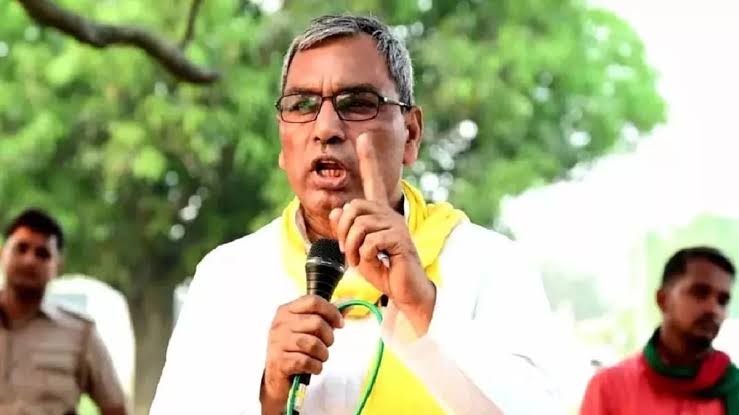
Rajbhar attacks Akhilesh Yadav’s promise, political debate to escalate
Om Prakash Rajbhar has raised the issue of Akhilesh Yadav’s previous regime, questioning his promise to provide ₹40,000 annually to women. Rajbhar said that along with the election announcements, it should also be seen what the concerned government had done for women, youth, Dalits and backward classes while in power.
At the same time, the announcement made by Akhilesh Yadav regarding women’s welfare is an important part of SP’s strategy for the 2027 assembly elections. With the ‘Stree Samman Samriddhi Yojana’, the party has promised financial assistance to women and has presented it by linking it with the respect of ‘half the population’.
Now, political rhetoric on this issue is likely to continue. As the elections draw closer, political parties will try to outdo each other in terms of their models and track records on promises related to economic support, security and employment for women.