Table of Contents
Vijay’s stance on the delimitation issue has sparked a political uproar in Tamil Nadu
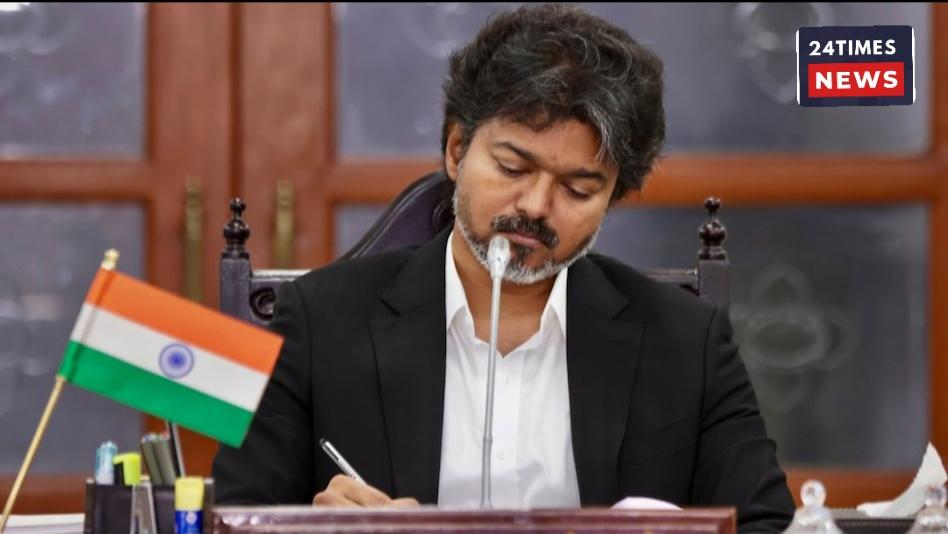
Tamil Nadu Chief Minister Vijay’s stance on delimitation has sparked a new controversy in the state’s politics. Opposition parties have accused him of changing his stance and called it a ‘U-turn’. The reason for the controversy is that in his latest stand, the Chief Minister did not reiterate the resolution passed in the Assembly on August 12, in which a demand was made to permanently maintain the number of 543 seats in the Lok Sabha.
The issue of delimitation has already been a sensitive political topic in Tamil Nadu. Political parties in the state have argued that states that have performed better in population control should not be disadvantaged in future redistribution of Lok Sabha seats. It was against this backdrop that the demand was raised to maintain the existing number of seats in the Assembly.
The opposition has described the alleged change in Vijay’s stance as politically significant. Opposition leaders say that when a clear resolution has been passed in the Assembly, the Chief Minister should have stuck to the same demand. Now this controversy is also raising questions about Vijay’s position in Tamil Nadu politics and his political priorities.
What was in the Assembly resolution of August 12?
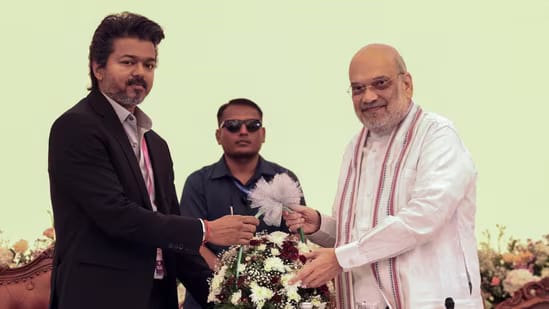
The Tamil Nadu Assembly had passed a resolution on the issue of delimitation on August 12. In this, a demand was made to permanently freeze 543 seats of the Lok Sabha. The main concern behind the proposal was that future redistribution of seats based on population might affect the political representation of the southern states.
This issue is not being seen merely as a matter of electoral mathematics in the state. It is also being linked to population control, federal structure and political representation of states. Many leaders of South India including Tamil Nadu have been expressing their concerns on this issue for a long time.
In such a situation, the resolution of the Assembly was seen as the collective political position of the state. Vijay’s subsequent stance has become a basis for the opposition to raise questions in the same context.
Why did the opposition accuse of ‘U-turn’?
Opposition parties say Vijay should have clearly reiterated the demand made in the Assembly resolution. According to him, the demand for permanent retention of the number of Lok Sabha seats is linked to the interests of Tamil Nadu and there should not be any ambiguity on this.
The opposition has linked Vijay’s latest stance to his earlier political stance. He alleges that after coming to power, a change is visible in the language and priorities of the Chief Minister.
However, not repeating a demand in a statement is not in itself evidence of a formal withdrawal from that proposal. Therefore, any further clarification from Vijay in this entire controversy could be important.
Why is delimitation so important for Tamil Nadu?
Delimitation means redrawing the boundaries of electoral constituencies and the structure of representation. There has long been concern in the southern states about the possibility of redistribution of seats based on population.
States like Tamil Nadu argue that after the steps taken for population control and social development, if Lok Sabha seats are distributed in future only on the basis of population, then better performing states may suffer in terms of political representation.
For this reason, delimitation in the state is being seen as linked to political and federal rights. Vijay’s stance has come amid this widespread debate, hence the political reaction to his statement has also intensified.
Vijay now faces the challenge of clarifying his stance.
The current controversy is significant for Vijay because, early in his government’s term, his position on a major constitutional and political issue like delimitation has come under scrutiny. After the opposition’s allegation of ‘U-turn’, the demand for clarification from the government may increase.
If Vijay makes it clear that he still supports the August 12 Assembly resolution, it could help defuse the controversy. On the other hand, if their stand is different from the proposal, the opposition will not shy away from making it a political issue.
The issue of delimitation already holds emotional and political significance in Tamil Nadu politics. In such a situation, political parties are closely watching every statement of Vijay.
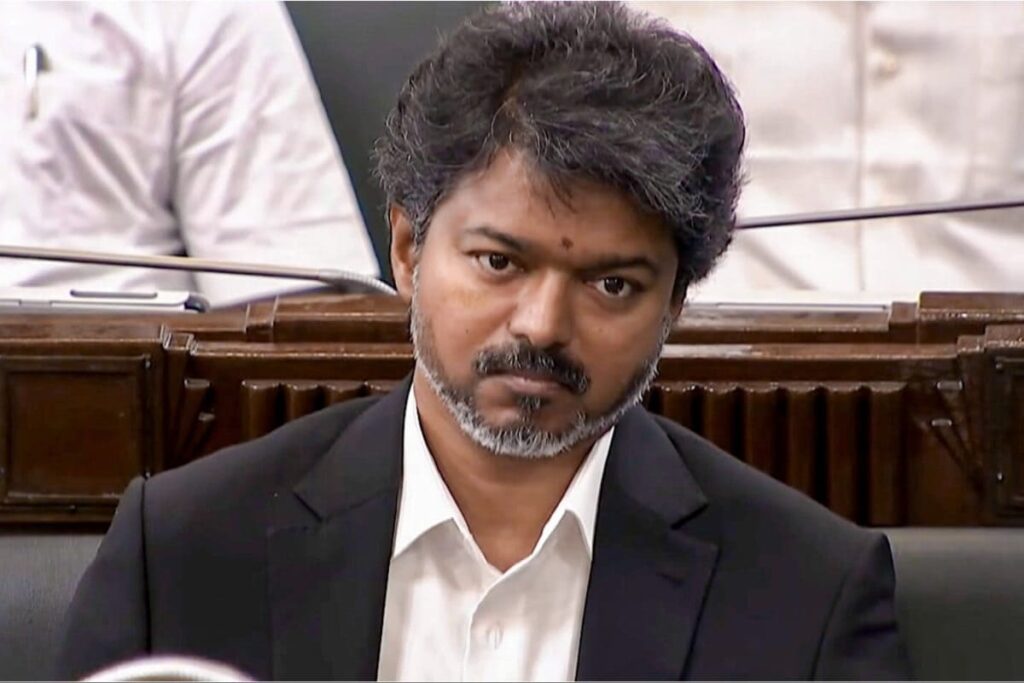
The delimitation dispute also casts a spotlight on Vijay’s political landscape.
Vijay’s stance on delimitation has sparked a new debate in Tamil Nadu politics. The opposition has immediately made a political issue of the apparent discrepancy between the resolution passed in the Assembly and the Chief Minister’s subsequent statement.
The next phase of this controversy will depend on Vijay’s clarification and the official stand of his government. It will be particularly important to clarify whether his government continues to support the demands of the resolution passed on August 12 or adopts a new stance on the issue.
At present, certainly, the issue of delimitation is not just a question of the number of seats in Tamil Nadu. This is a subject related to the political representation of the state, population policy and Centre-State relations. Therefore, Vijay’s stance may remain the centre of discussion in state politics in the coming days also.