Table of Contents
Why did the Satishan government’s stance on the restructuring of the Waqf Board create controversy?
The stand taken by the Congress-led UDF Satishan government in Kerala on the restructuring of the Waqf Board has sparked political and social debate. The government recently indicated that the board may be reconstituted in line with the amended Waqf Act of 2025. This law provides for the inclusion of two non-Muslim members on the state Waqf Board.
This stance of the government has caused resentment among the Indian Union Muslim League (IUML) and some Muslim organizations. The IUML is a key constituent of the Congress-led UDF alliance. The party says that it has been opposing the inclusion of non-Muslim members in the Waqf Board. The recent order of the Kerala High Court is also in the background of the controversy. The court prima facie held that the present composition of the State Waqf Board was not in accordance with the amended law of 2025 as it did not have two non-Muslim members and representation of certain specified communities. After this, there was judicial intervention regarding the functioning of the board also.
This situation has now become a political challenge for the Satishan government. On the one hand, the government has to keep in mind the court order and the provisions of the existing law, while on the other hand, opposition is also coming from its main ally IUML and Muslim organizations. IUML argues that the question of including members of other religions in institutions dealing with religious matters is sensitive. The party leaders have also said that just as people of other religions are not included in the administration of other religious institutions, similarly the appointment of non-Muslim members in the Waqf Board is also not appropriate.
At the same time, the government’s stand is linked to the legal process and court instructions. In such a situation, the Congress-led government faces the challenge of striking a balance between the political sensitivity of the alliance and legal compliance. The issue of Waqf Board has already been sensitive in Kerala politics. Now the controversy over the formation of the board is also exposing the political differences within the UDF.
The question at present is how the Satishan government implements the court’s directions and the provisions of the amended law and what will be its next step regarding the objections of IUML and Muslim organizations. This entire controversy can affect not only the formation of the Waqf Board but also the internal politics of the UDF alliance.
What objection do IUML and Muslim organisations have with the stand of the Satishan government?
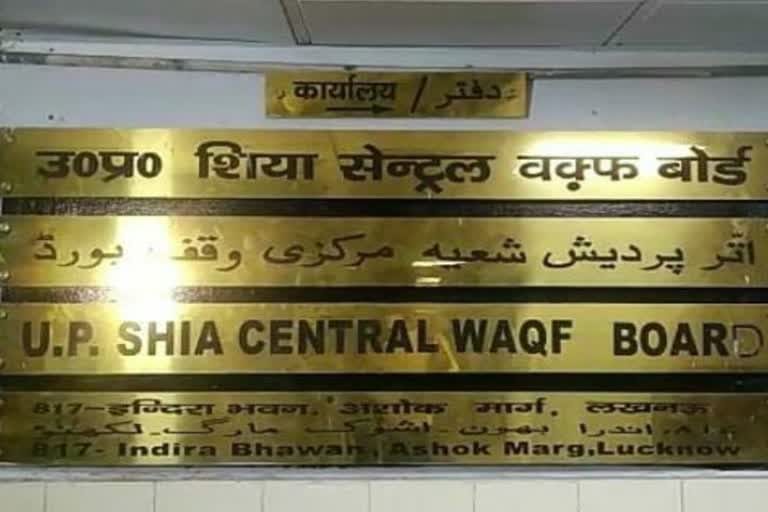
The main reason for the anger of IUML and many Muslim organizations is the government’s consent regarding the reorganization of the Waqf Board. Under the amended law, there is a provision to include two non-Muslim members in the board. Muslim organisations argue that the Waqf is a religious institution and the question of including non-Muslim members in its administrative structure is linked to religious autonomy.
IUML’s opposition is also significant because it is a key ally of the Congress-led UDF alliance. In such a situation, clear differences are visible between the stand of the government and the position of the ally party.
IUML leaders say the provision of appointing non-Muslim members to the Waqf Board cannot be accepted. They argue that if members of other religions are not included in the administration of other religious institutions, then why should there be a different arrangement in the case of Waqf Board.
On the other hand, the government faces the challenge of complying with the legal position. After the court order and the provisions of the amended law, it will not be easy for the government to completely ignore this issue.
What political challenge does the Waqf Board controversy pose to the UDF alliance?
The controversy over the Waqf Board could increase political discomfort within the UDF. The differences between the Congress-led government and the IUML on the issue have put coordination within the coalition to test.
The IUML has significant influence in Kerala politics and the party has consistently played an active role on issues concerning the Muslim community. In such a situation, its opposition to the formation of the Waqf Board is politically sensitive for the government.
If the government reconstitutes the board in accordance with the amended law, the resentment of IUML and Muslim organisations may increase. At the same time, if the government steps back in view of the objections of the coalition partner, then questions may arise regarding its legal position and the court’s instructions.
This balance has become the biggest challenge before the Satishan government. The government’s final decision in the coming days will determine whether the controversy remains confined within the UDF or becomes a major issue in Kerala politics.
What is the biggest challenge before the Satishan government on the issue of Waqf Board?
The biggest challenge before the Satishan government regarding the reorganization of the Waqf Board is to strike a balance between the legal process and political pressure. On the one hand, the provisions of the amended law and the court’s directions are before the government, while on the other hand, clear objections have been expressed by UDF’s key ally IUML and several Muslim organisations.
If the government reconstitutes the Waqf Board in accordance with the amended law of 2025, the resentment of IUML and Muslim organisations may increase. This is likely to create political discomfort within the alliance. On the other hand, ignoring the law and judicial directions is also not an easy option for the government.
This is why the issue is no longer merely an administrative or legal decision. Its political implications could also be widespread. The government will have to decide how it addresses the concerns of its coalition partner while complying with the court orders.
What next? Will the Waqf Board controversy increase tensions within the UDF?
Differences between the government and IUML over the restructuring of the Waqf Board may impact UDF politics in the coming days. For the IUML, the issue is important at both religious and political levels, while the government has the responsibility to follow the law and judicial process.
If the two sides fail to reach an agreement, the dispute could escalate into a major political rift within the alliance. However, it will also be important for the UDF constituents to maintain the unity of the alliance.
The reaction of Muslim organizations and the opposition to the possible move of the government will also be important. At the same time, IUML can decide which political strategy it adopts to increase pressure on the government.
At present, the issue of Waqf Board has become a sensitive political test for the Satishan government of Kerala. Now the final decision of the government will decide whether the dispute proceeds through the legal process or further escalates the political tug-of-war within the UDF.