

Table of Contents
The Lack of Accountability Within the NTA: Is it time to make the National Testing Agency more accountable?
The role of the National Testing Agency (NTA) has grown phenomenally in the last few years. This institution, which conducts many major entrance examinations of the country, influences the future of millions of students. But after recent controversies, examination irregularities and administrative challenges, The Lack of Accountability Within the National Testing Agency has become a subject of serious public debate. Experts say that the lack of accountability within the National Testing Agency is not just an administrative problem but a question related to institutional accountability.
Many academics believe that due to The Lack of Accountability Within the NTA, adequate attention is not given to the rights of students and the grievance redressal mechanism. This is the reason why the discussion regarding The Lack of Accountability Within the National Testing Agency has intensified at the legal and political level. Critics argue that the lack of accountability within the NTA is a result of the structural arrangement in which the agency was not established through a specific Act of Parliament, but operates as a registered society.
The NTA was established in 2017 with the aim of making entrance examinations across the country more transparent, professional, and standardized. Over time it took over the responsibility of NEET, JEE, CUET and many other important exams. However, with the increasing scope of the organization, questions have also started being raised about its accountability.
Experts say that when an institution impacts millions of students, it is essential to have a clear accountability system for its operations and decisions. Currently, many critics argue that the grievance redressal mechanisms available to students are not effective enough.
In recent years, exam postponements, technical glitches, allegations of paper leaks and administrative errors have further fuelled the debate. Although the National Testing Agency has denied these allegations on several occasions and claimed to have taken corrective steps, critics are demanding more institutional reforms.
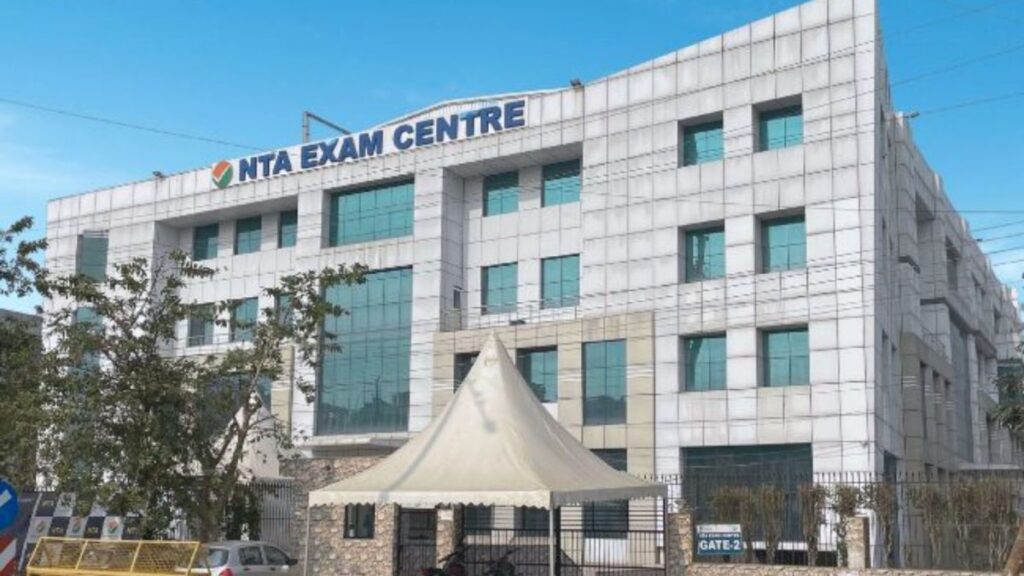
5 Key Questions Raised About NTA’s Accountability
- Formed as a Society Instead of a Parliamentary Act
National Testing Agency was established not through a Parliamentary Act but as a registered body under the Societies Registration Act, 1860.
Critics argue that this limits its legal accountability. He believes that there should be a clearer legal framework for such a large examination body.
- Lack of clear accountability to students
Millions of students appear for examinations conducted by the NTA every year.
Experts say that if an exam faces technical or administrative problems, the accountability mechanisms and compensation arrangements available to students do not appear clear.
- Questions about the grievance redressal system
Student organizations and parents have repeatedly called for strengthening the grievance redressal process.
They argue that a more transparent and time-bound resolution process is essential for issues affecting a large number of candidates.
- Increasing responsibilities bring increasing challenges
The NTA now conducts many of the country’s largest entrance examinations.
According to experts, along with expanding the scope of work of the organization, it is also necessary to continuously strengthen its administrative and technical capabilities.
- Calls for Institutional Reform
Following recent controversies, many academics and policy experts have stressed the need for comprehensive reforms.
These include suggestions such as independent monitoring mechanisms, greater transparency and stronger accountability frameworks.

How the NTA became one of India’s most important testing bodies and why the debate over accountability has escalated
The original purpose of establishing the National Testing Agency was to make the conduct of entrance examinations more professional and modern. Earlier, different institutions used to conduct different examinations, which led to disparity in procedures and administrative complexities. NTA was developed as a centralized examination agency to ensure standardization at the national level.
The role of National Testing Agency has steadily increased over time. Today it conducts examinations on which the academic and professional future of millions of students depends. For this reason, every decision of the organization has a wide impact.
Experts say the credibility of any examination system depends not only on its results but also on how it deals with errors and complaints. If problems arise with an exam, students should have confidence that their complaints will be heard in a fair and transparent manner.
The controversies surrounding various competitive examinations in recent years have tested this belief. Allegations of paper leaks, technical glitches, complaints related to examination centres and controversies over results have often become the subject of public discussion. Although the circumstances of each case have been different, these incidents have strengthened the demand for accountability.
Legal experts argue that when an institution influences the future of millions of young people, it becomes necessary to clearly define its rights and obligations. Some experts also suggest that a more comprehensive statutory framework may be created for the NTA in the future.
On the other hand, supporters of National Testing Agency say that the organization has created a huge examination network in a short time and has played an important role in making many examinations digital and more systematic. He believes that despite the challenges, the institution has made many improvements in the conduct of examinations.
The important aspect of this debate is that accountability and institutional capacity are not contradictory but complementary. If accountability is strengthened, the credibility of the institution also increases. This is why many experts consider the reforms not a criticism but a necessary step towards institutional strengthening.
In today’s times when the importance of competitive examinations is continuously increasing, it has become extremely important to maintain public trust in the examination conducting bodies. This trust is built not only by successful conduct of examinations but also by transparency, accountability and fairness.

Can institutional reforms further strengthen the credibility of NTA?
Experts believe that the biggest challenge before the National Testing Agency is to strengthen its administrative and legal structure in line with its increasing responsibilities. Several suggestions include independent audit systems, better grievance redressal mechanisms, greater public transparency and strengthening technical security measures.
Some academics also believe that more communication should be established with students and parents to restore confidence in the examination system. This can help reduce misunderstandings and increase transparency.
While there may be differences of opinion on the nature and direction of reforms, most experts agree that both credibility and accountability of the examination system should be given equal importance.
The Way Forward: The Need for an Accountable, Transparent, and Trustworthy Examination System
India has one of the largest education and examination systems in the world. Every year crores of students appear in various competitive examinations and the credibility of the examination bodies is very important for them.
The ongoing debate regarding National Testing Agency is not limited to just one institution. This raises broader questions about how examination administration in modern India can be made more transparent, accountable and student-centric.
In the future, whether there are changes in the legal framework, administrative reforms or technological advancements, the objective should be to strengthen the confidence of students and ensure that the examination system remains fair and reliable. Steps taken in this direction can make not only NTA but the entire education system stronger and more effective.