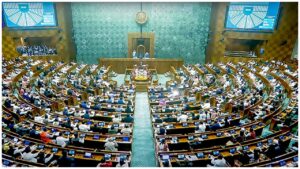

New Delhi: The central government is set to introduce a bill in Parliament that combines women’s reservation with the delimitation process. To pass this bill, the Modi government will need to secure a two-thirds majority. It is expected that the government will be able to garner this support and ensure the bill’s passage. It will first be presented in the Lok Sabha and the Rajya Sabha.
Once passed by both houses and granted presidential assent, it will become law. Notably, the central government faced a setback regarding this bill in the Lok Sabha on April 17, as opposition parties united to strongly oppose it. The current proposal has been approved under the chairmanship of Prime Minister Narendra Modi. Here is a look at what has changed in this reintroduced version of the bill.
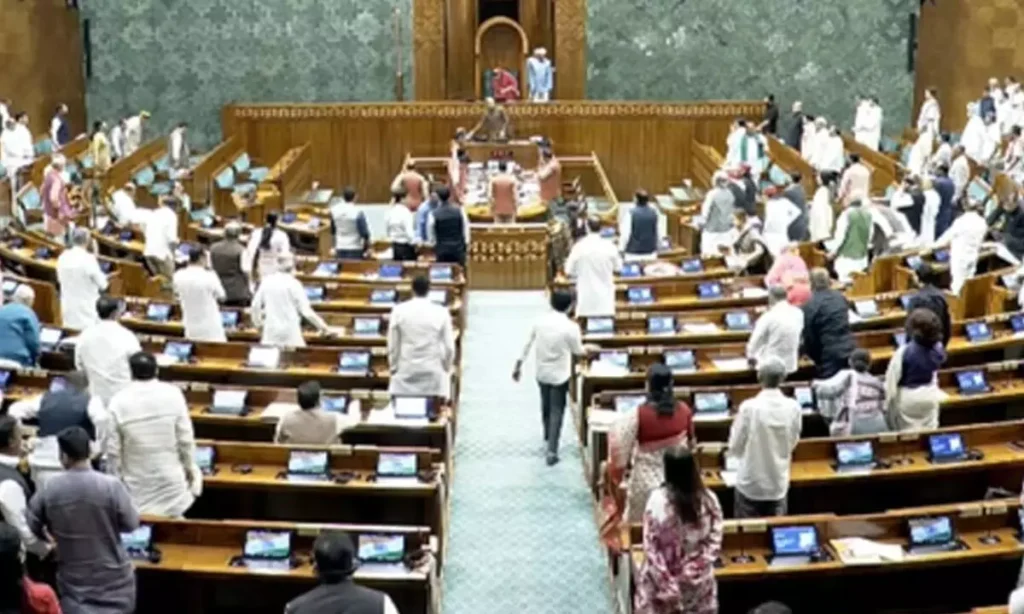
The bill was defeated on April 17 due to opposition unity.
On April 17, a vote was held in the Lok Sabha on a Constitution Amendment Bill that linked women’s reservation with the delimitation process and an expansion of parliamentary seats. The government failed to secure the necessary support, and the bill could not be passed.
The opposition alleged that the delimitation process could alter the political representation of various states. Southern Indian states, in particular, expressed concerns that a redistribution of seats based on population could lead to a reduction in their proportional share in the Lok Sabha.
What has changed in the new bill?
The most significant change in the new proposal concerns the formula for the expansion of seats. It includes a provision to increase the existing number of Lok Sabha seats across all states and union territories by 50 percent. This would raise the total number of Lok Sabha members from the current 543 to approximately 815. The proposed upper limit is 850 seats, with 815 allocated to states and 35 to union territories.
The objective behind this is to address the concerns of southern Indian states, which fear that their political influence in Parliament might diminish due to their effective performance in population control. The new proposal includes a provision to maintain the existing proportional distribution of Lok Sabha seats among the states until 2051.
A key element of the new proposal is the plan to implement the reservation for women starting from the 2029 Lok Sabha elections. With an increase in the total number of seats, political parties will still have a sufficient number of seats available for general electoral competition, even after accounting for the 33 percent reservation for women.
Changes to the seat-allocation formula
The proposal from April had opened the door for the redistribution of Lok Sabha seats among states based on their population proportions. This raised concerns that more populous states like Uttar Pradesh and Bihar might see an increase in their seat counts, while the proportional share of South Indian states could decline. In contrast, the new proposal mandates a uniform 50 percent increase in the current number of seats for all states.
The new proposal sets the maximum strength of the Lok Sabha at 850 and that of state legislative assemblies at 650. Currently, the upper limit for the number of members in a state legislative assembly is 500. The Uttar Pradesh Legislative Assembly, for instance, currently has 403 seats; a 50 percent increase would bring this figure to approximately 604 or 605. However, the exact numbers will be determined following the delimitation process.
How long will the states’ proportional shares remain protected?
The April proposal included a provision to lift the freeze on the existing proportional distribution of seats among the states. The new proposal, however, ensures that this proportion is maintained until 2051. Nevertheless, the most recently published census data available at the time the relevant law comes into effect will be used to define the boundaries of constituencies within the states. If the data from a 2027 census has not been published by that time, the 2011 census data will serve as the latest available basis.