
Table of Contents
Markets Bounce Back After Panic Sell-Off
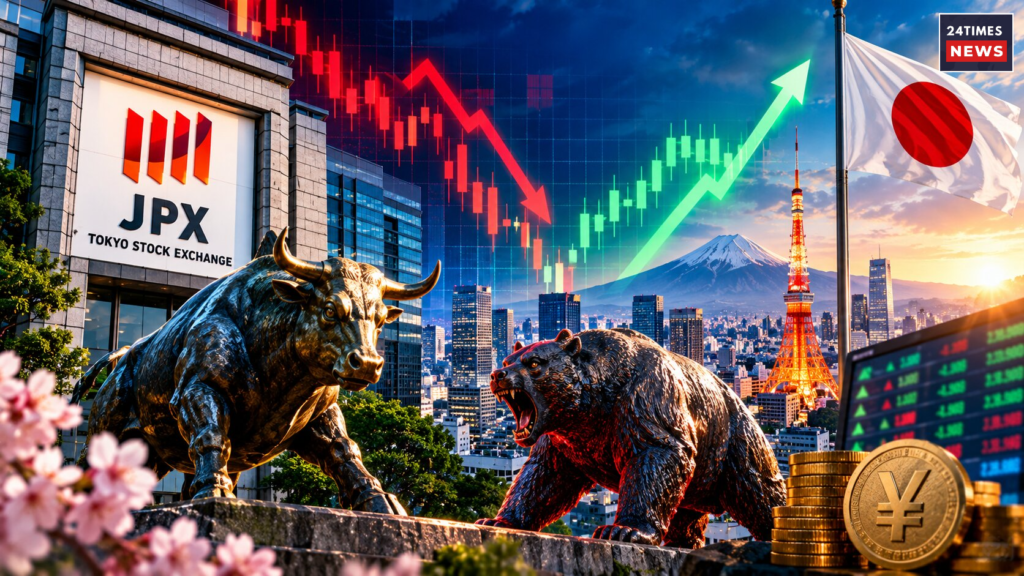
Friday, October 23, 2026, was a wild ride for Japan’s stock market. The Tokyo Stock Exchange (TSE) started the day in a slump, battered by worries from Wall Street. Overnight in the US, the Nasdaq tumbled more than 2.6 percent, mainly from a sell-off in technology giants. That nervous energy spread to Asia. When the opening bell rang in Tokyo, traders rushed to dump tech stocks. By late morning, the Nikkei 225 had pierced the floor, dropping more than 1,400 points in just hours.
But the story didn’t end with despair. As the afternoon rolled on, big money from the big institutions to the retail crowd swept in. They snapped up bargains, especially in household names and consumer staples. The Nikkei 225 clawed its way back through the day, finally closing at 62,693.16, down just 214.68 points, or 0.34 percent. On the surface, it looks like a bad day, but index watchers saw resilience in how far the market came back from the brink.

The Numbers: Indices Show Tech’s Dramatic Rebound
The Nikkei 225 is heavily slanted toward big tech and electronics groups. On Friday, it showed just how vulnerable those names can be to global shockwaves. The price-weighted nature of this index means swings in a few giants, like Fast Retailing or Tokyo Electron, can make a huge difference for the day’s headline move.
By contrast, the broader TOPIX index, which covers a wider set of companies, had a rougher time. It closed down 0.79 percent at 3,965.81 points. The damage there reflected ongoing selling across middle-cap firms, factories, and cyclical sectors even as top-tier tech staged a shaky comeback.
Other important numbers:
- JPX-Nikkei 400: Closed at 36,038.19, down 0.74 percent.
- JPX Prime 150: Ended at 1,668.64, falling 0.91 percent.
- Small-cap TSE Growth Market 250: Up 0.18 percent a glimmer of optimism for smaller, growth-oriented names.
- TSE REIT Index: Jumped 1.01 percent as investors dove into safe, yield-focused real estate investment trusts.
On the currency side, the Japanese yen gained a little ground, trading at about 157 to the dollar. That strength came as investors started betting on a possible rate hike from the Bank of Japan, especially after fresh inflation data beat forecasts.
What Moved the Market: Three Big Forces
Tech Panic from Wall Street
Nobody on the TSE was ignoring events in the US. The meltdown started with Meta Platforms. After revealing a huge jump in artificial intelligence spending but not much immediate payoff Meta shares cratered more than 7 percent. Nvidia and Tesla shares also sank.
Those headlines prompted automated “program selling” to slam Japan’s top tech exporters as soon as trading opened. It was a tough morning for names like Advantest, SoftBank, Tokyo Electron, and Disco, together wiping out more than 1,100 points from the Nikkei before lunch. Sumco, a key silicon wafer maker, dropped almost 9 percent. Disco, which makes precision grinding equipment, lost over 7 percent. It was a full-blown tech rout at least until bargain hunters swooped in later.
Japanese Inflation Heats Up
Before anyone could catch their breath from the tech sell-off, economic news started coming in. Japan’s latest Consumer Price Index rose 2.1 percent from the previous year, a notch above what many expected and higher than last month. Even stripped of volatile food prices, inflation still ran above the central bank’s 2 percent target.
For investors, this stoked talk that the Bank of Japan might finally move to raise interest rates a big deal, since Japan’s rates have been near zero for years. The possibility of a rate hike made the yen a little stronger, as traders looked for shelter from the volatile equity markets.
The flip side is, a stronger yen can hurt the bottom line for major Japanese exporters, whose overseas earnings look weaker when converted back to yen. Still, in the chaos of the morning, most traders seemed to welcome the yen’s safety rather than worry about export profits.

Flight to Safety in Bonds and Real Estate
Stocks weren’t the only story. As the tech panic swept through early trading, bond prices climbed fast. The yield on Japan’s benchmark 10-year government bond slid to 2.795 percent, the lowest in weeks a sign that big investors were parking their money somewhere safe.
Because bond yields fell, investors also started chasing real estate investment trusts (REITs) and shares in groups tied to domestic demand, like supermarkets, food companies, and drugmakers. That defensive shift helped stabilize the market and built the foundation for the remarkable afternoon rally.
How Sectors Performed: Winners and Losers
Friday’s sell-off left a huge gap between the tech sector’s pain and the resilience of more defensive, local names.
Winners included:
- REITs (+1.01%): Investors looking for steady income flocked here as bond yields sank.
- Food and Drinks (+0.63%): Companies like Kikkoman which hit its highest closing price since mid-2024 Sapporo Holdings, and others gained ground.
- Pharma (+0.54%): Healthcare demand held up well.
- Retail: Aeon, a supermarket giant, soared almost 4 percent.
- Fast Retailing (+2.90%): The operator of Uniqlo single-handedly contributed nearly 200 points to the Nikkei’s recovery, keeping the market from a much deeper drop.
By contrast, tech and heavy industry took the brunt of the pain:
- Electric Appliances (-1.37%): Hit by all the chip and electronics worries.
- Machinery (-1.42%): Factory and automation stocks dropped.
- Nonferrous Metals and Shipping: Also lost ground as global demand concerns flared up.
Key Stocks: A Closer Look
Some of the most exciting action centered on a handful of stock names:
- Fast Retailing (Uniqlo): The day’s MVP, driving almost 200 points of positive movement in the Nikkei. This single company proved how much influence a price-weighted index hands over to a few giants.
- Tokyo Electron and Advantest: Both suffered huge losses by mid-morning but managed a stunning comeback by the close. Advantest fell as far as ¥30,030 before closing at ¥32,340, almost even on the day.
- Sumco and Disco: These chip equipment firms couldn’t shake off the losses, with Sumco clocking in as the biggest loser among top chip suppliers.
Technical Signals: Is the Market Bottoming Out?
Technical analysts saw something familiar in the charts: a “long-lower-wick hammer candle” pattern for the Nikkei 225. That simply means the index plunged, but buyers forced it back up often a sign that the worst of the selling has passed for now.
The Nikkei’s drop to 61,462.61 points put it right at its 200-day average, a key support level for many traders. When the index bounced off that point, dozens of algorithms and institutional desks started buying, triggering the rapid rally that followed.
Even with Friday’s rebound, the Nikkei is still about 14 percent below its 52-week peak, reflecting how sharply markets have corrected from the AI-boom highs seen earlier in the year.
Looking Ahead: What Could Shape Next Week?
Investors will be watching the calendar closely. Big events next week could keep volatility high:
- Bank of Japan Policy Meeting (October 29–30): Investors will listen for hints about rate hikes or changes in bond-buying from the central bank.
- US Federal Reserve Meeting (October 27–28): American interest rate policy will influence global risk appetite and the Yen’s trajectory.
- Japanese Corporate Earnings: Several large conglomerates and exporters report results, offering clues about how firms are coping with inflation, yen strength, and shifting global demand.
Market watchers are split on whether the recent gains represent a true turning point. If the Nikkei drops below 61,400, more selling could be triggered, possibly setting sights on 60,000 as the next downside marker. But if the index stays in its current range or climbs over 64,075, it may start to build a new base for a larger rebound.
Summary Table: Tokyo Market Snapshot
Here’s how the key figures shook out at the Friday close:
- Nikkei 225: 62,693.16 (-0.34%) after recovering over 1,200 points from the day’s low.
- TOPIX: 3,965.81 (-0.79%) held up by defensives but dragged by cyclical stocks.
- Small-cap Growth: 0.18% up small stocks showed a touch of optimism.
- REITs: +1.01% investors chased steady income as bond yields fell.
- Fast Retailing: Up 2.90%, pivotal for the Nikkei’s resilience.
- 10-year JGB yield: 2.795%, showing a flight to safety.
- USD/JPY: Settled near 157 per dollar, driven by inflation expectations.
In short, Friday’s trading on the TSE was defined by an early panic and a surprisingly strong afternoon comeback. The fear from Wall Street’s tech wreck battered Japanese markets, and yet, by the end of the day, buyers showed they still have faith in Japan’s consumer-facing sectors and key household brands. With critical policy meetings and earnings ahead, traders should brace for more drama in the weeks to come.