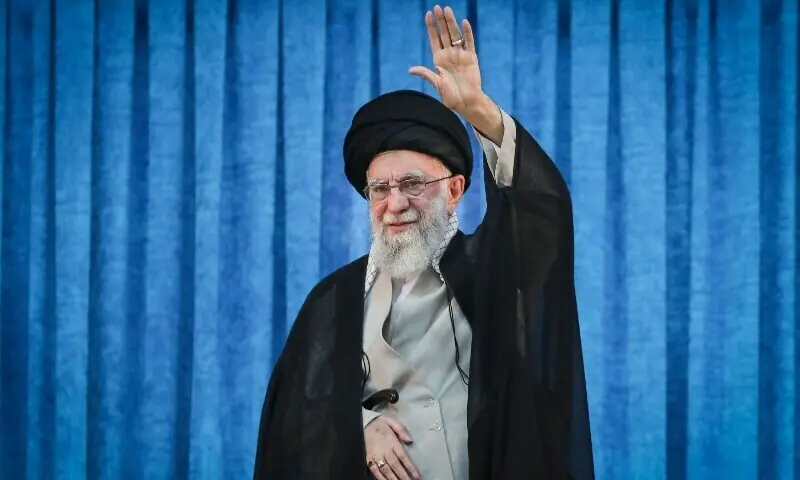
The era of Ayatollah Ali Khamenei is over. For almost four decades, he was the Supreme Leader of Iran – a figure who shaped the country’s direction and set its tone. On March 1, 2026, after a devastating military strike, the Iranian government confirmed his death. Khamenei’s story is really the story of modern Iran: how it was built, how it changed, and how it was held together, for better or worse, by one man’s grip.
Table of Contents
Growing Up in Struggle
Ali Khamenei was born in Mashhad on April 19, 1939. He was the second child out of eight. His family was deeply religious but barely scraped by. His father, Sayyid Javad Khamenei, taught religion and led an extremely simple life. Childhood for Khamenei was tough—he lived with his big family in a cramped, single-room house. He started learning the Quran at just four. He was sharp, and everyone knew it. By his teens, he was already studying in the holy cities of Najaf and Qom, on his way to becoming a top religious scholar.
Taking on the Shah
In the 1960s and 70s, Iran was under the iron rule of the Shah. Khamenei hated the way the Shah ran things. He wanted Iran to follow strict Islamic laws. He became a devoted follower of Ayatollah Khomeini, who was leading the charge against the monarchy. It was risky. The Shah’s secret police arrested Khamenei six times. He spent years in prison and exile, sent off to far corners of the country with no support. Those years hardened him. By the time the 1979 Revolution exploded, Khamenei was one of the most trusted men in the new Islamic government.
The “Living Martyr”
After the revolution, Khamenei took on big responsibilities. In 1981, he was elected President of Iran. While in office, someone tried to kill him. A bomb hidden inside a tape recorder exploded while he was speaking at a mosque. He survived, but his right arm was permanently damaged—he could never use it again. That attack, and his survival, only made him more famous. In Iran, people started calling him a “living martyr”—a man who’d sacrificed his own body for his country.
During his eight years as President, Iran was locked in a brutal war with Iraq. Khamenei spent a lot of time visiting soldiers on the front lines. He built close ties with the Revolutionary Guard (IRGC), which now runs the show in the Iranian military.
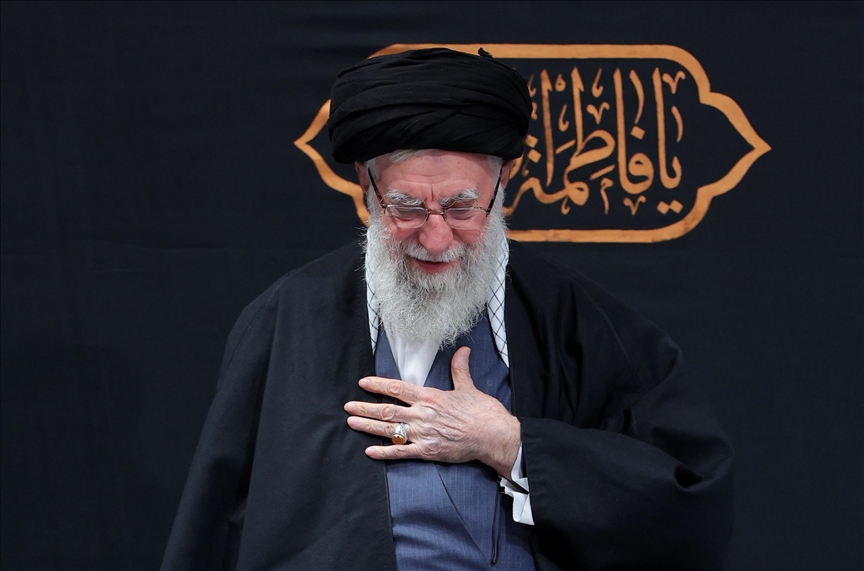
The Supreme Leader (1989–2026)
After Ayatollah Khomeini died in 1989, Iran needed a new Supreme Leader. This position holds enormous power—even more than the President. The Supreme Leader commands the military, oversees the courts, and sets the country’s legal direction.
The Assembly of Experts, a council made up of religious scholars, chose Ali Khamenei. It surprised many—he wasn’t the most senior cleric at the time. Still, he quickly showed he was ready for the job. For nearly forty years, he kept the revolutionary spirit alive.
What Khamenei Represented
The “Axis of Resistance”: Khamenei built a network of regional allies—groups like Hezbollah in Lebanon and the Houthis in Yemen. His goal? Resist the influence of the United States and Israel in the Middle East.
The Nuclear Program: He strongly defended Iran’s right to nuclear technology. That stance led to years of sanctions. Life grew harder for ordinary Iranians—prices for food and fuel soared, and the economy suffered.
Tight Control at Home: Khamenei was a strict hardliner. He enforced rigid Islamic rules and often used police to break up protests. Even in 2022, during the “Woman, Life, Freedom” movement, he refused to give in.
The Final Days: February 2026
The start of 2026 was extremely tense—almost explosive. Iran was involved in conflicts with both Israel and the U.S.
Then, on February 28, Tehran suffered heavy airstrikes. One of the strikes hit Khamenei’s heavily guarded residence. The attack, code-named “Operation Epic Fury,” was a joint operation by the U.S. and Israel. Khamenei was killed in the explosion at age 86.
State media soon confirmed the grim news: some of his family members, including his daughter Hoda, also died.
The following day, March 1, the government announced his death. They declared 40 days of mourning and closed schools and shops for a week.
What’s Next for Iran?
Iran now faces a crucial moment. According to Article 111 of the law, three leaders take charge as an “Interim Council.” That means the President, the Chief Justice, and senior cleric Alireza Arafi are temporarily running the country.