When talking about cryptocurrencies, the first names that come to one’s mind are usually Bitcoin and Ethereum. However, it was Ripple (XRP) that very quietly changed the entire system of how money is transferred across the globe. Unlike most digital tokens whose main objective is trading or decentralization, Ripple was created to achieve just one goal: to make global payments more efficient in terms of time, cost, and reliability.
Table of Contents
The Early Days: Where It All Began
Ripple’s story goes back a lot further than Bitcoin. In 2004, Canadian developer Ryan Fugger initiated the creation of RipplePay, a peer-to-peer payment network that enabled people to send money directly without the need for banks.
Come 2012, Jed McCaleb and Chris Larsen were the ones who started Ripple Labs (currently known as Ripple). They created the XRP Ledger, and thus was born the digital asset XRP.
Their goal wasn’t to do away with the use of money — rather, it was to network financial systems globally, making it possible for money to be sent as easily as emails.
The Vision: Solving the Payment Problem
While Bitcoin was trying to get rid of banks, Ripple, on the other hand, decided to collaborate with them.
Transferring money internationally via the conventional method by using a system such as SWIFT may take a few days, and one has to pay a lot in fees. Ripple invented a cheaper and quicker way of doing it, where banks could move money from one account to another without delay by utilizing the XRP token as the intermediary currency.
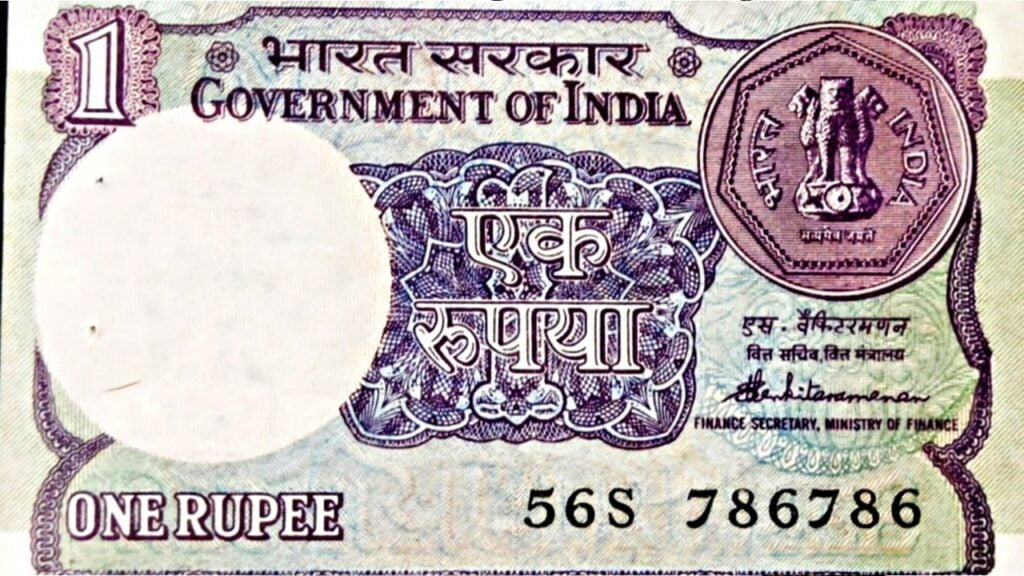
Let’s say, a person in India wants to send some money to the U.S. What happens is that first, rupees are converted to XRP by the use of Ripple; after that, the same token is converted to dollars in the U.S. — Thus, the transaction that takes several days is done within seconds.
Rise of Ripple: From Hidden Gem to Global Player
Ripple became the center of attention in 2017, the year when large companies such as Santander, American Express, and Standard Chartered, among others, started the pilot phase of their products based on Ripple tech.
In that same year, the value of XRP witnessed an extremely rapid increase. It jumped from a mere $0.006 in early 2017 to an all-time high of $3.84 on January 4, 2018, thus making a lot of early believers millionaires overnight.
After the crypto crash occurred, Ripple went on with the good work of establishing more and more collaborations. It was not a crypto-hype chaser but a real financial infrastructural builder.
The Big Battle: Ripple vs. SEC
The biggest hurdle that stood in the way of Ripple was its case against the U.S. Securities and Exchange Commission (SEC), which happened in December 2020, resulting in a lawsuit claiming that the company sold unregistered securities via XRP.
The suit was a disastrous event — the value of XRP went down significantly, and many trading platforms temporarily stopped trading it.
Though they had a win only partially in court, in July 2023, Ripple managed to turn the tables: the American judiciary found that XRP should not be regarded as a security when it is traded on public exchanges, yet that some sales on the institutional side could be. This decision revived investor trust in the company and confirmed its status as a legitimate player.
Ripple in 2025: Back on the Global Map
As of November 2025, XRP is valued between $2.30 and $2.50 USD, and its market capitalization is near $170 billion, which places the digital currency among the ten major cryptocurrencies worldwide.
Ripple has been able to capitalize on this momentum to broaden its network not only there but also in the Middle East, Asia, and Latin America, where banks and fintech companies are availing themselves of the instant and inexpensive international payment services offered by RippleNet and On-Demand Liquidity (ODL).
The company would also like to partner with a number of central banks, among which are Bhutan, Palau, and Colombia, to provide assistance in the development of Central Bank Digital Currencies (CBDCs), thereby enhancing its importance in both the public and private sectors of finance.
Ripple’s Price Evolution (2013 – 2025)
| Year | Price (USD) | Key Milestone |
|---|---|---|
| 2013 | ~$0.005 | Founded Ripple Labs |
| 2015 | ~$0.006 | Began banking partnerships |
| 2017–2018 | $0.006 → $3.84 (ATH Jan 2018) | Worldwide crypto bull market |
| 2019 | ~$0.25 | Time for market correction |
| 2021 | ~$1.60 | Expansion & recovery |
| 2023 | ~$0.50 | Partial victory against SEC |
| 2025 | $2.30 – $2.50 | Stability & renewed adoption |
The Future of Ripple
Ripple’s saga is the very opposite of what most people expect when it comes to the time it takes for a revolutionary innovation to come into effect. Whereas Bitcoin is considered the epitome of financial freedom, Ripple can be likened to a facilitator of financial freedom as it continuously builds bridges between different currencies, banks, and countries.
Ripple’s plan is to be the fundamental global payment infrastructure that works in such a way that the transfer of value is as easy as sending a message online.
Final Thoughts
Compared to other cryptocurrencies, Ripple’s story is quite different. Its success is attributed not to the hype but to the goal it had in mind. Thus, from being just a tiny experiment in 2004, Ripple has become the biggest force in global payment in 2025, showing that blockchain technology can cooperate with the financial system rather than compete with it.
Bitcoin may still be the digital equivalent of gold, but Ripple is the bridge that connects the traditional world of finance with the new one based on blockchain.
And as the world transitions to digital money, one thing is clear: Ripple’s wave is far from over.