Rajya Sabha elections announced, with polling scheduled for June 18.
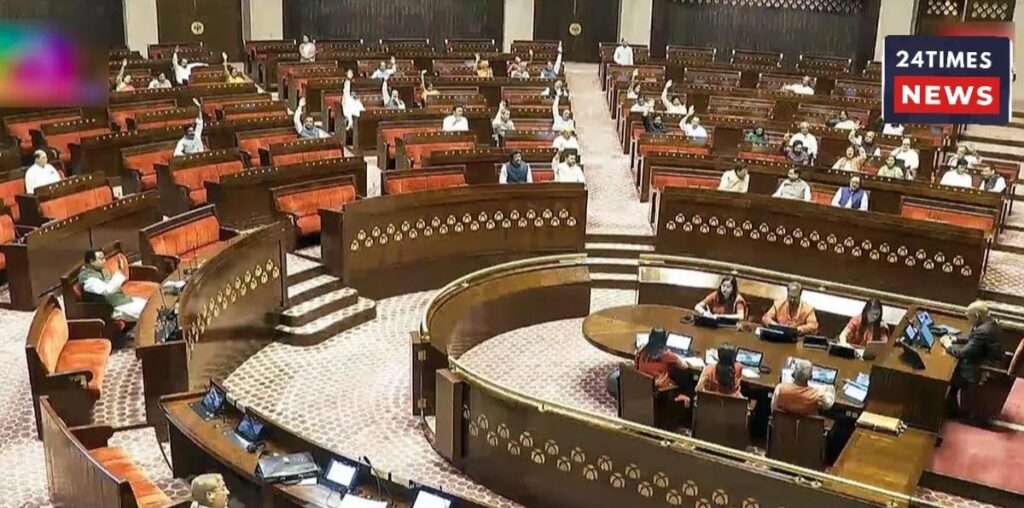
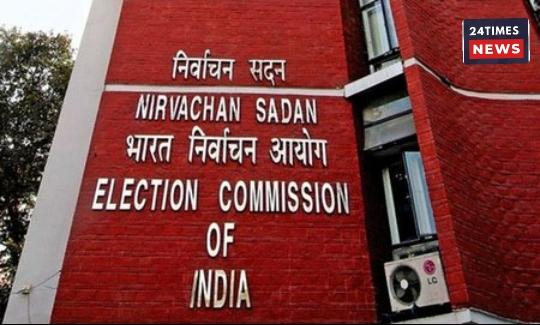
There is going to be a stir in the country’s politics once again. The Election Commission has announced the election dates for 24 Rajya Sabha seats. According to the Commission, voting for these seats will be held on June 18. These seats belong to those MPs whose term is going to end on different dates between June and July.
Although Rajya Sabha elections are not as noisy as general elections, nor do the public vote directly in them, but they are of great importance for political parties. The balance of numbers in the upper house of Parliament often determines the strength of the government. This is the reason that as soon as the Election Commission announced the dates, a series of meetings started in the offices of political parties.
Elections for these 24 seats will be held in 10 states. The term of the current MPs is to end between June 21 and July 19. As per the rules, a new process is completed before the end of the term so that representation in Parliament is maintained.
Those who closely follow politics know that the Rajya Sabha is not just a formal house. Many major decisions, important bills and national issues are debated here at length. In such a situation, how strong a party is here directly impacts the policies of the government and the strategy of the opposition.
After the announcement of the Election Commission, the main focus now is on which parties want to send which faces to the Rajya Sabha. Many times Rajya Sabha elections are not just a process of filling seats, but political messages are also given through it.
How do Rajya Sabha elections differ from general elections?
Many people think that when elections are held, the public votes, but the process of Rajya Sabha elections is a little different. Common voters do not participate here. Rajya Sabha MPs are elected by the MLAs of the respective states. That is, in the states where seats are vacant, the elected members of the Legislative Assembly there elect new MPs through their votes.
Rajya Sabha is called the permanent house of the Parliament. Its most special feature is that it never breaks. Instead of being completely abolished after five years like the Lok Sabha, in the Rajya Sabha some members retire every two years and new members come in their place. The tenure of every MP is six years.
This is the reason why the numbers in Rajya Sabha change gradually. A single election doesn’t change the entire math, but over time, the change can be significant.
If a party has a strong position in the Lok Sabha but does not have sufficient numbers in the Rajya Sabha, then sometimes it is not easy for it to get the bill passed. The government has to seek the support of the opposition or engage in lengthy negotiations.
In the last few years, there have been many occasions when the numerical balance in the Rajya Sabha became big news in national politics. There was a long debate between the government and the opposition on many bills. That is why political parties take Rajya Sabha elections very seriously.
Another interesting thing is that the Rajya Sabha often becomes a gateway for those leaders who do not directly contest the Lok Sabha elections or lose, but the party wants to keep them in Parliament. This is why many big names are seen here – former Chief Ministers, senior leaders, experts and sometimes even people from the film, sports or industry world.
Political turmoil in 10 states, debate over candidates will intensify
After the announcement of the Election Commission, the real movement will now start within the political parties. Every party will decide its candidates according to its own mathematics. In states where the numbers are clear, the election may appear easy, but where the contest is close, political activity is expected to intensify.
Many times in Rajya Sabha elections, such names come up which no one expects. Some leaders are sent by the party as a reward for their long-term contribution, while in some cases candidates are selected keeping in mind the social and regional balance.
This time too, it is believed that many big political faces may be seen in the race for Rajya Sabha. In some states, parties may give a chance to new faces, while in some places, efforts will be made to retain experienced leaders in Parliament.
Moreover, Rajya Sabha elections often bring out the true picture of political relationships. Who supports whom, who strategizes against whom – all this becomes clear during this time. Sometimes opposition parties come together, and sometimes they adopt different strategies.
Some political analysts believe that many important issues may be debated within the Parliament in the coming months. In such a situation, the number of Rajya Sabha will become even more important. No matter which party forms the government, it is necessary for it to garner support in the Upper House.
Although Rajya Sabha elections are not discussed as much among the general public as Lok Sabha or Assembly elections, their political importance is not considered less. The direction of many major political decisions is decided from here.
Now in the next few days, the most discussion will be about the names of the candidates. Which party gives confidence to whom, which leader will reach Parliament again and which new faces will enter national politics – all this will be kept under watch.
The voting on June 18 may take place in a peaceful atmosphere, but its results may impact parliamentary politics in the future. Therefore, political parties are considering it not just as a regular process but as an important part of their future strategy.