
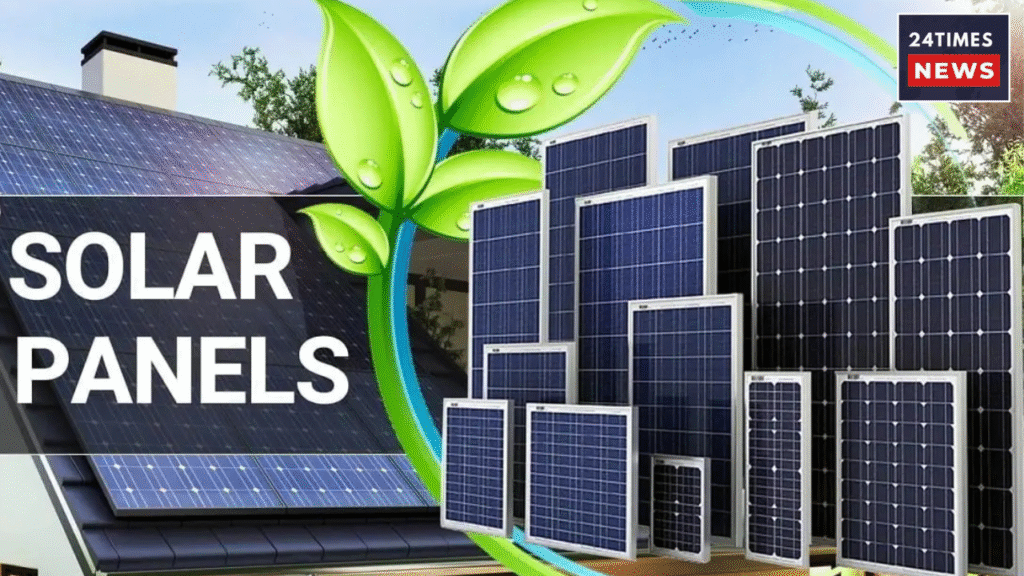
These days, the trend of installing solar panels is rapidly increasing in India because they can save electricity in your home and reduce your electricity bill. This is why people are installing them in large numbers. The government is also running the “PM Surya Ghar Muft Bijli Yojana,” which makes it easy to install solar panels in homes and commercial buildings. Although the installation cost is a bit higher, the government also provides subsidies, which significantly reduce this cost.
Let’s find out what a solar panel is and what benefits it offers. Which of the two, P-type or N-type, would be better for you?
What is a solar panel?
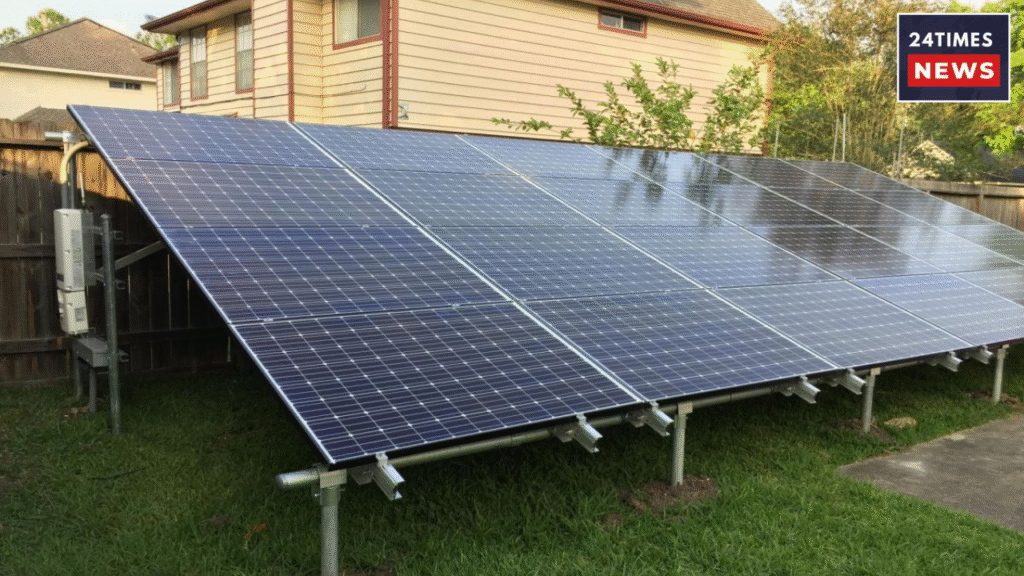
It’s a device that produces electricity from sunlight, allowing you to run all your household appliances—lights, fans, refrigerators, air conditioners, and TVs—on a daily basis. It’s also called a “solar panel” or “photovoltaic panel.”
Benifits Of Solar Panel
Solar panels have many benefits :-
- They generate electricity from sunlight, allowing you to run all your household appliances.
- This reduces your electricity bill to almost nothing.
- Installing a solar panel also provides government subsidies, making it budget-friendly.
- They are environmentally friendly, helping protect our environment.
- They also provide relief from power cuts and rising electricity rates, and they don’t require much maintenance.
- Once installed, you can enjoy its benefits for approximately 25 years.
What is a P-type or N-type panel?
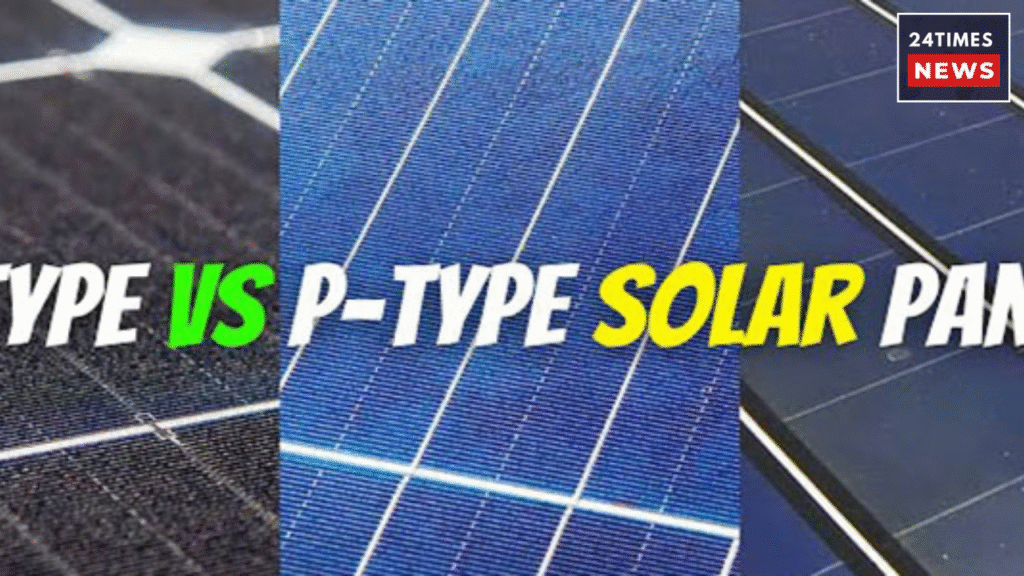
Solar panels are made in two ways, P-type and N-type.
P-type panels are made by mixing boron with silicon, which causes a chemical reaction and produces electricity. This is the most common panel available in the market because it is produced in the largest quantity. N-type panels are made by mixing phosphorus with silicon, which creates a large amount of negative charges in it. However, this is modern technology and it produces a large amount of electricity and is also more expensive in the budget. Only a few companies manufacture N-type solar panels.
Which solar panel is better
P-type or N-type?
- The efficiency of P-type panel is around 18% to 21% and that of N-type is 22% to 25%, that is, N-type panel has higher efficiency and produces more amount of electricity, hence if seen in terms of efficiency, N-type panel is better.
- Boron is used in P-type panels which reacts chemically with oxygen and is called LID (Light Induced Degradation), due to which the efficiency of P-type reduces by about 2% to 3%, whereas phosphorus is found in N-type panels due to which LID is only nominal, hence even after it becomes very old, there is negligible reduction in its efficiency and it can produce electricity for a longer period of time.
- P-type panels lose their power generation capacity when exposed to excessive heat, whereas N-type panels can easily generate power even in extreme heat.
- Talking about the price, P-type panels are the most commonly used solar panels and they are a better and economical option for the common people whereas N-type panels can be a bit more expensive and are about 15% to 25% more expensive than P-type, however they provide electricity for a longer period of time.
Conclusion
If your budget is limited and you want to install solar panels at a low investment, in which you can also get subsidy from the government and you have enough space on your roof, then you can choose P-type solar panels. However, if you have less space on your roof and you want to invest in future technology where your panel can produce electricity for about 30 years and there is a lot of heat in your area, then you should choose N-type panels.