Table of Contents
The Delhi government and the World Bank have taken the initiative to reduce pollution by collaborating.
The national capital of India has been suffering with worst air pollution in India. The situation becomes even more worst during winters season, where the Air Quality Index(AQI) become really high and reaches hazardous levels above 200+.
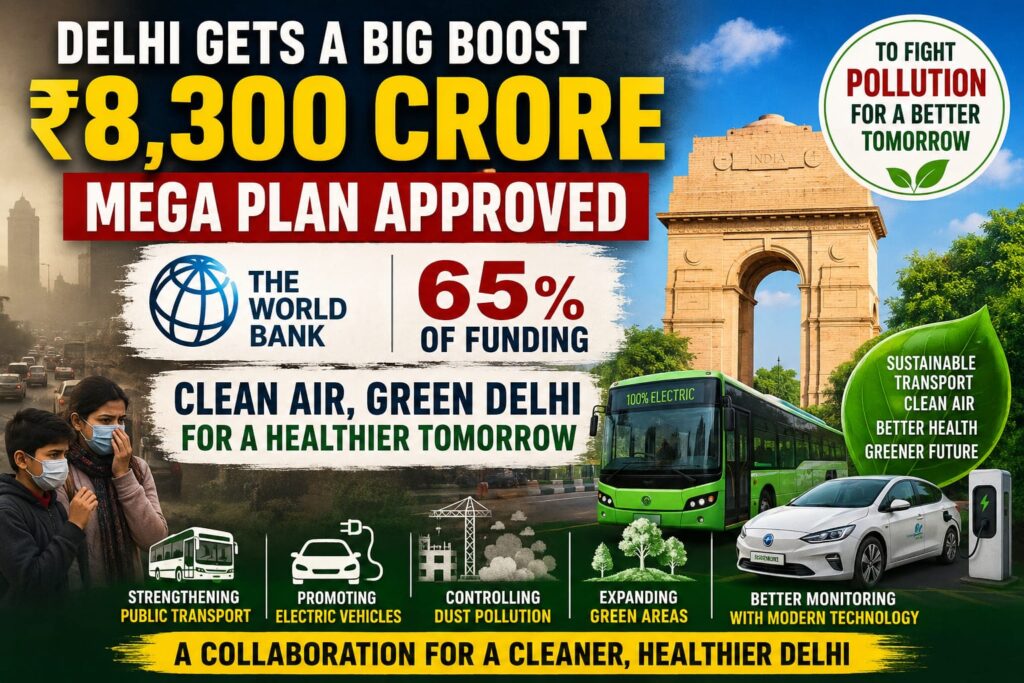
After seeing this situation, the Government of Delhi has decided to collaborate with the World Bank, who has prepared a programme control worth ₹8,300 crore to control the air pollution. The most important thing about this project is that about 65 percent of its total cost will be provided by the World Bank, while the remaining amount will be raised from the Delhi Government and other sources.
The government plans to build a sustainable and eco friendly urban environment ,reduce the air pollution and try to maintain the good AQI level in the capital. The plan may include several important steps such as strengthening public transport, promoting electric vehicles, controlling dust pollution, expanding green areas and improving pollution monitoring through modern technology.
The leading causes of Delhi’s pollution include smoke coming from vehicle, dust from construction sites, industrial activities and the impact of paddy straw burning in neighbouring states. Experts believe that a permanent solution to the problem of pollution is not possible without working on all these sources simultaneously. Therefore, this project will coordinate with various agencies and departments to get rid of this problem as soon as possible.
The World Bank’s participation is bank on to provide financial support and technical experts for looking into this scheme. Partnerships with international institutions can also strengthen project implementation, monitoring and transparency. However, the success of any scheme depends on its effective and timely implementation.
Environmental experts say that if the targets set under this project are achieved on time, then positive changes can be seen in the air quality of Delhi in the coming years. This will not only improve the environment but will also have a positive impact on people’s health.
At present, this mega plan is being considered an important step against pollution in the capital. Now people will be keeping an eye on how fast the project is implemented and when its results start becoming visible on the ground.
What will be included in this ₹8,300 crore scheme and who will benefit from it?
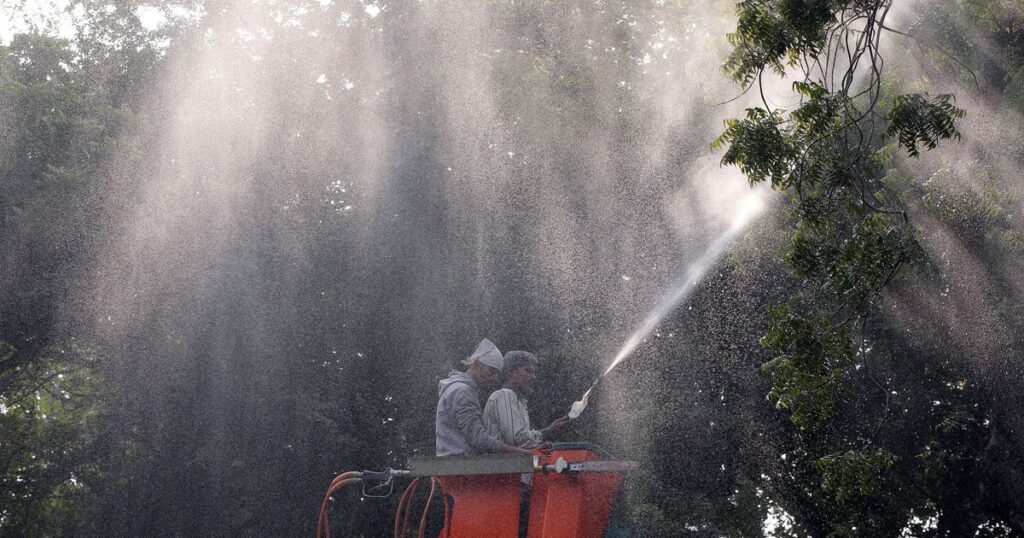
The Delhi government says that the aim of this mega plan is to simultaneously control various sources of pollution in the city. Under this, many steps can be taken like making the transport system more clean and modern, promoting electric mobility, implementing dust control measures at construction sites and increasing green areas.
A major objective of the scheme is also to make air quality monitoring more effective by using modern technology. This will make it easier to identify sources of pollution and take necessary steps in time. Besides, emphasis will also be laid on establishing better coordination between various government departments.
The biggest advantage of this project is expected to follow to crores of residents of the capital. If pollution levels become low, the risk of breathing diseases like asthma , allergies and other health problems may also decrease. Clean air will be especially beneficial for children, the elderly and those who’s suffering from pre-existing medical conditions.
However, experts also believe that merely allocating budget will not solve the problem. The impact of the scheme will depend on the transparency, speed and accountability with which the projects are implemented.
Why is the pollution problem so dangerous for the people of Delhi?
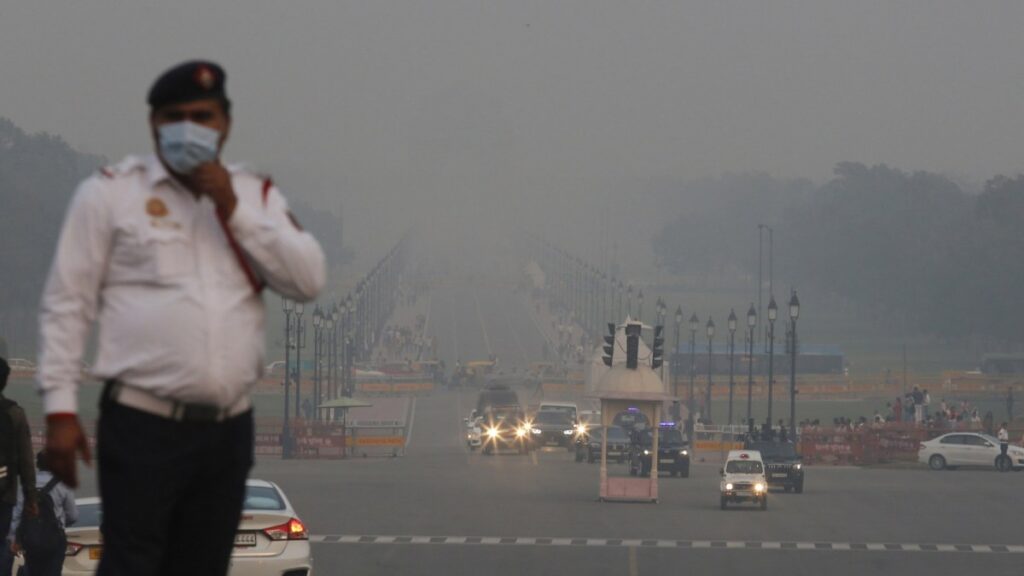
Delhi is in the list of most polluted cities in the country for many years. Here air pollution iis not caused by any single reason, but by the combined effect of many sources. Vehicular smoke coming from vehicles, dust coming from underconstruction sites, industrial smoke, burning of solid waste and paddy straw burning in neighbouring states during winter affect the air quality of the capital.
According to experts, In Winters the weather conditions trap pollutants close to the ground, causing air quality to degrade rapidly. It affects children, the elderly and people suffering from breathing diseases like asthma the most.
For this reason, the government is now working on a panoramic plan, not just focusing on one source, but keeping in mind all the major sources of pollution. This mega plan of ₹8,300 crore is also being considered a important part of this thinking.

Why is the World Bank’s involvement important to this project?
The World Bank‘s involvement in this project is not considered to be limited to financial assistance only. International organisations also typically provide technical advice, monitoring mechanisms, and global experience for projects. This can help facilitate the effective implementation of large-scale schemes.
The Delhi government believes that with the cooperation of the World Bank, the project can be taken forward with a long-term vision. By getting 65 percent financial assistance, the financial pressure on the state government will also reduce and various pollution control projects will get momentum.
However, experts say the success of any international collaboration ultimately depends on better planning, transparent spending and timely implementation at the local level.
Will this mega plan actually clean Delhi’s air?
Over the past few years, number of schemes have been executed to address the topic of pollution in Delhi. These include measures such as promoting electric buses, dust control regulations at construction sites, monitoring polluting industries and strengthening public transport. Despite this the problem could not be completely eliminated.
Experts believe that the scope of the ₹8,300 crore project proposed this time is much wider than many earlier schemes. If effective coordination is established between transport, environment, urban development and local bodies, positive results can be seen.
However, it is also clear that government efforts alone will not be enough. Participation of citizens is equally important to reduce pollution. Even small steps like increased use of public transport, not burning garbage, following rules in construction work and responsible behaviour towards the environment can bring about big changes.
Environmental experts say that the results of any pollution control plan are not visible immediately. This requires constant monitoring, timely corrections and coordination between various agencies. Therefore, the real success of this project will be determined by its impact in the coming years.
The Way Forward- Effective implementation will be more important than the plan itself.
This huge plan, evolved with the Collaboration between Delhi government and the World Bank, is considered a important step for the capital. But like any major project, its success will depend on the transparency, speed and accountability with which it is implemented.
The biggest challenge coming for the government in the coming times will be to establish better coordination between various departments and complete the projects within the defined time frame. It is very important to make sure that the assigned funds are used only for the planned purposes and not get misused, it has to be regularly monitored.
Experts thinks that long-term improvement in Delhi’s air quality is only possible when the plan strengthens public transport, promotes electric vehicles, effectively controls dust and industrial pollution, and increases green areas.
However, a complex problem like pollution will not be solved by a single project. it requires the collective participation of the government, local bodies, industries, and citizens. This is why this scheme is being seen not just as a budget announcement but as a step towards long-term environmental improvement.
If the plan achieves its set goals, it will not only help improve Delhi’s air quality but could also prove to be an effective model for other metropolises in the country.