
New Delhi: Farmers in India can earn substantial profits by engaging in diverse farming practices. Many farmers avoid taking risks and often struggle to farm effectively. Beyond staples like wheat, paddy, and pearl millet, there are numerous other crops that offer lucrative returns. To maximise earnings, farmers should consider trying their hand at alternative forms of cultivation.
Did you know that saffron commands a very high price in the market? Cultivating saffron can be highly profitable. Traditionally, saffron is primarily grown in the valleys of Kashmir, where the yield is excellent. One might wonder why such a high-value crop could only be grown in Kashmir.
Modern technology has made it possible to successfully cultivate saffron in open fields in your own region, far from Kashmir. Nowadays, alongside open-field farming, techniques like shade-net houses are increasingly being used. These allow farmers to easily create a climate mimicking the desired temperature conditions of Kashmir within a section of their field. If you wish to earn massive profits from saffron farming, it helps to understand a few key requirements first.
What is required for this cultivation?
Saffron cultivation involves specific requirements and differs somewhat from traditional farming methods. You will need Kashmiri saffron seeds, known as ‘corms’. These bulbs are planted in fields or trays during the months of August and September.
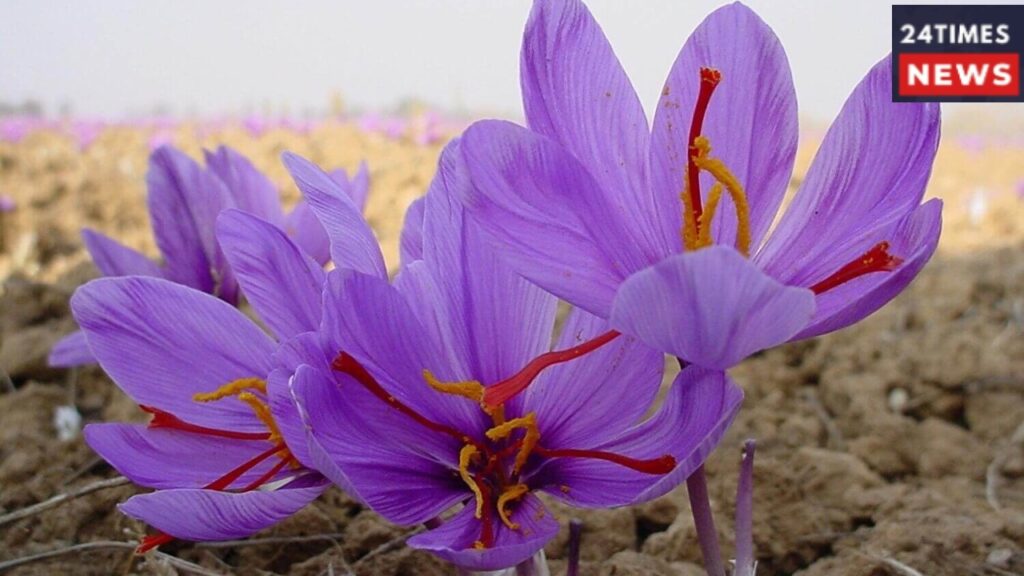
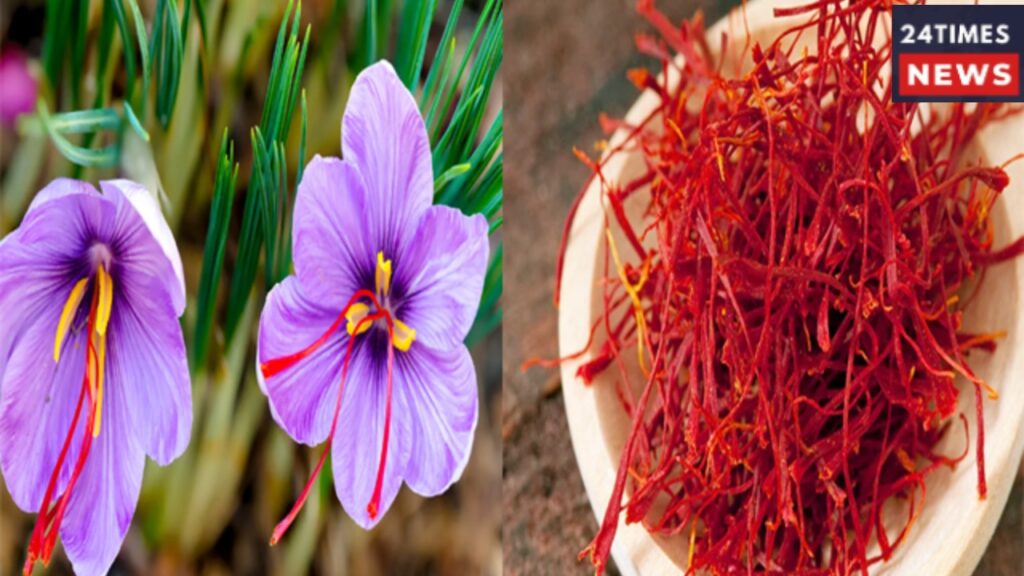
When selecting a site for cultivation, choose land where water does not stagnate. Excessive moisture causes the bulbs to rot completely, resulting in a failed harvest. Beautiful purple flowers bloom between October and December, revealing red saffron threads at their centre. This crop does not require excessive water or expensive fertilisers.
Keep Key Factors in Mind for a Good Yield
Saffron is ranked among the world’s most expensive spices and enjoys high sales volume. The market price for genuine saffron is estimated to range from ₹2.5 lakh to ₹3 lakh per kilogram. Even if you start with small-scale cultivation, the profit margins are significantly higher compared to other crops.

However, the harvesting process extracting the saffron strands from the flowers, requires care and hard work. Yet, the substantial profits make this effort worthwhile. The saffron corms (bulbs) you purchase initially multiply on their own every year, saving you the cost of buying planting material for subsequent seasons.