C. Vijayabaskar Resignation: Why is political turmoil increasing within the AIADMK just weeks before the 2026 elections?
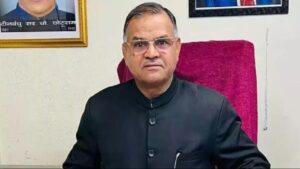
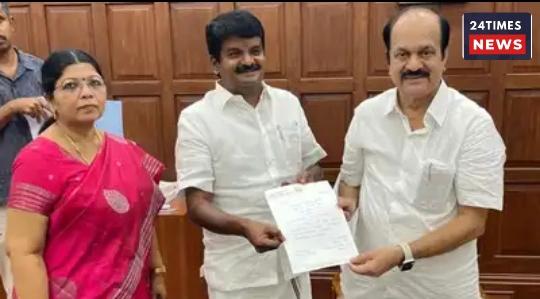
Another major development has come to light in Tamil Nadu politics, where senior AIADMK leader C. Vijayabaskar has resigned from his MLA post. This decision has sparked a new discussion in the state politics because C. Vijayabaskar resignation has come at a time when only a few weeks have passed since the 2026 Assembly elections.
The special thing is that he has become the fifth AIADMK MLA, C. Vijayabaskar, to leave the Assembly membership after the elections. For this reason, issues like AIADMK MLA resigns and AIADMK political crisis have become topics of discussion in political circles.
Although various political speculations are emerging regarding the official reasons behind the resignation, analysts are beginning to see it as a broader organisational challenge rather than an isolated incident. C. Vijayabaskar resignation has raised questions whether internal disagreements are increasing within the party or the process of leadership restructuring is going on.
AIADMK has been a major political force in Tamil Nadu for a long time. However, in the last few years, many challenges have been seen regarding party leadership, organizational unity and electoral performance. The spate of resignations by MLAs after the 2026 elections has led observers to wonder if the party is going through a period of internal turbulence.
Political analysts say that when repeated resignations are seen immediately after the elections, naturally questions arise on party stability and future strategy. However, supporters argue that resignations should not always be seen as a political crisis, as strategic calculations or personal reasons also play a role.
At present, the AIADMK MLA resigns development has once again brought Tamil Nadu politics into headline discussions. Now the focus is on how the party leadership handles this situation and what the organizational messaging will be in future.
5 Big Yet Important Takeaways From AIADMK MLA Resigns Development.
- C. Vijayabaskar becomes the fifth MLA to resign
This fifth resignation, just weeks after the elections, is naturally attracting political attention. Analysts say repeated resignations could raise concerns for any party.
However, it is also possible that the context of each resignation is different and it would be premature to view them collectively as a crisis.
- Questions about political stability after the 2026 elections
Organizational unity is considered extremely important immediately after the elections. In such a situation, repeated exits can give opposition parties an opportunity to build a political narrative.
Supporters argue that political restructuring after elections is not unusual.
- AIADMK Political Crisis Debate Intensifies
Political observers are now openly discussing whether the narrative of the AIADMK political crisis is gaining strength.
However, party supporters insist that the AIADMK still remains a major player in Tamil Nadu politics and temporary setbacks should not be exaggerated.
- Increased discussion on leadership and internal coordination
Repeated resignations naturally increase the focus on leadership structure and internal communication.
Experts say that strong party discipline becomes more important after electoral setbacks.
- Could impact future electoral strategy
If resignations continue, it could impact local body elections and future alliances.
Political analysts believe that perception politics is also an equally important factor.
AIADMK Political Crisis: Is the party facing internal challenges?
Tamil Nadu politics is historically considered personality-driven and alliance-oriented. In regional party structures like AIADMK, leadership perception and organisational unity play a major role. This is the reason why C. Vijayabaskar resignation is being seen in a wider political context rather than just individual development.
Experts say that political adjustments are common after elections. Sometimes dissatisfaction, sometimes strategy shifts and sometimes constituency-specific calculations can influence resignations. But when multiple resignations happen in a short period, political speculation automatically increases.
Some analysts believe that AIADMK may be in a post-election repositioning phase. After elections, parties often conduct internal reviews, reassess leadership responsibilities, and determine long-term organizational direction.
However, critics say that repeated exits may affect party morale. There is a risk of confusion, especially at the grassroots cadre level, if the party does not provide clear messaging quickly.
C. Vijayabaskar Resignation: Is there a personal reason behind this or a political signal?
Till now, the political debate on the exact motive behind the resignation is ongoing. Due to limited official clarity, different interpretations are emerging.
Some observers consider this a personal or strategic move, while others argue that broader internal dynamics may also play a role. Symbolism is considered very important in Tamil Nadu politics, so timing can also create political meaning.
Supporters insist that an individual resignation should not be over-interpreted. He argues that strong political organisations recover despite temporary disruptions.
AIADMK MLA Resigns: Will the opposition get political advantage?
Political rivals may naturally try to use such developments as a ruling narrative or opposition attack line. Repeated resignations can become an opportunity for opposition parties to build a party instability argument.
However, analysts caution that voter perception is not always determined by immediate political headlines. Many times parties also make a stronger comeback after internal restructuring. Therefore, the long-term impact will largely depend on the AIADMK leadership response.
What can happen next in Tamil Nadu Politics?
Now the biggest question is whether the resignations will remain an isolated trend or will prove to be a sign of a larger organisational issue. Party discipline, public messaging and leadership coordination will be closely observed in the coming months.
If AIADMK quickly shows internal clarity and stable political direction, the current concerns may prove to be temporary. But if the uncertainty continues, the AIADMK political crisis narrative could strengthen.
At present, C. Vijayabaskar’s resignation, AIADMK MLA resigns, and AIADMK political crisis remain at the centre of Tamil Nadu political discourse. The coming weeks may determine whether this is just a short-term turbulence or the beginning of a deeper political challenge for the party.