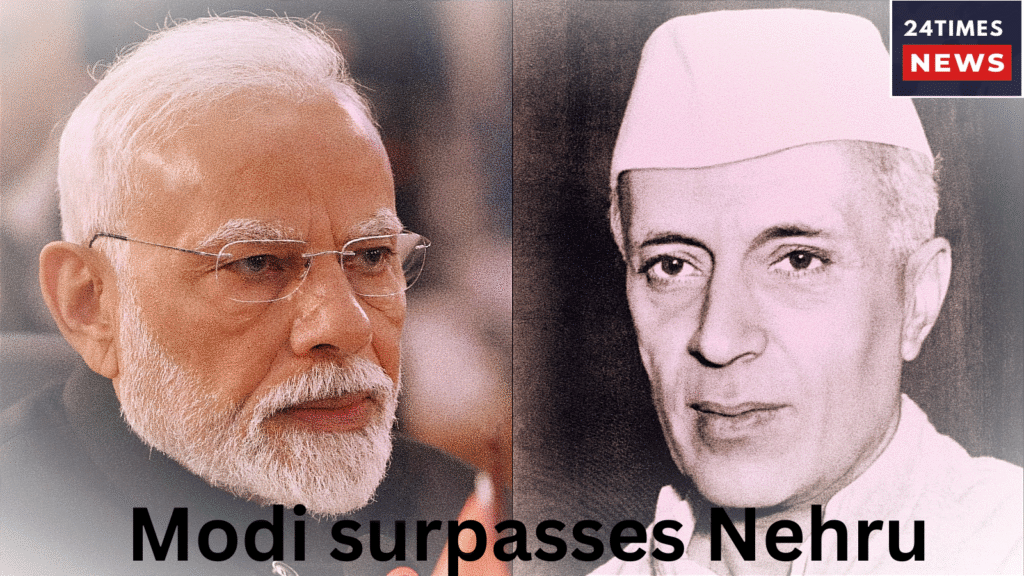
Prime Minister Narendra Modi has entered the record books by becoming India’s longest-serving elected Prime Minister, surpassing the tenure of Jawaharlal Nehru. The milestone was reached after Modi completed 4,399 consecutive days in office, moving ahead of Nehru’s record of 4,398 days as an elected Prime Minister. The achievement marks a significant moment in India’s democratic journey and has sparked discussions across political circles, with supporters and critics alike acknowledging the historic nature of the event.
Twelve years of transformation
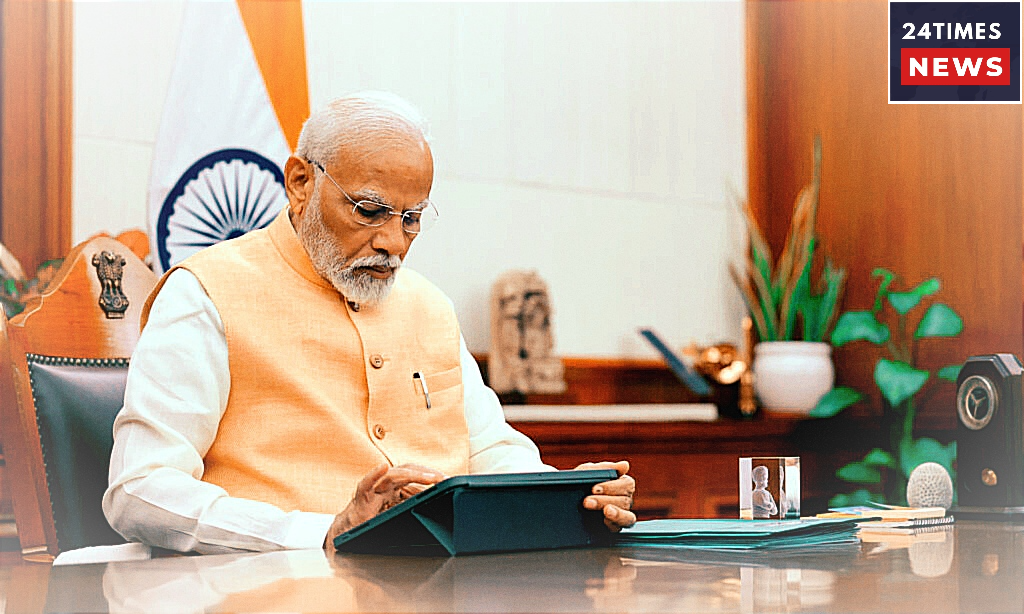
Modi first took office in May 2014 after leading his party to a decisive victory in the Lok Sabha elections. He secured a second term in 2019 and returned for a third consecutive term in 2024. Over the past twelve years, his government has overseen several major initiatives in areas such as infrastructure, digital services, welfare delivery, manufacturing, and foreign policy. Programmes related to financial inclusion, digital payments, sanitation, and renewable energy have often been highlighted as important features of his administration. His tenure has also witnessed India’s growing presence in global forums and a greater emphasis on large-scale development projects.
Nehru and Modi : Two visions of India’s Growth
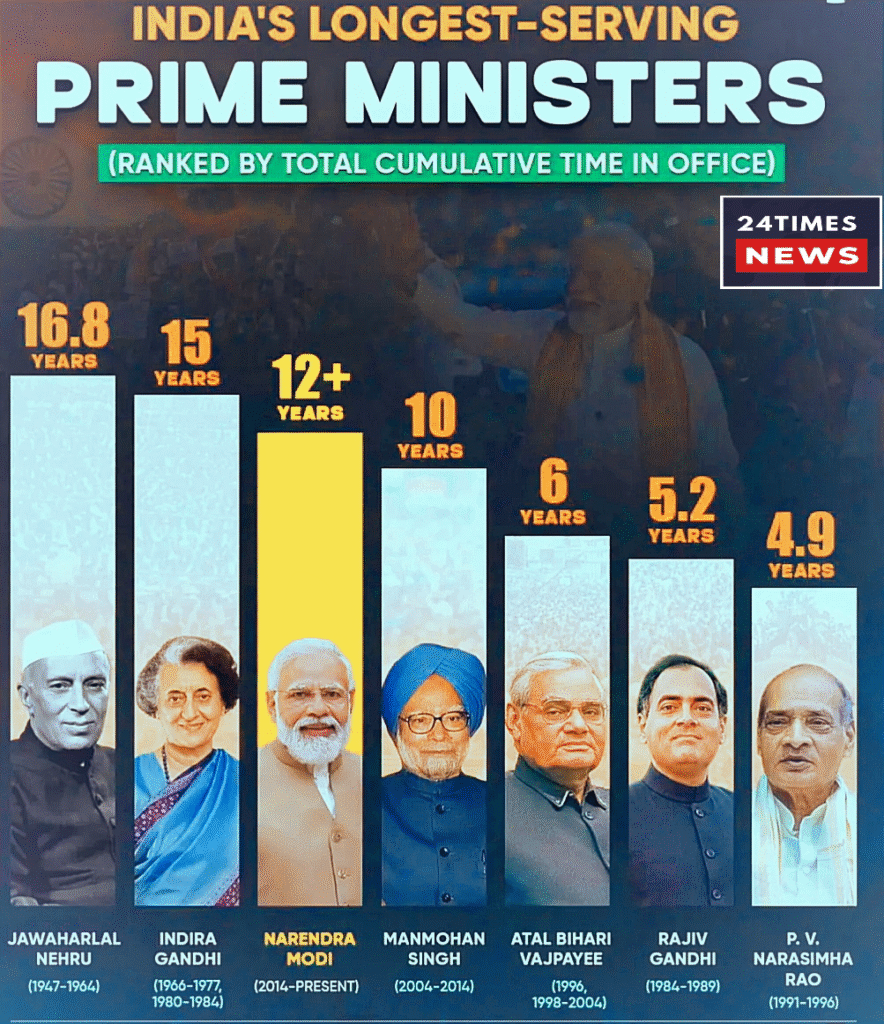
The milestone has naturally drawn comparisons with Jawaharlal Nehru, India’s first Prime Minister, who played a crucial role in shaping the institutions of the newly independent nation. While Nehru’s era focused on nation-building, industrial development, scientific advancement and democratic consolidation, Modi’s period has been associated with rapid infrastructure growth, technological transformation and efforts to expand welfare schemes through digital platforms. Political analysts note that the two leaders governed India during very different periods of history, making direct comparisons difficult despite the symbolic significance of the record.
Shifts in challenges
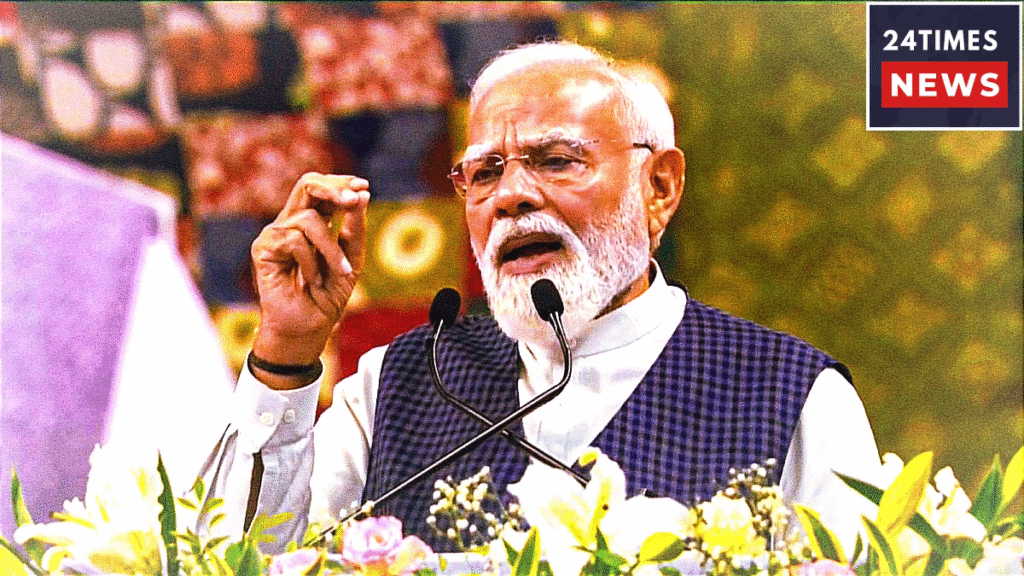
Beyond politics, the occasion highlights the continuity and stability of India’s democratic system, where leaders are judged through regular elections and public mandates. Whether viewed as a personal achievement or as a reflection of changing political trends, Modi’s record-breaking tenure will remain an important chapter in the country’s political history. As India continues to face new economic, social and geopolitical challenges, the focus will now shift from the record itself to how the government addresses the expectations and aspirations of more than a billion citizens in the years ahead.