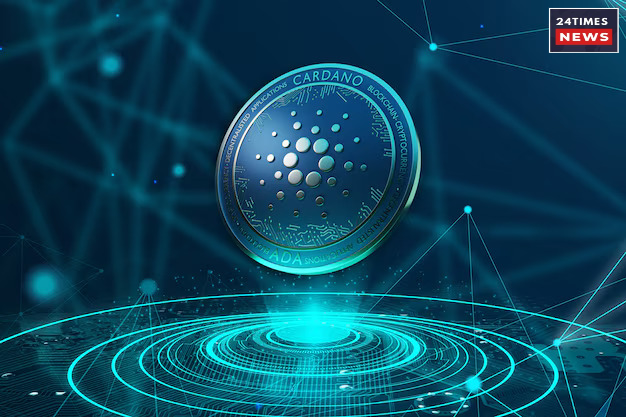
Cardano (ADA) stands at a big turning point as of September 8, 2026. The project is no longer just riding on hope or hype it’s deep into fully decentralized, community-led governance after moving through what it calls the Voltaire era. The “Vision 2026” upgrade plan keeps rolling out, but it’s clear Cardano faces a market that expects real use, not just promises.
Table of Contents
Let’s break down where things stand this September.
Market: Cardano’s Price, Supply, and Trading Details
Cardano kicked off the second week of September trading in a tight, sideways range. Earlier in the year, ADA took a sharp dip, falling as low as $0.14 in June. It bounced back a bit, but it’s now stuck around $0.22.
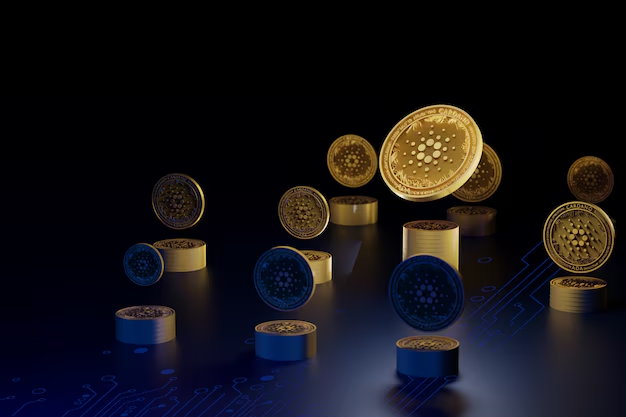
Here’s a quick look at the numbers:
- ADA price: about $0.22
- Market cap: around $8.35 billion
- Coins in circulation: about 35.78 billion out of a max 45 billion ADA
- Daily trading volume: between $220 million and $310 million
- All-time high: $3.10 back in September 2021
- Year-to-date: ADA has lost about 40-45 percent of its value in 2026
The token hovers well below its old highs, and it keeps running into resistance from its longer-term moving averages.
Support and Resistance
ADA holds immediate support near $0.21. If it slips much below that, the next strong level sits way down at $0.15. On the upside, the price needs to break through $0.23 if that happens, $0.25 becomes the next big psychological hurdle.
Staking Still Strong
Despite the quiet prices, Cardano’s staking story keeps chugging along. Over 60 percent of all ADA stays locked up in staking pools. People clearly see value in holding and staking, not just short-term trading.
Decentralized Governance in Action
What makes Cardano different now? For one, its “Voltaire” era fully rolled out earlier this year, meaning true decentralized governance is in place. Cardano’s community members through a system called CIP-1694 now control decisions on everything from funding to upgrades.
Cardano’s model splits governance and decision-making across three groups:
- Delegated Representatives (DReps): Regular ADA holders give these reps their voting power. DReps debate and vote on everyday project changes.
- Stake Pool Operators (SPOs): These technical users get a big say in core upgrades and forks. They keep the network secure and up-to-date.
- Constitutional Committee: This team makes sure everything stays within the rules set out in the Cardano “Constitution” proposals have to stick to these basics.
Funding and development now run through Treasury proposals. The community itself must approve any spending, and the old founding teams (IOHK, Cardano Foundation, EMURGO) do not make final decisions anymore. The treasury holds about 1.5 billion ADA, so there’s money for real improvements as long as they get voted through.
Upgrades and Technical Progress
2026’s roadmap has Cardano working on 15 major improvements across six main areas. What’s actually shipping?
- Faster and scalable transactions: The Ouroboros Leios upgrade splits transaction validation and block building. That means the network can process more transactions at once, not just in a slow, single-file process.
- Faster settlement: Ouroboros Peras speeds up how quickly transactions finalize, taking it from several minutes to just a few seconds. This beats one of Cardano’s biggest weaknesses compared to other leading blockchains.
- Layer-2 scaling: The “Hydra” tech lets small payments, DEX trades, and even games run instantly and off the main chain, without clogging up the base network.
- Privacy chain: Cardano’s “Midnight” sidechain adds zero-knowledge privacy tools. Now, institutions can use DeFi with privacy and compliance, which is key for business and finance adoption.
Ecosystem and DeFi Right Now
If you only look at the dollar value locked up, Cardano’s DeFi scene doesn’t look massive. But activity measured in ADA is steady, and usage is rising.
Here are some highlights:
- The main decentralized exchanges (DEXs) are Minswap, Spectrum Finance, and SundaeSwap.
- For lending and synthetic assets, people use Liqwid Finance and Indigo.
- Cardano has both fiat-backed (USDM) and algorithmic (DJED) stablecoins.
- Smart contracts got a big boost from Aiken, a new programming language made just for Cardano, making it easier for developers to build new features at lower costs.
Another plus: Cardano supports native tokens directly, so users don’t have to rely on custom smart contracts for every new asset. That means fewer bugs and smaller fees.
Opportunities and Challenges
Where does Cardano shine, and where does it struggle?
Optimists say:
- Cardano has worked nonstop and never suffered a major outage since 2017.
- Full decentralization puts decision-making in the hands of the community.
- Its privacy systems help win over banks and businesses that need to stick to strict regulations.

But critics point out:
- The ADA price is still down more than 90 percent from 2021. Investors who bought during the last big hype cycle are still waiting for a turnaround.
- Rival blockchains like Ethereum, Solana, and Sui have more money locked, bigger developer teams, and slicker onboarding tools.
- Cardano’s democratic system can make decisions slow. Coordinating a big, diverse community sometimes means progress comes in fits and starts.
What’s Next for Cardano in 2026?
If Cardano uses its treasury to roll out key upgrades like Leios and Peras, tie in stablecoins, and attract developers from outside its own bubble, there’s a real shot for ADA to build support above $0.25 in the coming months.
But if growth stalls if wallets, users, and developers stop showing up ADA could stay stuck between $0.15 and $0.23. The next few quarters will show whether all this groundwork lays a path for real-world adoption or whether Cardano just keeps treading water.
In short: Cardano is built, it’s more decentralized than ever, and the tools are in place. Whether that leads to real growth depends on what the community manages to do next.