Table of Contents
Subhash Chandra: ₹6.25 crore repayment plan put on hold amid claims totalling ₹22,006 crore
A newly constituted five-member bench of NCLT Delhi has put a stay on the approval of the repayment plan proposed by Essel Group founder Subhash Chandra. Under this scheme, creditors were to receive only ₹6.25 crore against the total admitted claims of ₹22,006.57 crore.
The bench also restrained Chandra from selling, transferring or otherwise disposing of his properties. Solicitor General Tushar Mehta, appearing for the creditors, had sought to ensure the safety of the guarantor’s assets.
NCLT has issued notices to the parties involved in the case. Now the five-member bench will further consider the issues related to the validity and scope of the repayment plan in this dispute.
Controversy over plan with nearly 99.9% haircut
The proposed plan was to provide ₹6.25 crore to creditors and ₹25 lakh for the cost of the insolvency process. This amount is very less compared to the admitted claims of ₹22,006.57 crore and amounts to a haircut of about 99.9%.
Despite this, 80.814% voting share of the creditors voted in favour of the repayment plan. On this basis, it was argued in favour of approving the scheme that the required statutory voting threshold had been reached.
However, not all creditors agreed with the plan. Some parties raised objections to Chandra’s financial activities and the terms of the offer, due to which the matter remained a subject of dispute before the NCLT for a long time.
The two-member NCLT bench failed to reach a consensus.
The case was previously being heard by a two-member NCLT bench. Judicial Member Ashok Kumar Bhardwaj and Technical Member Reena Sinha Puri had different opinions regarding the repayment plan.
Bhardwaj had supported approving the scheme and believed that it could be limited to creditors who voted in its favour. At the same time, Technical Member Reena Sinha Puri refused to accept the proposal.
After this the matter was sent to the third member, Judicial Member Nilesh Sharma. His order of August 25 expressed his opinion in favour of approving the repayment plan.
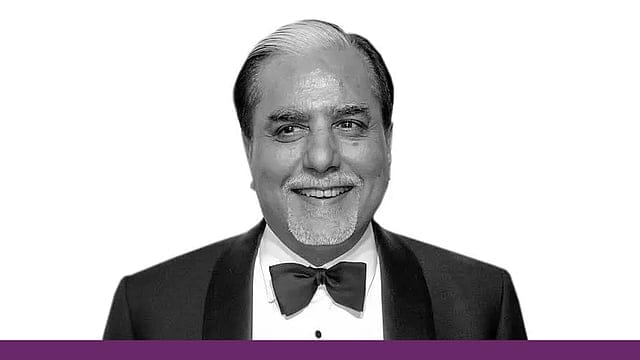
The third member stated that the voting threshold had been met.
Nilesh Sharma, in his order, acknowledged that the scheme had the support of the creditors who met the prescribed voting threshold. According to him, the disagreement of only a few creditors in itself is not a sufficient ground to reject the repayment plan.
They also considered objections raised over certain financial transactions involving Chandra. Also, some claims involving 960 people and around 300 others were investigated, which were allegedly accepted on the basis of verbal assurances by Chandra.
The third member held that these claims should not have been accepted without sufficient supporting material. However, he said such irregularities do not invalidate the entire insolvency proceedings.
Opinions also expressed on the issue of the plan being applicable to all creditors.
Nilesh Sharma, the third member, also agreed that if the repayment plan is approved, it will apply to all creditors, including those who voted against the plan.
This aspect became a significant part of the controversy, as a member of the original bench had argued that the scheme’s effect should be limited only to its supporting creditors.
Thus, due to different opinions, the situation regarding the legal effect of the repayment plan and the rights of the creditors could not be clarified. This difference of opinion paved the way for referring the matter to a larger bench.
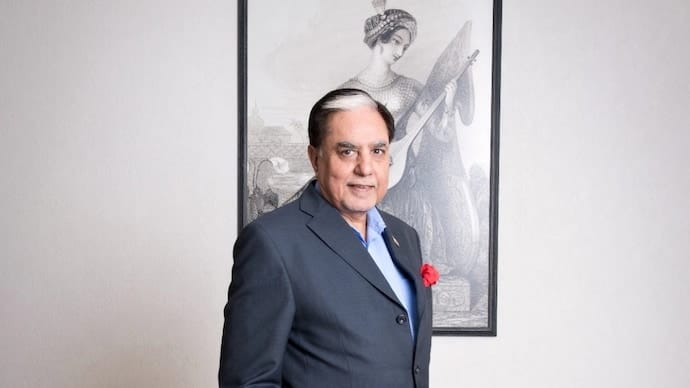
The matter was referred to a five-member bench under Section 419(5).
The matter was referred to a five-member bench after the original bench failed to resolve the differences. The reference has been made under Section 419(5) of the Companies Act, 2013, which provides for referring a matter to a larger bench in case of difference of opinion among the members.
The new bench is headed by NCLT President Justice Anupinder Singh. It includes Judicial Members Bachu Venkat Balara Das and Mahendra Khandelwal and Technical Members Atul Chaturvedi and Ravindra Chaturvedi.
Now this bench will consider all the major legal questions related to the repayment plan. At present, the approval of the plan has been stayed and an interim protection order has also been issued in respect of Chandra’s properties.
All eyes are on the NCLT’s next order.
The matter regarding Subhash Chandra‘s repayment plan is now before a five-member NCLT bench. The proposal to pay ₹6.25 crore against admitted claims of ₹22,006.57 crore has raised serious questions about creditor recovery and the insolvency process.
The plan could not be agreed upon in the original NCLT bench despite having the support of 80.814% voting share of the creditors. The opinion of the third member also could not completely resolve the differences among the original members, after which the matter was referred to a larger bench.
Currently, the NCLT has stayed approval of the scheme and banned the transfer of Chandra’s properties. After the notice and further hearing, the validity of the repayment plan and its impact on creditors should become clear.