It’s tough to name just one “best” asset in the world. The answer changes as you zoom in or out on the timeline. If you look back for centuries, owning businesses what we usually call public equities has grown wealth more reliably and steadily than anything else. But if you focus on the last couple of decades, digital assets led by Bitcoin have delivered jaw-dropping gains that even the most optimistic investors didn’t see coming.
How did these very different assets each end up at the top? It’s a story that threads together market cycles, economic shocks, and the mechanics under the hood.
Table of Contents

Bitcoin and Digital Assets: A 15-Year Rocket Ride
Over the past fifteen years, there’s been nothing quite like Bitcoin. It didn’t even exist before 2009, and for the first year, you could barely give it away. Someone famously traded 10,000 bitcoins for two pizzas at the time, it wasn’t worth more than spare change. Fast forward to now, and Bitcoin has gone from those humble beginnings to become the fastest-rising financial asset we’ve ever recorded.
The secret sauce? Bitcoin was designed to be both scarce and self-governing. It has a hard cap of 21 million coins, and new coins trickle out at a decreasing rate through a process called “halving,” which happens roughly every four years. The rewards for “mining” Bitcoin started at 50 BTC per block in 2009, dropped to 25 in 2012, 12.5 in 2016, 6.25 in 2020, and now just 3.125 after 2024. That tightening supply is a big part of what’s pushed up the price.
Measured on an annual basis, Bitcoin’s average returns since 2010 have blown past the usual suspects stocks, gold, even real estate. The range is extreme: its average yearly growth has often been between 50% and 85%. The S&P 500 or gold can’t touch that. But the flipside is hard to ignore: Bitcoin’s price sometimes collapses by 60% or more in a single year, so it’s not for the faint of heart. Still, each wave of volatility has moved Bitcoin further into the mainstream, earning it a place in some company treasuries and even helping launch new financial products like Bitcoin ETFs.

Stocks: The Champion of the Long Game
Digital assets have shocked us with their speed, but stocks still take the crown if you’re thinking about wealth for the long run for your kids, grandkids, and beyond.
When you own shares of a company, you’re not just hoping prices go up. You own a slice of something productive. Companies make things, sell services, pay dividends, and can adapt as the world changes. That adds up to steady growth. Over almost 200 years, U.S. stocks have averaged about 6.5% to 7% growth per year above inflation, or around 10% a year in dollars you could spend at the time.
Want proof of how that stacks up? An initial $100 investment in the S&P 500 in 1928 would have grown to more than $700,000 by 2024 (if you reinvested every dividend). That’s the magic of compounding and sticking with the market through ups and downs.
Some of that growth comes from dividends money big companies pay to shareholders and some comes from innovation. Old industries fade, new ones take their place, and the stock market as a whole keeps moving forward. Small companies, too, sometimes beat out big ones, though with more dramatic swings.

Tangible Assets: Real Estate and Gold’s Enduring Place
Stocks and digital assets tend to lead the headlines, but real estate and gold have quietly held onto wealth for centuries.
Real Estate: Buy a piece of property, and you’ve got a built-in combo. There’s income if you rent it out, and the value of the land and buildings can inch up over time. Take out a mortgage, and a bit of your money can control something much bigger a plus when prices rise. Historically, real estate returns about 1 to 2% above inflation, but smart use of leverage can boost those gains.
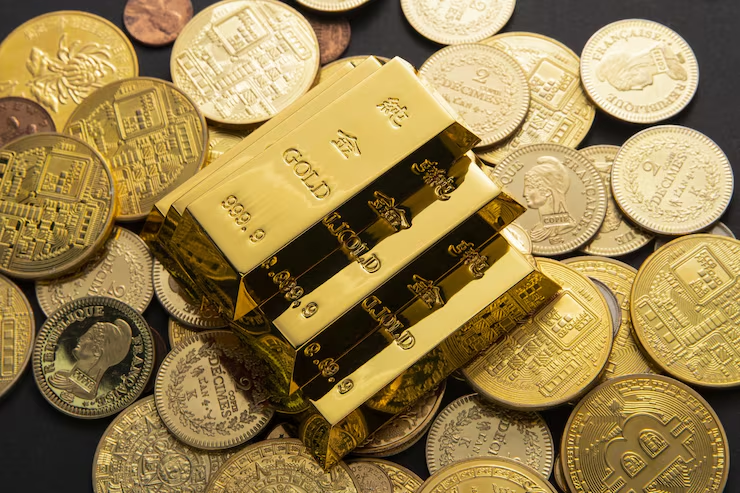
Gold: Gold doesn’t pay dividends or make new things, but it has been a reliable store of value for thousands of years. It shines brightest when currencies lose value or when times are unstable. Since 1971, when the U.S. dollar stopped being tied directly to gold, its price has fluctuated based on supply, demand, and global trust. In tough times, gold helps preserve what you’ve worked for.

How Do These Asset Classes Compare?
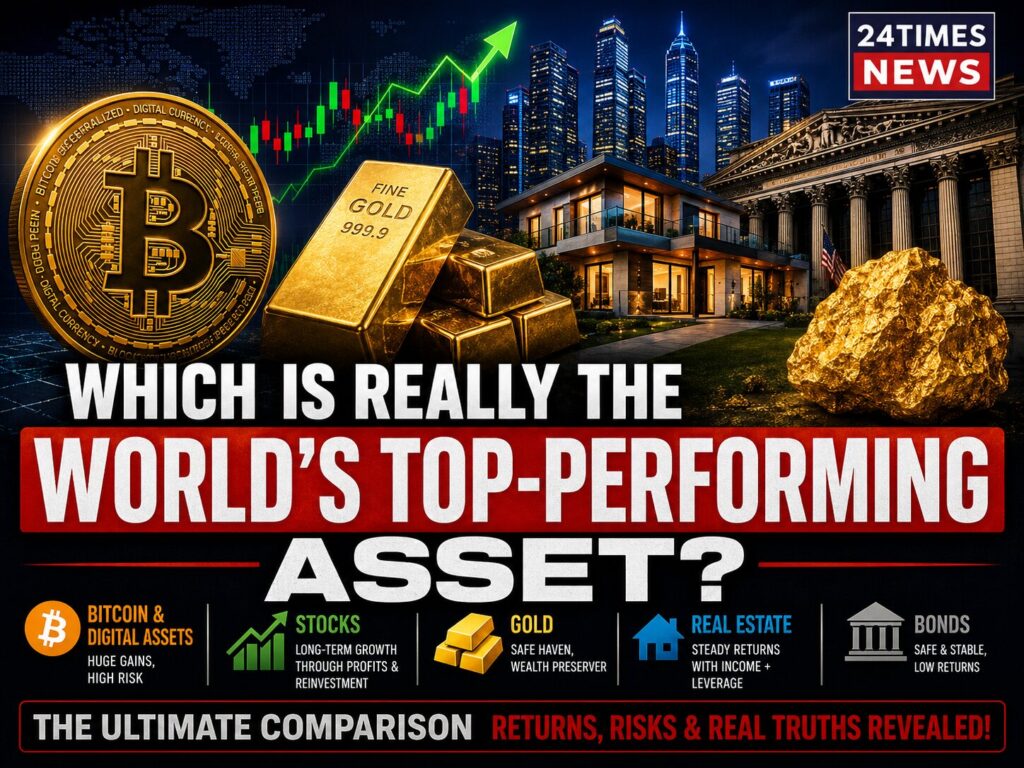
Here’s a simple look at each type’s average returns, risks, and strengths:
- Bitcoin and other digital assets: Huge short-term gains but wild swings (risk and reward both high).
- Stocks, especially big ones: Strong long-term growth through profits and reinvested earnings; risk is moderate.
- Small-cap stocks: More growth, more ups and downs.
- Real estate: Steady returns, helped by both rental income and leverage.
- Gold: Not a big money-maker, but rock-solid during financial turmoil.
- Government bonds: Safe but low returns. Best for preserving cash, not growing it.
Why Do Some Assets Outperform?
There are some common threads that unite winners over time. First, scarcity helps things you can’t make more of (like Bitcoin, high-quality real estate, or gold) tend to become more valuable when everyone wants them. Second, assets that actually produce something like businesses that earn profits generate real returns. Third, network effects matter in the digital age: services and currencies become dominant when more people use them, which boosts their value even faster.

Context Matters: Economic Cycles Always Change the Game
Different assets shine during different eras. The 1970s, marked by inflation and uncertainty, were great for gold and energy stocks, but tough on bonds and regular stocks. The late 20th century’s focus on lower inflation made stocks and bonds soar. The 2010s favored big tech firms and digital assets, while the 2020s, so far, have made room again for gold, real estate, and Bitcoin as people look for safety outside traditional money.
So, What’s the Answer?
There’s no one-size-fits-all answer. If you want incredible short-term speed, Bitcoin leads. If you’re thinking about building wealth slowly and steadily, stocks have stood the test of time. Real estate and gold help smooth out the ride and preserve what you build. The best strategy blends these assets, adapting to the moment but always with an eye on the horizon. That’s how you build and keep wealth through all the cycles history throws at you.