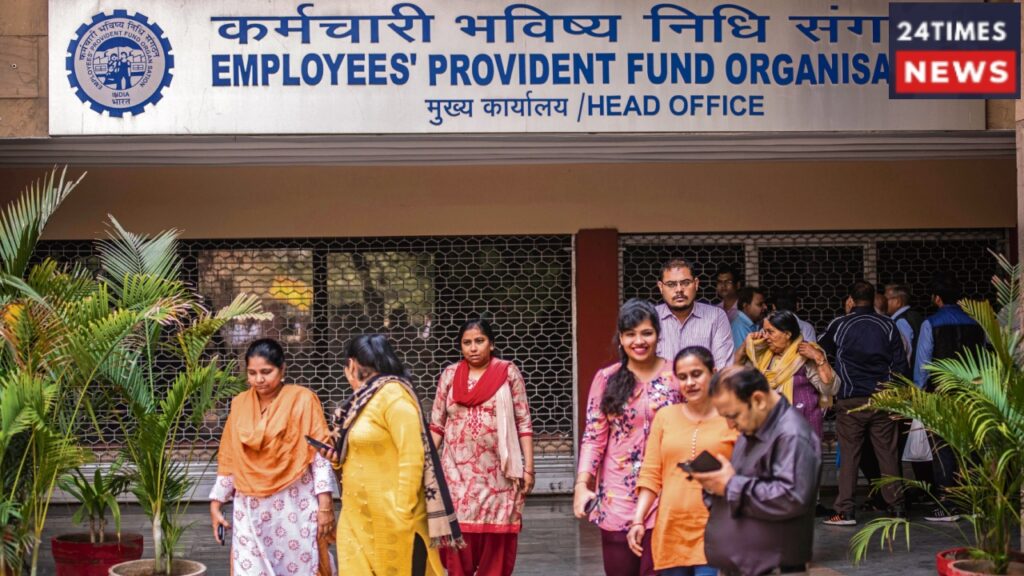
New Delhi: The Employees’ Provident Fund Organisation (EPFO) recently took a surprising decision, resulting in changes to certain rules. Employees have various questions regarding the EPF 2026 scheme. Introduced under the Code on Social Security, 2020, this new scheme replaces the old 1952 framework.
Many employees are wondering about the contribution amounts required under the new PF scheme and when they will be able to withdraw their funds. If you wish to clear up any confusion, do not delay—read the article below carefully.
Will a new PF account need to be opened?
If you are already an EPF member, your membership will be automatically transferred to the new scheme. In short, there is no need to open a new EPF account. Your existing Universal Account Number (UAN) will remain valid, and your previous balance and service history will remain completely secure.
What will be the base contribution rate?
Employees should note that there has been no change to the base contribution rate. Both the employee and the employer will continue to contribute 12% of the basic salary and Dearness Allowance (DA), just as before. Essentially, there is no change in this regard.
Is there a salary hike for PF contributions?
The salary limit for PF contributions remains unchanged at ₹15,000 per month. Mandatory contributions will continue to be determined based on this limit until the government issues a notification regarding a new threshold.
Can additional contributions be reduced in the future?
The new scheme offers a key feature: the EPF Scheme 2026 provides employees with the flexibility to reduce or completely stop additional voluntary contributions if their financial priorities change.
How to Withdraw PF Funds After Quitting a Job or Being Laid Off
If you leave your job, your PF money will not be lost. Upon quitting, you can withdraw up to 75% of your total eligible funds under the rules for partial withdrawal. To withdraw the entire corpus, it may now be mandatory for an individual to have remained unemployed by any EPFO-covered company for a minimum of 12 months.
Improved Service
PF-related services for employees are set to improve significantly. Stricter regulations and enhanced digital capabilities have now been mandated for companies that manage private PF trusts. Employees will continue to benefit from fast online services, such as electronic claim filing, online settlement, and e-passbooks.
How to Withdraw PF Funds After Quitting a Job or Being Laid Off. If you leave your job, your PF money will not be lost. Upon quitting, you can withdraw up to 75% of your total eligible funds under the rules for partial withdrawal. To withdraw the entire corpus, it may now be mandatory for an individual to have remained unemployed by any EPFO-covered company for a minimum of 12 months.
Does the company have to match the employee’s additional contribution?
That is not required. The scheme allows employers to provide a matching contribution equal to the employees’ additional voluntary contributions. However, this rule does not apply to the companies themselves; they will continue to limit their contribution to 1 per cent, within the statutory ceiling of 15 pper cent