Table of Contents
Sonam Wangchuk Hunger Strike: Threatens Fast at Jantar Mantar from June 28, Raises Voice for Education, Ladakh, and Environment.
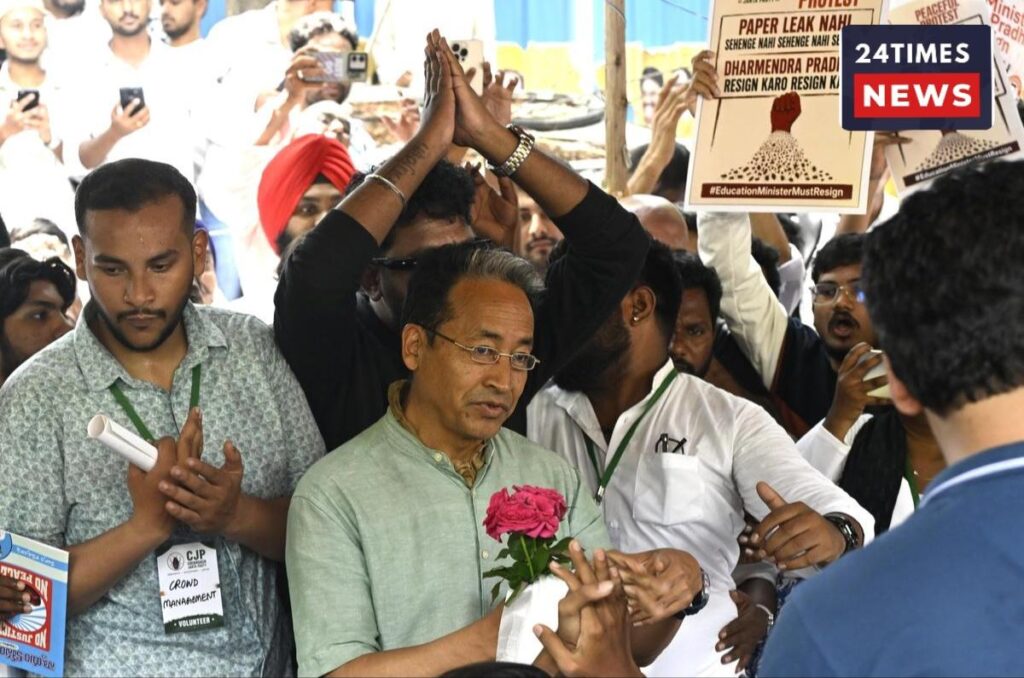
Sonam Wangchuk has once again brought issues related to education, environmental protection, and Ladakh to the center of national debate by announcing an indefinite hunger strike at Jantar Mantar in New Delhi from June 28. He stated that in a democratic system, the participation of citizens and local communities is essential for making any policy or decision effective.
According to him, it is not enough to take decisions on an important subject like education only at the administrative level, but the opinions of students, teachers, experts and common citizens should also be given importance.
Sonam Wangchuk specifically mentioned Ladakh, saying the people living there should have full opportunity to have a say in decisions related to their environment, natural resources and cultural heritage. He says that the Himalayan region is a highly sensitive ecological region and development plans here should be implemented keeping in mind the local conditions and environmental balance.
He also said that the success of any democracy depends on how strong the communication is between the government and the citizens. If the concerns of local communities are heard in time, a better balance can be struck between development and conservation. His announcement is likely to trigger widespread discussions on education reforms, environmental protection and the future of Ladakh.
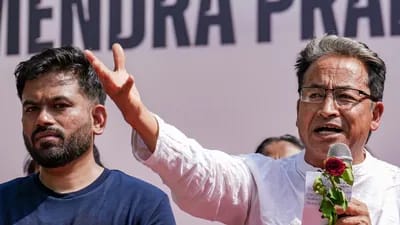
Major Issues Focused on the Proposed Hunger Strike.
- Hunger Strike at Jantar Mantar Starting June 28
Sonam Wangchuk has announced that if his demands are not adequately addressed, he will begin a hunger strike on June 28.
- Citizen Participation in Education Policy
He said that society and citizens should have meaningful participation in important decisions related to education.
- The Voice of the People of Ladakh
Wangchuk says that the opinions of local communities should be prioritized in decisions related to Ladakh.
- Emphasis on Environmental Protection
He described the protection of the fragile environment and natural resources of the Himalayan region as an important issue.
- Demand for the preservation of cultural heritage
He said that along with development, it is also necessary to protect Ladakh’s cultural identity and traditions.
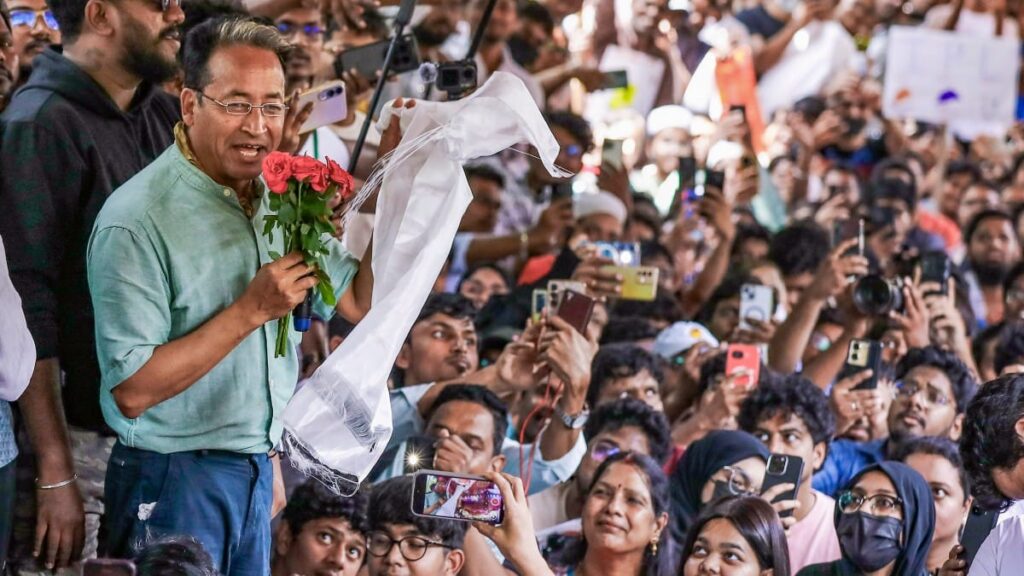
Why is this announcement of Sonam Wangchuk being considered important?
Sonam Wangchuk has long been vocal on issues related to education reform, sustainable development and environmental protection in the Himalayan regions. According to him, while taking decisions related to the development of any area, importance should be given to the participation and suggestions of the local people there.
In his statement, he said that the basic principle of democracy is that people who are directly affected by any policy should get an opportunity to express their views. Widespread public participation is essential, especially on issues like education and environment, as these have an impact on future generations.
Wangchuk also expressed concern over the environmental balance of Ladakh. He says the Himalayan region is facing pressure from climate change and rapidly changing development. In such a situation, local conditions and environmental impacts should be seriously evaluated while deciding on any policy or project.
Political and social analysts believe that his proposed hunger strike is not just a protest programme but also an attempt to generate public discussion on broader issues related to education, environment and local governance. Reactions to this announcement are likely to emerge from various parties in the coming days.
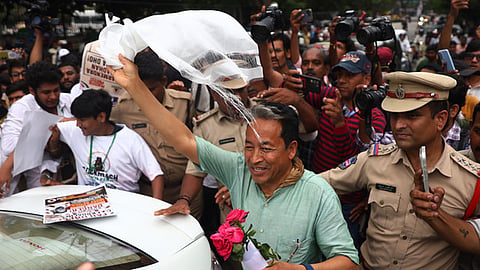
What could be the impact of this movement?
If Sonam Wangchuk begins the proposed hunger strike from June 28, its impact cannot be limited to just a protest. Political analysts and social experts believe that this movement can give rise to a new debate at the national level on education policy, environmental protection and administrative issues related to Ladakh. Jantar Mantar has long been a major centre of various mass movements and democratic protests, hence the entire country will be watching this movement.
Experts say that the purpose of such movements is not only to register protest but also to promote dialogue between the government, policy makers and civil society. If various parties come forward for dialogue, a positive solution to many important issues can be achieved.
Additionally, the movement is also likely to generate widespread public discussion on issues such as environmental protection, development models for the Himalayan regions and participation of local communities. In the coming days, the reactions of the government, social organizations, education experts and environmentalists can decide the direction and impact of this movement.
A debate centered on dialogue, democracy, and public participation.
Sonam Wangchuk’s entire campaign is based on the idea that democracy should not be limited to elections, but should also ensure the active participation of citizens in the policy-making process.
He argues that issues such as education, the environment, and cultural heritage impact not only the present generation but future generations as well. Therefore, a broad public dialogue on these issues is necessary.
He also said that local communities understand the conditions, challenges and needs of their area best. If their opinions are valued, development projects can become more balanced and sustainable. Experts also believe that public participation enhances policy transparency and strengthens public trust.
Wangchuk’s message also emphasizes that environmental protection and economic development should be seen as complementary rather than contradictory. This is why their proposed movement is not limited to just one demand but brings to the fore broader issues of democratic participation and sustainable development.
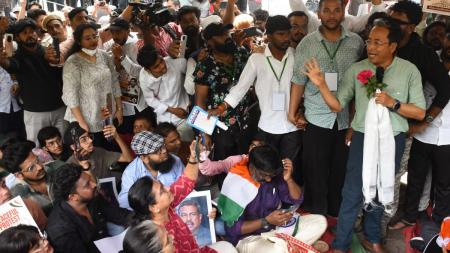
The movement could reorient the national discourse on education, the environment, and the future of Ladakh.
With the announcement of a hunger strike scheduled for June 28th, Sonam Wangchuk has once again made it clear that his primary concern is not limited to a single administrative decision, but encompasses broader issues such as education, environmental protection, participation of local communities, and cultural heritage. He believes that the real strength of a democratic system is visible when the voices of the affected people get their due place in policy decisions.
Maintaining a balance between development and conservation in an environmentally sensitive region like Ladakh is a major challenge. Experts say that participation of local communities, scientific studies and transparent policy making can play an important role in maintaining this balance. Similarly, in the field of education also, incorporating suggestions from citizens, teachers and experts can make the policies more effective.
In the coming days, it will be important to see what response the government and related institutions give to the proposed movement. If the dialogue process moves forward, it can become the basis for positive discussions not only on Ladakh or education but also on broader issues of democratic participation and sustainable development. At present, this announcement by Sonam Wangchuk seems to be giving rise to an important public debate at the national level.