
Table of Contents
CJP Protest: Second major demonstration at Jantar Mantar, demands for Education Minister’s resignation intensify, protesters remain steadfast despite police alert.
CJP protest once again became the center of political and social debate in the national capital, Delhi, when a large number of protesters gathered for the second protest held at Jantar Mantar. Tensions escalated when the police urged the crowd to vacate the site after the 5 PM deadline, but the protesters refused to back down. Abhijit Dipke, the organisation’s founder, stated clearly that the agitation would continue until Education Minister Dharmendra Pradhan resigned.
The protest has once again sparked debate on the education system, political accountability and the right to democratic protest. During the protest, many protesters reiterated their demands in a peaceful but firm manner. Those involved in the protest said that this movement is not against any individual or party, but is demanding systemic reforms.
This second phase of the protest is considered to be more organised and widespread than the first demonstration. People participating in the protest accused the government of ignoring their demands. The crowd present at the protest registered their dissent with slogans and demanded reforms in the education policy.
During the protest, efforts were also seen for talks between the administration and the protesters, but the situation remained tense. The protest also put the security system in the capital on alert mode.
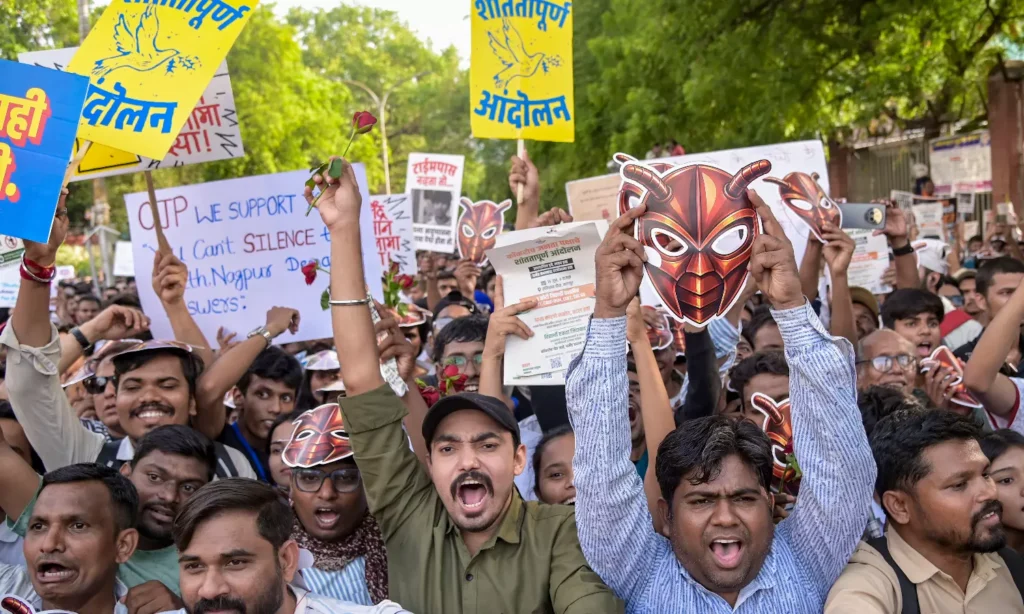
5 key highlights of the Jantar Mantar CJP protest
- Second major demonstration and growing crowd
This was the second phase of the protest, which saw a larger number of people participating than before. There was an increase in both the number and organisation of protesters. - The main demand was the resignation of the Education Minister.
The most prominent demand in the protest was the resignation of Education Minister Dharmendra Pradhan. The protesters said that the movement will continue until responsibility is fixed. - Police deadline and tense situation
The administration appealed for an end to the protest by 5 p.m., but those involved in the CJP protest persisted, leading to a tense situation. - Abhijeet Dipke’s tough stance
CJP founder Abhijeet Dipke made it clear that the agitation will continue until their demands are met. - Debate on Democratic Rights Intensifies
The CJP protest has once again sparked a national debate on the right to protest and the government’s response.
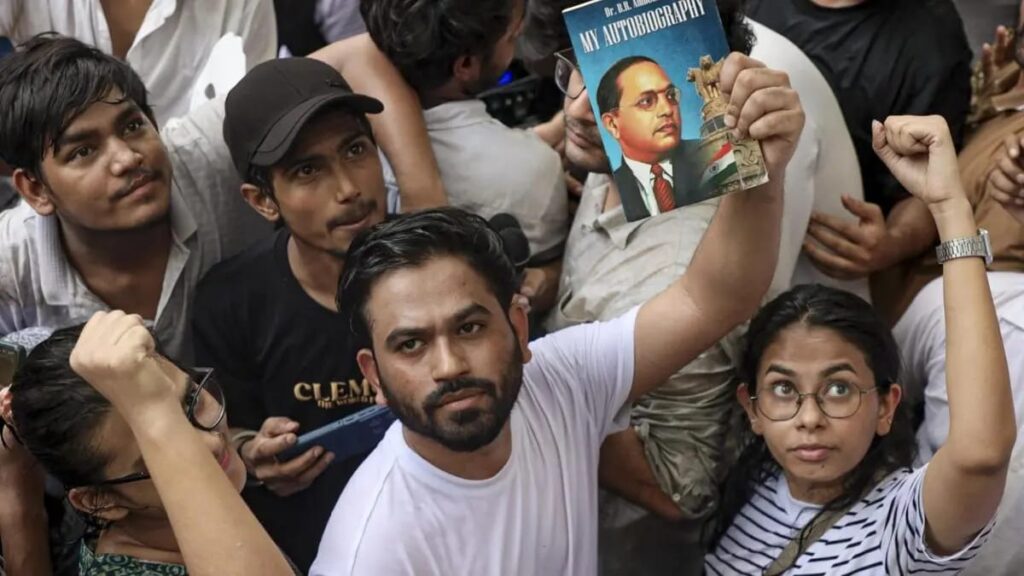
The CJP Protest and the Changing Face of the Democratic Movement.
The protest is not just a protest but has become part of a broader social and political movement. Such protests at places like Jantar Mantar have always been a symbol of democratic expression, and this time too the protest has carried forward the same tradition.
The protesters say their demands are not just against any particular individual, but they are demanding accountability and transparency in the education system. Those involved in the CJP protest also said that the agitation will continue until the government takes their concerns seriously.
The role of police and administration is always challenging in such demonstrations. Even during the protest, the security forces set deadlines to control the situation, but the attitude of the protesters complicated the situation.
Abhijeet Dipke’s leadership gives a clear direction to the movement, making it an organised campaign rather than just a crowd demonstration. The protest also showed that movements can be quickly organized in the age of digital and social media.
This entire incident has also raised questions about how effective the dialogue between the government and the protesters is and whether there is a need to develop new methods of democratic dialogue.
Future Situation and Potential Impact
The protest may spark further political debate in the future. If a dialogue between the protesters and the government fails to materialize, the movement could expand further.
This situation may also impact education policy, administrative decisions and public discourse. It will also be important to see whether the government issues a formal response to this issue.
Overall, the protest is becoming more than just a protest but a part of a larger democratic discourse, which may take on a more significant form in the times to come.
Conclusion and the Way Forward: The Changing Political and Social Landscape After the CJP Protest.
The protest is no longer confined to a demonstration at Jantar Mantar, but is becoming part of a broader political and social discourse. This movement has made it clear that in a democracy, voices of protest are not merely symbolic, but they also have the potential to put pressure on policy and administration.
After this entire incident, the biggest question is how strong the path of communication between the government and the protesters can be. If the process of dialogue and resolution moves forward, the CJP protest can become a vehicle for positive change. But if the deadlock persists, this movement may take a more intense form.
Furthermore, it has become clear that in modern times, movements are not limited to the streets, but they also spread rapidly through public opinion, media and digital platforms. In such a situation, the responsibility increases on both sides on the government as well as on the agitators.
Ultimately, the CJP protest sends the message that there will always be a place for dissent and protest in a democratic system, but its resolution is possible only through dialogue, balance and constitutional process.